
People are searching GLP 1 drugs for one reason.
They want to know what actually happens. How fast the scale moves, what week the appetite changes, whether the side effects are worth it, and what a realistic timeline looks like if you are not living on protein shakes and willpower.
And that is where expectations get messy.
Because GLP 1 medications really are a big deal in weight loss. They have pulled obesity treatment out of the pure motivation category and into something more medical and measurable. But at the same time, the internet turned them into a highlight reel.
What changed is pretty simple. GLP 1 drugs started in diabetes care, then the weight loss results were too strong to ignore, and suddenly they were everywhere. Clinics. Telehealth. Celebrities. Friends who quietly dropped two sizes and said, yeah I just am not that hungry anymore.
Here is the key thing to hold in your head before we go any further.
This is not a quick cut. It is weight management.
Weight loss is the drop. Weight management is the plan that keeps the drop from snapping back. GLP 1s can help with both, but they do not erase the fact that your body adapts, your habits matter, and stopping the medication often changes the appetite signals again.
The core promise is real: less appetite, fewer cravings, smaller portions, less food noise.
The core reality is also real: it takes time, consistency, and usually some trial and error with dosing and side effect tolerance.
Also, these are prescription medications that require medical supervision. Results vary a lot based on dose, adherence, starting weight, other conditions like insulin resistance or sleep apnea, and what your eating and activity look like while you are on the drug.
Why GLP-1 drugs are such a big deal for weight loss (and why expectations get messy)
GLP 1s made something possible that used to feel almost impossible for many people. They changed hunger.
Not just, I can resist hunger. But, hunger itself gets quieter for a lot of users. That is why people call it life changing. When your baseline appetite drops, decisions get easier. Portions shrink without a daily internal argument. Cravings hit less often. Some people even forget to eat, which sounds great until you realize it can backfire if protein and nutrients get too low.
The messy expectations part happens because:
- The first few weeks are often a starter dose that is not meant for big losses.
- Early scale changes can be water and glycogen, not pure fat loss.
- Side effects can slow people down or limit dose increases.
- Social media tends to show the best case responders, at their best angle, on their best week.
So the healthiest mindset is this.
GLP 1s can make fat loss easier to sustain. But they still work on a human timeline, with human variability. You are looking for a trend over months, not a miracle by next Friday.
GLP-1 explained in plain English: what “glucagon-like peptide-1” actually does
GLP 1 stands for glucagon like peptide 1.
It is a hormone your gut releases after you eat. One of its jobs is basically to tell your brain and body, food is coming in, you can calm down now.
The effects that matter most for weight management:
- More satiety. You feel satisfied sooner.
- Slower gastric emptying. Food leaves your stomach more slowly, so fullness lasts longer.
- Reduced appetite signaling. The urge to keep eating eases up.
- Improved insulin response and glucose control. Especially important if you have insulin resistance or type 2 diabetes, and it can indirectly help weight management too.
This is why people say things like, I get full faster. Or, I can stop halfway through. Or the weird one, I just do not think about food all day anymore.
That last part is what people call food noise. It is not a scientific term, but it describes a real experience. A quieter constant background pull toward snacks, cravings, and mental bargaining.
Now, natural GLP 1 in your body breaks down quickly. It is short acting.
GLP 1 receptor agonist medications are designed to act longer and stronger. They mimic GLP 1, but with a longer half life so the effect is sustained. That is why dosing can be weekly for some medications.
And it also explains the timeline. Many benefits ramp up as the dose increases and your body adjusts.
What counts as a “GLP-1 drug” for weight loss: the main medications (and what’s actually approved)
When people say GLP 1 for weight loss, they usually mean GLP 1 receptor agonists, and sometimes they also include newer dual incretin medications that hit more than one pathway.
A high level overview of the names you will hear most:
- Semaglutide: commonly known by brand names like Wegovy (approved for weight management in many regions) and Ozempic (approved for type 2 diabetes and sometimes prescribed off label for weight loss depending on the clinician and local rules).
- Liraglutide: Saxenda (weight management) and Victoza (type 2 diabetes).
- Tirzepatide: a dual incretin agent (GLP 1 plus GIP activity). Brand names and approvals vary by country and indication, and it is often discussed in the same weight loss conversation because results can be strong.
One practical difference that matters a lot in real life is dosing cadence:
- Some options are daily injections.
- Others are weekly injections.
And nearly all of them use titration, meaning you start low and increase slowly. Not because the low dose is supposed to melt fat instantly, but because jumping to a higher dose tends to blow up side effects.
Also, there is no universal “best” GLP 1 drug. What works best depends on:
- Tolerability and side effect profile for you
- Access and insurance coverage
- Your medical history and current medications
- How your body responds once you reach an effective dose
A quick word about compounded medications and random online sources, because this is where people get hurt.
Quality and safety can vary. Dosing can be inconsistent. And sometimes what is sold is not what you think it is. If you are doing this, do it through a legitimate clinician and regulated pharmacy supply chain in your region. You want a prescription and proper follow up. Always.
Who GLP-1s are (and aren’t) for: eligibility, screening, and red flags
Most prescribing guidelines are built around BMI and medical risk.
Typical eligibility often includes:
- BMI at or above a threshold (commonly BMI 30+), or
- BMI 27+ with weight related conditions like hypertension, dyslipidemia, sleep apnea, insulin resistance, prediabetes, type 2 diabetes, and similar issues
But it is not a vending machine rule. The clinician decides based on the whole picture.
Before starting, a good medical review usually looks at things like:
- A1C, fasting glucose, sometimes insulin markers
- Kidney and liver function
- Gallbladder history
- GI history, especially severe reflux or motility issues
- Thyroid history
- Pancreas history
- Current medications, because some meds can affect weight, blood sugar, or side effect risk
Contraindications and precautions depend on the specific medication, but common red flags include:
- Personal or family history of medullary thyroid carcinoma, or MEN2, for certain agents
- History of pancreatitis, where risk discussion matters
- Severe GI disease, where an individualized assessment is needed
Special populations matter too:
- Pregnancy and breastfeeding: generally avoided, and you need a plan if pregnancy is possible
- Adolescents: only certain approvals, and it should be handled carefully
- Older adults: muscle loss risk is real, and protein plus strength training becomes even more important
And one expectation reset that helps.
Starting is not the hard part.
Staying consistent through titration, learning how to eat with lower appetite, and managing side effects is where most people either win or quit.
The realistic GLP-1 weight loss timeline (week-by-week and month-by-month)
The timeline is not instant, and that is not a sign it is not working.
Reasons it can feel slow early:
- You are on a starter dose for tolerance, not maximal effect
- Your body is adapting to slower gastric emptying and appetite changes
- Some people have early water shifts that look dramatic, others do not
- Behavior changes take time to become routine
Also, early scale drops can be water and glycogen. Not fake progress, but not the whole story either.
What to track besides weight, because this makes the timeline feel more real:
- Waist measurement (monthly is fine)
- Progress photos (same lighting, same clothes, monthly)
- Hunger and cravings (simple 1 to 10 rating)
- Energy, sleep, and digestion
- Blood pressure or blood sugar if those are goals for you
- Labs if your clinician is monitoring them
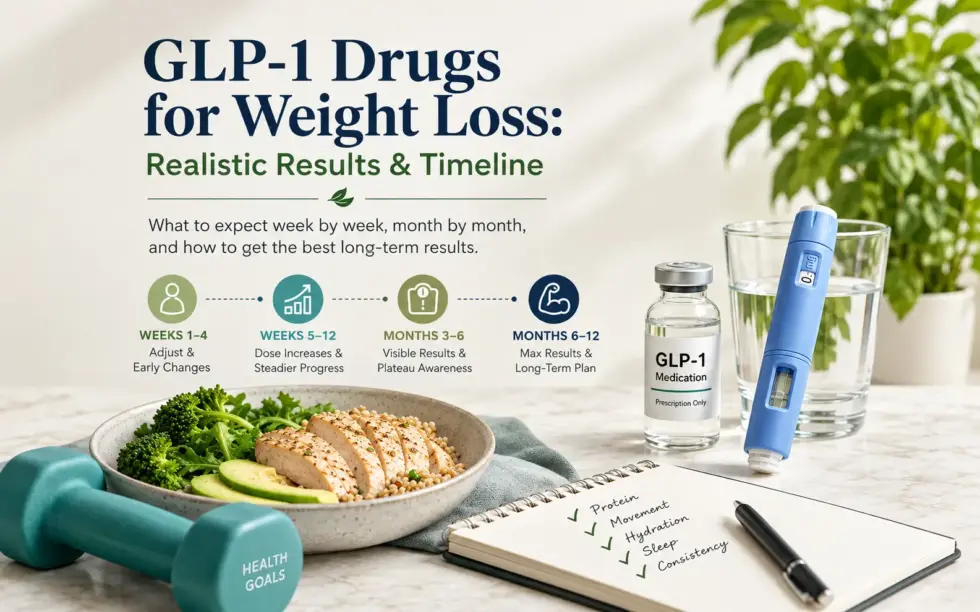
Weeks 1–4: Appetite changes, side effects, and the “is this working?” phase
A lot of people notice something in the first month, but it can be subtle.
What many feel:
- Reduced hunger, especially between meals
- Getting full faster
- Fewer cravings
- Less interest in snacking
And then there is the other group.
They feel almost nothing at first. That can happen when the starting dose is very low, or when someone simply needs more time and dose escalation to see the effect.
Common early scale outcomes are all over the place:
- Some people lose 0 to 5 pounds.
- Some are basically flat.
- Some lose more, usually due to water shifts and lower intake right away.
Side effects tend to show up early, especially around dose changes:
- Nausea
- Constipation
- Reflux or burping
- Fatigue
- Headaches, often dehydration related
Action steps that help in the first month:
- Hydration first. If you are eating less, you are often drinking less too, and that makes everything worse.
- Protein every time you eat. Even if portions are tiny.
- Smaller meals. Big meals are the fastest way to feel gross.
- Go easy on high fat meals if nausea hits. Fried foods are a common trigger.
- Gentle movement. Short walks help digestion and constipation without draining you.
When to message your clinician, not later, now:
- Persistent vomiting
- Signs of dehydration like dizziness, dark urine, inability to keep fluids down
- Severe abdominal pain, especially if it does not go away
Remember that achieving a healthy weight is a gradual process. It’s important to stay committed and follow through with your plan. For more information on maintaining a healthy weight, refer to the provided link.
Weeks 5–12: Dose increases, steadier fat loss, and learning your new “normal”
This is where a lot of people start to see the medication settle in.
Titration continues, and that matters because higher doses often produce stronger appetite control. But the dose increases can also retrigger side effects for a few days.
Typical pattern for responders:
- More consistent weekly loss starts to show up
- Week to week variability still happens, because bodies are annoying like that
- Portions and cravings become easier to manage without constant effort
This is also the time to build an eating pattern you can actually sustain. Because if you are barely eating, you might lose fast, but you will also feel awful, lose muscle, and rebound later.
Strength training starts to matter more here. Not for calorie burn. For lean mass protection. GLP 1s make it easier to eat less, but they do not automatically make your body preferentially lose fat.
Check in points that help a lot around this phase:
- Are you hitting a protein target most days
- Are you constipated and ignoring it until it becomes a whole situation
- Are you taking the medication correctly and consistently
- Are you unintentionally under eating to the point your energy and training crash
Months 3–6: Noticeable body composition changes (and the first plateau risk)
By this point, many people can see it.
Clothes fit differently. Face changes. Waist measurement moves. People you have not seen in a while comment, sometimes too much.
For many responders, this phase often includes a meaningful percent body weight reduction. Not everyone, but many.
This is also where plateaus start to show up.
Not always because the medication stopped working, but because:
- You weigh less now, so your calorie needs are lower
- You got comfortable and routines slipped a bit
- Activity dropped, especially NEAT like steps, because you are eating less and moving less without realizing it
- Constipation can literally mask scale changes
Troubleshooting that is boring but effective:
- Tighten protein intake
- Bring steps up to a consistent baseline
- Progress strength training slowly and steadily
- Take sleep seriously, because hunger and cravings creep up fast on low sleep
- Watch alcohol, because it hits harder and can trigger reflux, cravings, and extra calories
- Be careful with ultra processed slider foods that do not fill you up but add up fast
Medical tweaks can matter here too. If side effects are limiting dose escalation, talk to your prescriber. Sometimes managing nausea or constipation properly is what allows someone to reach an effective dose.
Mental side note, because it is real.
Motivation dips around here. The early excitement fades. That is when systems beat willpower. A simple weekly routine, repeated, wins
Months 6–12: Max results for many people and the long-term maintenance question
In clinical trials, a lot of the largest losses show up across roughly 6 to 12 months, then the rate of loss often slows.
This is where the big question shows up.
Do you stay on the medication for maintenance.
Because maintenance is not nothing. It is the phase that decides whether the weight stays off. Many people regain weight after stopping, partly because appetite signaling returns toward baseline and old patterns come back fast.
Success in this phase should not be only the scale.
It can mean:
- Improved A1C or glucose control
- Better blood pressure
- Improved lipids
- Better mobility and less joint pain
- Sleep apnea symptoms improving
- Less inflammation markers in some cases, depending on your health picture
Sustainability becomes the whole point:
- A food pattern you can repeat
- Training that keeps muscle and strength
- Regular clinician follow ups
- Labs if needed based on your history
- Mental health support if food issues get complicated
How much weight can you realistically lose on GLP-1s? (Ranges, not promises)
You want ranges, not hype. That is the only honest way to talk about this.
Clinical trials report averages. Real life is messier. Some people lose a lot, some lose a moderate amount, some barely respond, and a small group cannot tolerate the medication long enough to reach an effective dose.
A realistic way to think about outcomes is percent body weight.
Many clinicians consider milestones like:
- 5 percent body weight loss: meaningful health benefits for many people
- 10 percent: bigger metabolic improvements and visible change
- 15 percent or more: possible for some responders, especially over longer durations, but not guaranteed
Key drivers of response include:
- Starting weight and metabolic health
- The dose you are able to reach and maintain
- Adherence and consistency
- Side effect tolerance, because it affects dosing and nutrition quality
- Activity level, especially steps and resistance training
- Protein intake
- Sleep and stress
- Other medications that can promote weight gain
Responder vs non responder, in plain language:
- A responder sees meaningful weight loss after reaching an adequate dose and giving it enough time.
- A non responder sees minimal loss even with good adherence and adequate dosing.
If weight loss is minimal after an appropriate trial period, clinicians might:
- Check adherence and injection technique
- Review calorie intake, protein, alcohol, liquid calories
- Look for other medical issues, meds, thyroid, sleep apnea
- Adjust dose, switch medications, or add other anti obesity therapies
Also, do not compare yourself to influencer numbers. Please. Most of those are filtered, cherry picked, or missing context.
Track your trend. Focus on percent weight loss and health markers, not someone else’s before and after.
GLP-1 side effects: what’s common, what’s manageable, and what’s a red flag
Side effects are the number one reason people quit.
Most side effects are GI related, and many are manageable with tactics and pacing. But you need to take them seriously because dehydration and under eating can spiral quickly.
Why side effects happen, broadly:
- Slower gastric emptying
- Reduced appetite leading to longer gaps between meals and lower intake
- Dose increases that your body has to adjust to
You want to separate mild and manageable symptoms from symptoms that need medical attention.
Common side effects (and practical ways to reduce them)
Nausea
- Eat smaller meals, more often if needed
- Avoid greasy, fried, or very rich meals
- Try bland foods when symptoms flare
- Ginger or peppermint can help some people, if tolerated
- Some people do better with timing adjustments, ask your clinician before changing how you take the medication
Constipation
- Drink more water than you think you need
- Add fiber slowly, not all at once
- Daily walking helps more than people expect
- Ask your clinician about magnesium or stool softeners if needed, do not just suffer
Diarrhea
- Hydration and electrolytes
- Simplify meals, less fat, less very spicy food
- Watch sugar alcohols and high sugar drinks
Reflux and burping
- Smaller dinner
- Avoid late meals
- Elevate the head of the bed if needed
- Discuss OTC options with your clinician, especially if it becomes frequent
Fatigue and headaches
- Hydration is usually the first fix
- Make sure you are not accidentally eating too little overall
- Prioritize sleep
- If symptoms are persistent, your clinician may want to review intake and labs
Less common but serious risks to know about (when to seek care)
Call your clinician or seek urgent evaluation if you have:
- Severe, persistent abdominal pain, especially with vomiting (pancreatitis warning sign)
- Right upper abdominal pain, nausea after fatty meals, fever, or jaundice symptoms (possible gallbladder issues)
- Ongoing vomiting or diarrhea with dehydration signs (risk of kidney strain)
- Severe allergic reaction symptoms like swelling, trouble breathing, widespread rash
- Concerning mood changes or eating patterns that feel disordered, which can happen when appetite drops and control issues show up
If something feels off and intense, do not try to out tough it.
What to eat on a GLP-1 (to lose fat without losing too much muscle)
When appetite is lower, nutrient density matters more.
The biggest mistake I see people make on GLP 1s is accidentally turning the medication into a semi starvation plan. Weight drops, yes. But muscle drops too. Energy tanks. Hair can thin. Constipation gets worse. And maintenance becomes harder.
Protein is the anchor.
Why protein matters here:
- Preserves lean mass during weight loss
- Improves satiety per calorie
- Supports strength training progress
- Helps stabilize intake when meals get small
Practical ways to hit protein with smaller portions:
- Greek yogurt, cottage cheese, skyr
- Eggs plus egg whites if tolerated
- Chicken, fish, lean meat in smaller servings
- Tofu, tempeh, edamame
- Protein shakes can help, but they should not replace real food all day
Hydration and electrolytes matter more than people expect, especially if you are eating less and getting constipated or headachy.
A simple rule of thumb is to aim for consistent water intake across the day, and add electrolytes if you are struggling with dizziness, headaches, or frequent GI issues. Ask your clinician if you have blood pressure or kidney considerations.
Meal structure that tends to work well:
- 2 to 3 meals plus a protein snack
- Protein first. Then fiber rich carbs or fruit. Then fats, depending on tolerance
Foods that commonly trigger nausea or reflux:
- Very fatty meals
- Fried foods
- Large meals
- Alcohol
- Creamy sauces, rich desserts
But it is individual. Some people can eat a burger just fine. Others cannot handle two bites.
Exercise on GLP-1s: the simplest plan that protects metabolism
Resistance training is not optional if you care about long term results.
Because with weight loss, some lean mass loss is common. GLP 1s reduce appetite, not just fat. So you need a signal to your body that muscle is still required.
Minimum effective dose that works for most people:
- 2 to 3 full body strength sessions per week
- Basic progressive overload, meaning you slowly increase reps, weight, or control over time
You do not need fancy splits.
A simple full body template is enough:
- Squat or leg press pattern
- Hip hinge pattern like RDL
- Push like bench or pushups
- Pull like rows
- Core and carries
NEAT and steps matter too. Walking is perfect on GLP 1s because it supports digestion, appetite regulation, and energy without crushing recovery.
Cardio is great for heart health. Add it strategically. Do not use it to punish low intake days.
Recovery is the quiet limiter:
- Sleep
- Hydration
- Enough protein and enough total calories to train without feeling wrecked
Plateaus and “it stopped working”: the most common reasons (and fixes)
First, define plateau.
A true plateau is usually no change in trend for several weeks, despite consistency. A 2 week stall can be normal fluctuation, water retention, constipation, hormones, stress. Annoying, but normal.
Common reasons people feel like it stopped working:
- Dose is not optimized, or you could not increase due to side effects
- Inconsistent dosing or missed doses
- Calories creeping up through liquid calories, snacks, and grazing
- Activity dropped without noticing, especially steps
- Poor sleep and high stress
- Constipation masking loss on the scale
A simple fix framework that works surprisingly often:
- Verify adherence and injection technique with your clinician or pharmacist
- Track intake for 7 days, just to get reality back
- Tighten protein and add fiber slowly
- Increase steps to a consistent baseline
- Add one strength session per week if you are only doing one or none
- Review alcohol intake honestly
Medical check in matters if you are truly stalled:
- Discuss titration schedule and side effect management
- Consider alternative medications
- Review labs and underlying conditions
- Look at other meds that cause weight gain
- Evaluate thyroid function if clinically appropriate
- Address sleep apnea if present, because it can blunt weight loss and drive hunger
Stopping GLP-1s: what happens, why regain is common, and how to minimize it
This part is important and often skipped.
When you stop GLP 1 therapy, appetite signaling tends to move back toward baseline over time. That means hunger increases, cravings can return, portion sizes creep up, and old patterns are suddenly louder again.
Weight regain is common, but it is not identical for everyone. Regain depends on:
- How long you were on therapy
- How much lifestyle structure you built while appetite was quieter
- Activity level, especially strength training
- Whether you transition to another support strategy
Best practices if discontinuing:
- Do it with a clinician guided plan. Do not just stop randomly.
- Keep protein high and keep lifting.
- Maintain a step baseline. This matters more than people think.
- Use structured meals, because unstructured eating comes roaring back when appetite rises.
Support options if you come off:
- Other anti obesity medications, depending on your history
- Nutrition coaching
- Behavioral therapy, especially if emotional eating is a major driver
- Sleep apnea treatment if relevant
- Ongoing follow ups, because maintenance is still medical care for many people
A realistic frame is this.
Some people need long term pharmacotherapy, like blood pressure medication. That is not failure. It is treating a chronic condition.
Cost, access, and safety: what to clarify before you start
Cost and access are real barriers, and pretending they are not does not help.
Typical cost drivers include:
- Brand and indication (weight loss indication vs diabetes indication)
- Insurance coverage and prior authorization requirements
- Supply shortages
- Pharmacy and distribution differences by region
Safety basics:
- Use clinician prescribed, regulated products
- Be cautious with non verified sources
- Know exactly what you are taking, at what concentration, and how it is stored
Questions to ask your prescriber or pharmacist before you begin:
- What is my dosing schedule and titration plan
- What do I do if I miss a dose
- How do I store the medication
- How do I dispose of needles safely
- What side effect plan do you want me to follow
- When should I contact you, and what symptoms are urgent
Follow up cadence matters. Many people do best with check ins during titration, then periodic monitoring after things stabilize. Labs may be recommended depending on your medical history.
And document baseline data. Not just weight.
Waist. Blood pressure. Resting heart rate. Basic photos. Hunger and cravings. Energy. Digestion. That way you can judge progress fairly.
Putting it all together: a realistic 12-month GLP-1 weight management game plan
If you want the grounded version, here it is.
GLP 1s help you eat less more comfortably. Results build over months, not days. The real win is not just losing weight, it is building a routine you can live with while the medication is helping, and after, if you stop.
A simple phased approach:
Month 1
- Focus: tolerate the medication
- Non negotiables: hydration, protein, small meals, gentle movement
- Track: side effects, bowel habits, hunger changes
Months 2 to 3
- Focus: build routine
- Non negotiables: consistent meals, step baseline, start strength training 2 to 3 times per week
- Track: weight trend, waist, protein consistency
Months 3 to 6
- Focus: strength and troubleshooting
- Non negotiables: progressive training, protein target, sleep
- Address: constipation, reflux, plateaus early
Months 6 to 12
- Focus: refine and practice maintenance skills
- Non negotiables: keep lifting, keep steps, keep follow ups
- Decide: long term medication plan with your clinician
A simple tracking checklist that keeps you sane:
- Weekly weigh ins, look at trend not daily noise
- Waist measurement monthly
- Strength numbers, even basic ones like reps and weight
- Side effects log
- Hunger and cravings rating, 1 to 10
Grounded takeaway.
Aim for consistency. Work with your clinician. Judge progress by trends and health markers, not viral transformations. GLP 1s can be a powerful tool, but the timeline is still a timeline. You live through it week by week, meal by meal, and it adds up.
FAQs (Frequently Asked Questions)
What are GLP-1 drugs and how do they aid in weight loss?
GLP-1 drugs, or GLP-1 receptor agonists, mimic the hormone glucagon-like peptide 1 that your gut releases after eating. They help increase satiety, slow gastric emptying, reduce appetite signals, and improve insulin response, making it easier to manage hunger and support sustainable weight loss.
How quickly can I expect to see weight loss results with GLP-1 medications?
Weight loss with GLP-1 drugs is a gradual process. Initial weeks often involve starter doses with minimal fat loss; early scale changes may reflect water and glycogen loss. Significant fat loss typically develops over months with consistent dosing and lifestyle habits.
What side effects should I anticipate when using GLP-1 drugs for weight management?
Common side effects include nausea, digestive discomfort, and sometimes slowed dose increases due to tolerance. These side effects usually diminish over time but can impact dosing schedules and require medical supervision.
Are GLP-1 medications a quick fix for obesity or weight management?
No, GLP-1 medications are tools for weight management rather than quick fixes. They assist in reducing appetite and cravings but require time, consistency, lifestyle adjustments, and medical oversight to maintain long-term results.
Which GLP-1 drugs are commonly prescribed for weight loss and what are their dosing schedules?
Common GLP-1 drugs include Semaglutide (Wegovy for weight management), Liraglutide (Saxenda), and the dual incretin Tirzepatide. Dosing varies from daily to weekly injections with titration to minimize side effects.
Why do expectations around GLP-1 drug results often get messy or unrealistic?
Expectations can be skewed due to social media highlight reels showing best-case scenarios, initial starter doses not delivering big losses immediately, side effects impacting dosing, and misunderstanding that sustainable weight loss takes months rather than days.