
Microplastics have this weird talent. They sound like a niche ocean problem, something you picture floating near a sad turtle, and then you look a little closer and realize… they are basically everywhere.
In water. In food. In household dust. In the air. In places you would not think to check, like tea bags, sea salt, synthetic clothing, even the inside of your car. And yeah, in human bodies too. Blood, lungs, placentas, stool. Not to be dramatic, but that is not the direction most of us thought modern life was heading.
Still, it is easy to swing into panic mode, or the opposite, which is numbness. So I want to do something more useful.
This is a grounded, everyday explanation of microplastics. What they are, how you are exposed in normal life, what the science actually says about health and wellness right now, and what changes are worth making without turning your home into a plastic free museum.
Not perfect. Just better.
What microplastics actually are (and why that definition matters)
Microplastics are small plastic particles, typically defined as less than 5 millimeters. That is already small, but the more interesting category is even smaller.
- Microplastics: under 5 mm
- Nanoplastics: so tiny they can be measured in micrometers or nanometers and may behave differently in the body
There are also two main “types” in terms of where they come from:
- Primary microplastics
- These are made small on purpose. Think microbeads (now restricted or banned in many places), industrial abrasives, pellets used in manufacturing.
- Secondary microplastics
- These are made by breakdown. A plastic bottle, food packaging, a synthetic shirt, a car tire. Over time, friction, heat, sunlight, and mechanical wear turn bigger plastics into smaller and smaller fragments.
And then there is the shape situation. Microplastics are not just little spheres.
- Fibers (from clothing, carpets, upholstery)
- Fragments (broken bits of larger items)
- Films (thin sheets from bags and packaging)
- Foams (from insulation, takeout containers)
- Pellets (industrial raw material)
Why does shape matter? Because fibers behave differently than fragments, and ultrafine particles can potentially move differently inside your body than a larger piece you simply pass through.
Also, microplastics are not just plastic. They can carry other stuff.
Plastic can contain additives (plasticizers, flame retardants, stabilizers, dyes). And plastic surfaces can also pick up environmental contaminants. So when people talk about health impacts, it is not always only the particle. It is the whole hitchhiking crew.
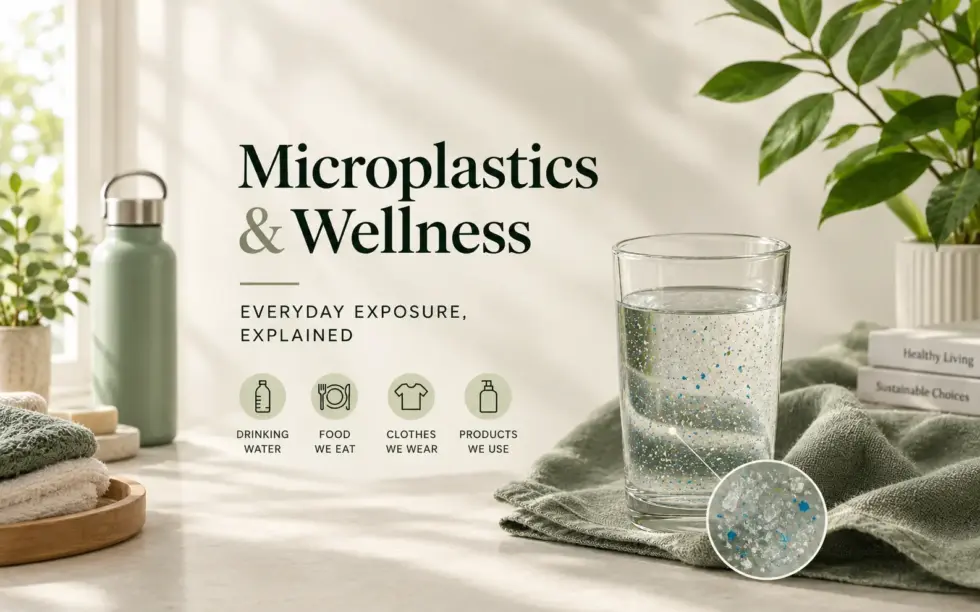
Everyday exposure: where microplastics show up in real life
If you want to understand exposure, forget the ocean for a second. Think “indoors” and “friction.”
Most of us spend a ton of time inside. We live with textiles, furniture, packaged foods, electronics, synthetic flooring, heating and cooling systems moving air around. That is a microplastic friendly environment.
Here are the big everyday pathways.
1. Drinking water (bottled and tap)
Microplastics have been detected in both bottled and tap water in many studies. Bottled water often gets extra attention because of the plastic packaging and the bottling process itself, but tap water can contain particles too, depending on the source and treatment.
The wellness takeaway is not “never drink water.” Obviously. It is more like this:
- If you rely heavily on bottled water, especially single use, it may be worth shifting to filtered tap water stored in glass or stainless steel when you can.
- If your tap water quality is questionable, a good filter can help, though filtration effectiveness varies by type and the particle size.
The tricky part is nanoplastics, because they are harder to measure and harder to filter. The science is evolving and measurement is genuinely difficult.
2. Food, especially certain categories
Microplastics can enter food through the environment, through processing, and through packaging. A few common categories that come up a lot:
- Seafood: filter feeders and small fish can accumulate plastics from water.
- Salt: sea salt and even some other salts have been found to contain microplastic particles in various studies.
- Processed foods: more handling, more packaging, more opportunity for particles.
- Food packaged in plastic: especially when heated.
A very normal example is reheating leftovers in a plastic container. Heat increases the movement of chemicals and can increase shedding of particles. Same with hot liquids in certain plastic lined cups or lids.
Does that mean you need to throw away every plastic container today? Not necessarily. But it does mean: do not microwave plastic if you can avoid it, and do not pour boiling liquid into random plastic vessels and assume it is fine.
3. Air and household dust
This one is under discussed because it is not as visible as food packaging. But indoor air can contain microplastic fibers, particularly from synthetic textiles and carpets.
If you have ever cleaned a dryer lint trap, you have basically seen a microplastic fiber factory. Lint is a mix, but synthetic clothing sheds tiny fibers with every wash and dry cycle.
Indoors, those fibers can settle into dust. Then we inhale them, and kids especially can ingest dust through normal hand to mouth behavior. Not because kids are gross, because kids are kids.
Practical factors that can influence this:
- amount of synthetic textiles and carpets
- ventilation and air exchange
- cleaning habits
- use of high quality vacuum filtration (like HEPA)
4. Clothing, laundry, and textiles
Synthetic fabrics like polyester, nylon, acrylic, and blends shed microfibers. Washing is a big shedding event. Dryers too.
Microfibers go into wastewater and also into indoor air via lint.
If you are into wellness, this is an interesting intersection. We chase breathable athleisure and soft blankets and performance fabrics, but they come with a shedding cost.
You do not need to go full linen monk. But if you are buying new items anyway, choosing more natural fibers some of the time can reduce shedding.
5. Food contact items: cutting boards, utensils, packaging
Plastic cutting boards can shed fragments over time, especially if heavily scored. Plastic utensils and storage containers can wear down too. Packaging can shed with friction.
Again, this is not a moral issue. It is physics.
If you cut aggressively on a plastic board for years, there will be wear. Those worn bits do not evaporate. They go somewhere.
6. Cars, roads, and tires (yes, really)
A major source of microplastics in the environment is tire wear particles. That is not something you can personally fix in your kitchen, but it matters because it contributes to air and dust pollution, especially near roads.
If you walk or run near heavy traffic, you are inhaling more than just “city air.” Some of that particulate load can include tire wear.
I am not saying stop going outside. I am saying exposure is not only about water bottles and straws. It is a bigger system.
7. Personal care products (less than before, but still worth mentioning)
Microbeads in rinse off cosmetics have been restricted or banned in many regions, but product regulations vary. Some products can still contain plastic based ingredients, and packaging itself is plastic heavy.
This is usually not the biggest exposure route compared to air, water, and food, but if you are auditing your daily routine, it is part of the full picture.
What the research says about health, without pretending we know everything
Here is the honest part. Microplastics and nanoplastics are a newer research area, and measuring them consistently is hard. Different studies use different detection methods, different particle sizes, different sample handling. That makes comparisons messy.
But we can still say some meaningful things.
Microplastics have been detected in humans
Multiple studies over recent years have reported microplastics in human samples like stool, blood, lung tissue, and placental tissue. That tells us exposure is real and ongoing.
It does not automatically tell us the health outcome. Presence is not the same as proven harm. But presence is not nothing, either.
Potential concerns: inflammation, oxidative stress, and barrier disruption
In lab and animal studies, microplastics and especially nanoplastics have been associated with things like:
- inflammation
- oxidative stress
- immune responses
- changes in gut microbiome markers
- potential impacts on gut barrier integrity
Again, a lot of this comes from models, not perfect direct real world causation in humans. But these are not random worries. These are plausible biological pathways.
Chemical exposure is part of the story
Plastics can include additives like:
- phthalates (often discussed in relation to endocrine effects)
- bisphenols (BPA is the famous one, but there are replacements like BPS and others)
- flame retardants and stabilizers in certain products
Even if microplastics themselves pass through the body, the chemical side can still matter. And microplastics can potentially act as carriers for other contaminants.
Vulnerable windows: pregnancy, infancy, childhood
If you think in wellness terms, it is usually smart to care extra during sensitive periods.
Babies and kids have higher exposures relative to body weight, and their detox systems and barriers are still developing. Pregnant people are also in a unique physiological state, and fetal development is sensitive to endocrine disruptors and inflammatory signals.
So even if you are not the type to overhaul your whole lifestyle, reducing exposure during these windows is a reasonable, low regret strategy.
The main scientific vibe right now
Not “we are doomed,” and not “it is fine.”
More like: exposure is widespread, and there is enough mechanistic and early human evidence to justify precaution. Especially because the burden is cumulative, and because microplastics are not a single chemical. They are a category of particles with different sizes and materials, interacting with different environments.
Microplastics and wellness: what this can look like day to day
Wellness can get weird if it turns into purity culture. Microplastics are a perfect trigger for that. They are invisible. They are everywhere. You can spiral quickly.
A better approach is to focus on the exposures you can actually reduce with minimal effort, and that also align with other health goals.
This is where the highest leverage changes tend to be.
The “worth it” changes (without reinventing your life)
1. Stop heating food in plastic, especially in the microwave
If you do one thing, do this.
- Move hot food into glass or ceramic before microwaving.
- Avoid pouring boiling liquids into random plastic cups or containers.
- Be cautious with plastic wrap in contact with hot food.
It’s important to note that microwaving food in plastic isn’t just about microplastics; it also involves chemical migration. Heat is the accelerant.
2. Switch a few key items to glass or stainless steel
You do not need to purge your kitchen in a weekend. But over time, replacing a few daily use items can reduce contact.
Good candidates:
- water bottle: stainless steel or glass
- food storage: glass containers for leftovers
- travel mug: stainless steel interior
- baby bottles: glass (if practical and safe for your situation)
If you are on a budget, start with what you use the most. Frequency matters.
3. Filter drinking water if it makes sense for your home
Not everyone needs the same setup, but some options people use:
- activated carbon pitchers
- under sink filters
- reverse osmosis systems
Each has tradeoffs. Some are better for taste and chlorine, some for metals, some for particle reduction. If your goal is microplastics specifically, look for performance data, and be realistic about filter maintenance. A neglected filter is its own problem.
4. Rebalance textiles in your home, slowly
If you are buying new items anyway, consider:
- more natural fibers (cotton, linen, wool, hemp) where comfortable
- fewer ultra cheap fleece blankets that shed like crazy
- washing synthetic athletic wear less aggressively and less often when possible
Also, laundry habits matter:
- wash full loads (less friction)
- use cooler water when appropriate
- consider a microfiber catching laundry bag or filter if you are motivated
Even small changes can reduce fiber shedding.
5. Improve indoor air and dust control
This is not glamorous, but it is quietly powerful.
- vacuum with a HEPA filter if you can
- wet dust instead of dry dusting (dry dusting just redistributes)
- ventilate when outdoor air quality is decent
- consider an air purifier in bedrooms if you live in a high particulate area
This helps with more than microplastics. Dust also carries allergens, pollen, and other irritants.
6. Be picky about tea bags and hot drinks
Some tea bags are made with plastic or have plastic sealing. When steeped in hot water, that is not ideal.
Options:
- loose leaf tea with a stainless steel infuser
- paper tea bags from brands that clearly state they are plastic free
This is one of those small swaps that feels fussy until you do it once, then it is just normal.
7. Choose non plastic cutting surfaces if you are replacing anyway
Wood and bamboo boards have their own care requirements, but they do not shed plastic fragments the way plastic boards can.
Not a rule. Just a reasonable replacement choice when your current board is heavily worn.
8. Reduce single use plastics where it is easy, not where it hurts
If you can:
- buy larger containers instead of many small ones
- use refill options
- use reusable produce bags
- avoid unnecessary plastic wrapped produce when alternatives exist
This is less about personal exposure perfection and more about reducing the overall plastic stream that becomes secondary microplastics over time.
What not to do (because stress is its own health issue)
A few things that tend to backfire.
- Do not try to eliminate microplastics completely. You cannot. Not right now. The goal is reduction, not purity.
- Do not replace everything at once. That is expensive, stressful, and ironically creates more waste.
- Do not fall for “detox” supplements that claim to remove plastics. There is no credible shortcut here. Your liver and kidneys handle a lot, but microplastics are not a simple toxin you flush out with a 7 day cleanse.
- Do not ignore basics like sleep, fiber, movement, and stress management. If you are doing everything “right” about plastics but living on four hours of sleep, that tradeoff is not working in your favor.
Sometimes wellness content forgets that the nervous system is part of the body too. If microplastics awareness turns into constant fear, that is a problem.
A simple exposure audit you can do in 20 minutes
If you like checklists, here is an easy run through. No spreadsheets, no guilt.
In your kitchen
- Do you microwave food in plastic containers?
- Do you drink mostly bottled water?
- Do you store hot leftovers in plastic immediately?
- Are most of your food storage items plastic?
- Do you use plastic wrap on hot food?
Pick one thing to improve this month. Just one.
In your laundry area
- Do you wear mostly synthetic workout clothes?
- Do you wash on hot and dry on high heat often?
- Do you clean the lint trap regularly? (this is also a fire safety thing)
Maybe you add a microfiber catching bag. Or you just wash synthetics on gentler cycles.
In your living space
- Do you have wall to wall synthetic carpet?
- Do you vacuum with a basic vacuum that exhausts fine dust back out?
- Do you open windows sometimes, or is air mostly recirculated?
Maybe you add a HEPA purifier in the bedroom. That alone can be a quality of life upgrade.
The bigger picture, because individual choices are not the whole solution
It is worth saying plainly. Microplastics are not only a personal responsibility issue.
They are driven by:
- packaging and supply chains
- fast fashion and textile manufacturing
- tire and road wear
- waste management systems
- industrial emissions and pellet spills
- product design choices that assume plastic is disposable
Your reusable bottle is nice. But policy, corporate shifts, and infrastructure are what move the needle at scale.
Still. Individual choices can reduce your personal exposure and signal demand. Both matter, just in different ways.
So… should you be worried?
Worried in the sense of panicked? No. That is not helpful.
Aware and a little more intentional? Yes.
Microplastics are a modern exposure we did not really sign up for, and the science is still catching up. The smart move, the sane move, is to reduce high heat plastic contact with food, improve indoor air and dust control, and make gradual swaps toward materials that shed less and leach less.
That is it. Not perfect. Not paranoid. Just a little cleaner, a little calmer, and likely better for your health long term.
Quick recap (the practical version)
If you want the highest impact, lowest drama actions:
- Do not microwave plastic. Use glass or ceramic.
- Use a stainless steel or glass water bottle.
- Filter drinking water if it fits your situation and budget.
- Vacuum and dust smarter, HEPA if possible.
- Reduce synthetic textile shedding over time.
- Be cautious with hot drinks and plastic based tea bags.
- Replace heavily worn plastic cutting boards when you can.
And then move on with your day.
Because wellness is not about living in fear of particles. It is about stacking small, reasonable choices that add up. Over a week, over a year, over a life.
FAQs (Frequently Asked Questions)
What are microplastics and why is their definition important?
Microplastics are small plastic particles typically less than 5 millimeters in size. This category includes even tinier particles called nanoplastics, measured in micrometers or nanometers, which may behave differently inside the body. Understanding their size and types helps clarify how they interact with the environment and our health.
Where do microplastics come from?
Microplastics originate from two main sources: primary microplastics, which are intentionally made small like microbeads and industrial pellets, and secondary microplastics, which form from the breakdown of larger plastic items such as bottles, packaging, synthetic clothing, and car tires due to friction, heat, sunlight, and mechanical wear.
In what everyday places are microplastics commonly found?
Microplastics are found everywhere beyond just oceans. They appear in drinking water (both bottled and tap), various foods like seafood and sea salt, household dust, indoor air from synthetic textiles and carpets, tea bags, synthetic clothing fibers, car interiors, and even inside human bodies including blood and lungs.
How do microplastics enter our food and water?
Microplastics enter food through environmental contamination, processing methods, and packaging materials. For example, seafood can accumulate plastics from polluted waters; sea salt has been found to contain microplastic particles; processed foods often have more packaging contact; reheating food in plastic containers can increase particle shedding. Drinking water can contain microplastics from both bottled sources due to packaging and tap water depending on treatment quality.
What health concerns are associated with microplastic exposure?
Health concerns stem not only from the plastic particles themselves but also from additives like plasticizers or flame retardants within them and environmental contaminants they may carry. Ultrafine particles like nanoplastics might behave differently inside the body compared to larger fragments. However, scientific understanding of direct health impacts is still evolving.
What practical steps can I take to reduce my exposure to microplastics without drastic lifestyle changes?
To reduce exposure: consider shifting from single-use bottled water to filtered tap water stored in glass or stainless steel; avoid microwaving food in plastic containers or pouring boiling liquids into plastic vessels; be mindful of synthetic clothing shedding fibers indoors; regular cleaning can reduce household dust containing fibers. These steps help minimize exposure while maintaining everyday comfort.