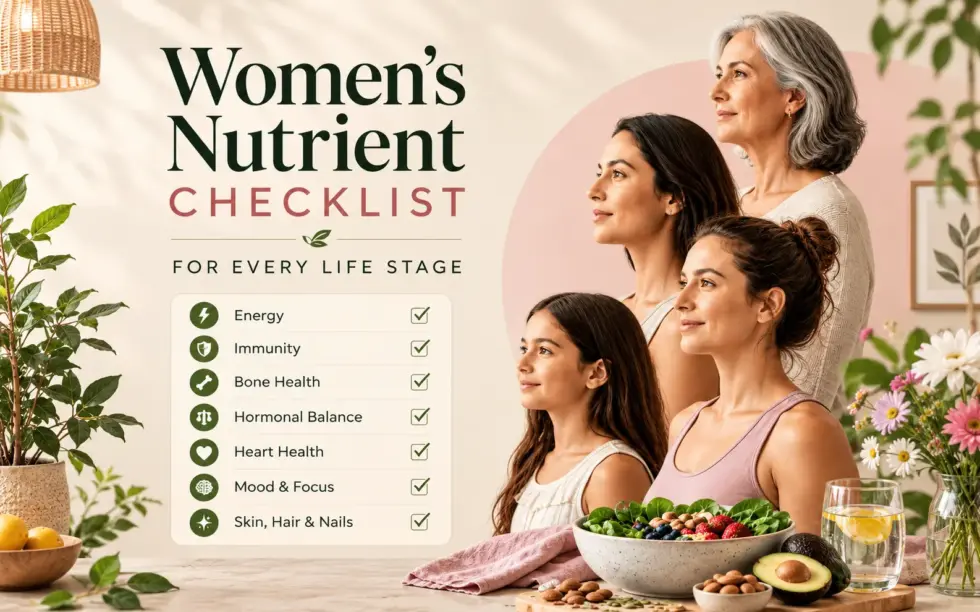

I wish someone had handed me a simple women’s nutrient checklist years ago.
Not in a scary, medical textbook way. More like… here are the few things your body keeps asking for, over and over, just in different outfits depending on your age, hormones, stress, sleep, and whether you are currently living on iced coffee and determination.
Because women’s nutrition checklist online is usually either too vague (just “eat clean”) or way too intense (take seventeen supplements before breakfast). Most of us need something in the middle.
So this is that.
A practical, real life checklist of nutrients that matter for women. Broken down by life stage. With food sources first, supplements second. And some straight talk on what changes when you hit puberty, start a career, get pregnant, go through perimenopause, or just… try to keep your energy stable long enough to make it through Thursday.
Quick note. This is education, not medical advice. If you are pregnant, have a condition (thyroid issues, anemia, PCOS, endometriosis, IBS, kidney disease, etc.), or take meds, it’s worth checking labs and talking to a qualified clinician before adding higher dose supplements.
Alright. Let’s make this simple.
The “always” nutrients (no matter your age)
Before we split into stages, there’s a core list that keeps showing up. These are the nutrients women commonly fall short on, or have higher needs for, or both.
1) Protein
Not a vitamin, I know. Still. It’s the base layer.
Protein supports muscle, skin, hair, immune function, blood sugar stability, and hormone production. It also makes it easier to actually feel full, which matters more than people admit.
Easy food sources
- Eggs, Greek yogurt, cottage cheese
- Chicken, turkey, fish, lean meat
- Tofu, tempeh, edamame
- Lentils, beans (pair with grains for a better amino acid profile)
- Protein powder if needed (whey, pea, soy, or a blend)
Gut check If you crash mid afternoon, feel snacky all day, or struggle to build strength, check your protein consistency first.
2) Iron
Women lose iron through menstruation. And even if you eat “healthy,” iron can still run low, especially if your periods are heavy, you are endurance training, you are vegetarian, or you’ve been pregnant.
Low iron can feel like fatigue, shortness of breath, restless legs, hair shedding, feeling cold, and brain fog. Not always dramatic. Sometimes it’s just… you feel like you’re moving through wet cement.
Best food sources
- Red meat, liver (very iron dense)
- Sardines, clams, mussels
- Lentils, beans, tofu, spinach (non heme iron, less absorbable)
Absorption tips
- Pair iron foods with vitamin C (citrus, bell pepper, strawberries)
- Avoid taking iron with coffee, tea, or calcium at the same time
Lab note Ferritin is the storage marker many women need to check, not just hemoglobin.
3) Calcium
Calcium is not just bones. It’s also muscle contraction, nerve signaling, and heart rhythm. Women’s lifetime bone health is heavily influenced by how well we build and maintain bone in teens through early adulthood, then preserve it later.
Food sources
- Yogurt, milk, kefir
- Sardines with bones
- Calcium set tofu
- Fortified plant milks
- Bok choy, kale (some greens are better than others)
4) Vitamin D
Vitamin D helps calcium absorption, immune function, mood, and muscle. Many women are low because indoor life, sunscreen (still important), darker skin tones, or living far from the equator makes it harder to get enough from sun.
Sources
- Sun exposure (variable, not reliable for many)
- Fatty fish (salmon, sardines)
- Egg yolks
- Fortified dairy or plant milk
Supplement reality For many people, vitamin D is one of the few supplements that actually makes sense. But dose should ideally be based on labs.
5) Magnesium
Magnesium is involved in hundreds of enzyme reactions. It supports sleep, stress response, muscle relaxation, PMS symptoms, migraines for some, and regularity.
Food sources
- Pumpkin seeds, chia, flax
- Dark chocolate (yes)
- Beans, lentils
- Leafy greens
- Nuts, whole grains
Common supplement forms
- Magnesium glycinate (often used for sleep, gentler)
- Magnesium citrate (can help constipation, can loosen stool)
- Magnesium oxide (cheap, less absorbable for many)
6) Omega 3 fats (EPA and DHA)
Omega 3s support brain health, heart health, inflammation balance, and pregnancy and infant brain development. Many women do not eat fatty fish often enough.
Food sources
- Salmon, sardines, anchovies, herring
- Trout
- For plant omega 3 (ALA): flax, chia, walnuts (conversion to EPA/DHA is limited)
7) Folate (and other B vitamins)
Folate is critical for DNA synthesis, red blood cell production, and pregnancy related neural tube development. B12 matters especially for vegetarians and vegans.
Food sources
- Lentils, leafy greens, beans (folate)
- Eggs, dairy, fish, meat (B12)
- Fortified foods can help
Folate vs folic acid Food folate is naturally occurring. Folic acid is the synthetic form used in many supplements and fortified foods. Some people prefer methylfolate, but it is not automatically “better” for everyone. Don’t overcomplicate unless you have a reason.
8) Iodine and selenium (thyroid support)
Thyroid function matters for energy, metabolism, fertility, pregnancy, hair, skin, and mood. Iodine and selenium are key nutrients here, but more is not always better.
Food sources
- Iodine: iodized salt, seaweed (careful, can be very high), dairy, eggs
- Selenium: Brazil nuts (1 to 2 is plenty), seafood, eggs
9) Choline
Choline supports liver health, brain function, and pregnancy fetal brain development. Many women do not hit adequate intake.
Food sources
- Eggs (especially yolks)
- Salmon
- Chicken
- Soybeans
That’s the backbone. Now let’s make it specific by life stage, because needs shift.
Life stage 1: Teens and early puberty (roughly 10 to 18)
This is when bone building ramps up, periods start, and appetite can feel like a moving target. Also, this is when diet culture tends to sneak in, which is… not helpful when your body is trying to grow.
Top nutrient priorities
Iron Once menstruation begins, iron needs go up. If your teen is constantly tired, gets dizzy when standing, or is always cold, iron status is worth checking.
Calcium + vitamin D Peak bone mass is built mostly before your mid 20s. This is a big deal. Think of it like a bone savings account.
Protein For growth, muscle, sports, and satiety. Teens skipping breakfast and then going hard on snacks later is super common.
Zinc Supports growth, immune function, skin. Often overlooked.
Omega 3 Brain development, mood support.
Food first checklist
- 2 to 3 calcium rich servings daily (yogurt, milk, fortified milk, tofu)
- A protein anchor at each meal (eggs, yogurt, chicken, beans)
- Iron foods several times a week (meat, lentils, fortified cereal) plus vitamin C
- Nuts, seeds, olive oil, fatty fish when possible
Common pitfalls
- Heavy periods + low iron intake
- Not enough calories overall
- Swapping meals for coffee, energy drinks, or ultra processed snacks
- Avoiding dairy without replacing calcium elsewhere
Life stage 2: College, early career, and your 20s
This stage is busy, messy, and often sleep deprived. Which affects appetite, cravings, digestion, skin, periods, everything.
Also, this is when you may start hormonal birth control, train harder, or get serious about fitness. Nutrient needs can quietly shift.
Top nutrient priorities
Protein Not because you need to become a gym person. Because consistent protein helps energy, mood stability, and body composition.
Iron Still a big one if you menstruate. Especially with endurance workouts.
Magnesium Stress, sleep, PMS, migraines. This is where magnesium often shines.
Omega 3 Inflammation balance, brain health, skin.
Folate and B12 Especially if you are vegetarian, vegan, or not eating much animal food.
Fiber Not a “nutrient” in the classic sense but it matters. Gut health, estrogen metabolism (which could be affected by heavy periods), blood sugar.
Food first checklist
- Aim for a real breakfast 3 to 5 days a week at least
- Something like Greek yogurt + fruit + nuts. Or eggs + toast. Doesn’t need to be perfect.
- Beans or lentils a few times weekly
- Fatty fish 1 to 2 times weekly (or consider fish oil if you never eat it)
- A handful of nuts or seeds most days
Common pitfalls
- Chronic under eating during the day, overeating at night
- High caffeine, low minerals
- Alcohol displacing nutrient dense meals
- “Healthy” diets that are actually low in total calories and iron
Life stage 3: Preconception (the 3 to 6 months before trying)
If pregnancy is a possibility anytime soon, this is the stage where nutrition can make pregnancy easier, not just healthier.
You do not need to be perfect. But you do want to fill in the big gaps early.
Top nutrient priorities
Folate Ideally starting before conception because neural tube development happens very early.
Iron Pregnancy will increase iron needs dramatically. Starting with low stores makes fatigue worse later.
Iodine Supports thyroid function, which matters for fertility and pregnancy brain development.
Choline One of the most missed nutrients for women planning pregnancy.
Omega 3 DHA Supports fetal brain and eye development later, but building the habit now helps.
Vitamin D Low vitamin D is common. Worth checking.
Practical checklist
- Prenatal vitamin selected before pregnancy, not after the positive test
- (Not all prenatals are equal. Many are low in choline and DHA, and sometimes low in magnesium.)
- Add eggs regularly if you tolerate them (choline, protein)
- Include seafood choices low in mercury (salmon, sardines)
- Get ferritin and vitamin D checked if possible
A quick word on prenatals
A prenatal is not a replacement for food. It is insurance. The “best” prenatal is the one you tolerate, take consistently, and that fits your needs and labs.
Life stage 4: Pregnancy (trimester by trimester feel, but keep it simple)
Pregnancy nutrition advice can get overwhelming fast. The core idea is this.
You are building a human. Your blood volume expands. Your nutrient needs rise. And sometimes nausea makes you survive on carbs for weeks. That is normal. We work with it.
Big nutrient priorities in pregnancy
Folate Critical early on.
Iron Needs increase significantly as pregnancy progresses. Many women become anemic or borderline.
Choline Supports fetal brain and spinal cord development.
Iodine Important for fetal brain development and maternal thyroid.
Calcium + vitamin D Bone support, blood pressure regulation.
Omega 3 DHA Brain and eye development.
Protein Higher needs. Also helps stabilize blood sugar.
Fiber + magnesium Constipation is common. So is reflux. Fun times.
Food first checklist
- Protein at every meal, even small (Greek yogurt, eggs, chicken soup, tofu)
- Iron foods often, paired with vitamin C
- Calcium rich foods daily
- Omega 3 fish 1 to 2 times weekly, choose low mercury options
- Fluids + electrolytes if you are vomiting or struggling with hydration
Common supplement gaps
- DHA: many prenatals do not include enough, or any
- Choline: often missing or low
- Iron: some prenatals include iron, some don’t, and needs can exceed prenatal amounts
Safety note
Avoid high dose vitamin A (retinol) supplements in pregnancy unless prescribed. Food sources are fine. Also be careful with herbal supplements, “detox” blends, and megadoses. Pregnancy is not the time for experiments.
For a more detailed understanding of pregnancy nutrition, including specific nutrient requirements and safety notes regarding supplementation, refer to the comprehensive resources available online. It’s essential to prioritize these nutrients as they play a crucial role in both maternal health and fetal development.
Life stage 5: Postpartum and breastfeeding
This stage is intense. Sleep is fragmented, healing is real, and you are either breastfeeding or not, but either way your body is recovering.
A lot of women feel depleted and assume it’s just motherhood. Sometimes it is, and sometimes it is iron, vitamin D, not enough calories, not enough protein, or thyroid shifts.
Top nutrient priorities
Calories and protein If you are breastfeeding, you need more energy. If you are not, you still need enough to heal. Protein is non negotiable here.
Iron Blood loss during birth plus postpartum bleeding can lower iron. Many women leave the hospital with low iron and no plan.
Omega 3 Supports mood and inflammation balance. Postpartum mood is complex, but nutrition is part of the foundation.
Iodine + selenium Especially if breastfeeding, iodine needs are higher.
Vitamin D Important for mom, and often recommended for baby too. Talk to your pediatrician about infant vitamin D drops if breastfeeding.
Magnesium Stress, sleep quality, muscle tension.
Food first checklist
- Eat something protein rich within an hour of waking, even if it’s quick
- (yogurt, protein shake, eggs, leftovers)
- Iron rich meals a few times a week
- Keep snacks that are actually nourishing
- Think trail mix, cheese + fruit, hummus + crackers, protein bars with decent ingredients
- Hydration. Especially with breastfeeding.
Common pitfalls
- Trying to “bounce back” with dieting
- Skipping meals because baby schedules are chaos
- Living on coffee and whatever is easiest
- Ignoring persistent fatigue that might be anemia or thyroid related
Understanding these aspects of postpartum nutrition can significantly help in recovery and overall well-being. It’s crucial to prioritize a balanced diet rich in essential nutrients during this challenging phase of life.
Life stage 6: Perimenopause (often mid 30s to late 40s, but varies)
Perimenopause can start earlier than most people think. Sometimes it shows up as anxiety, sleep issues, heavier periods, mood changes, migraines, stubborn weight changes, or feeling like your body is doing random things.
Estrogen and progesterone fluctuate. Cortisol resilience matters. Muscle mass starts to become harder to maintain unless you protect it on purpose.
Top nutrient priorities
Protein This is where protein really becomes your friend. It supports muscle retention, metabolism, appetite regulation, and strength.
Iron (sometimes) Some women have heavier periods in perimenopause, so iron needs might go up. Others start spacing periods out and iron needs drop. This is why labs matter.
Magnesium Sleep disruption and stress response support.
Calcium + vitamin D Bone density starts to become more of a concern. Building earlier helps, but maintaining now is key.
Omega 3 Heart health becomes increasingly important. Inflammation and joint pain can flare for some.
Fiber Supports gut health, blood sugar, cholesterol, estrogen metabolism.
Food first checklist
- Protein at breakfast, not just dinner
- Strength training plus protein, the combo matters
- 25 to 35 grams fiber daily from whole foods
- Calcium rich foods daily, vitamin D checked occasionally
- Omega 3 fish weekly
Common pitfalls
- Under eating protein, then feeling hungry and blaming “hormones”
- Cutting carbs too hard, worsening sleep and stress
- Relying on wine for stress relief, which backfires on sleep and hot flashes for many
Life stage 7: Menopause and beyond (50s, 60s, 70s…)
After menopause, estrogen drops more consistently. Risks shift. Bone health and heart health rise to the top. Muscle loss accelerates if you do nothing about it. The goal becomes strength, stability, and keeping your independence. That sounds dramatic but it’s just true.
Top nutrient priorities
Protein Higher protein needs per meal are common in older adults due to “anabolic resistance,” meaning muscles respond less robustly to smaller doses.
Calcium + vitamin D To reduce fracture risk and support bone maintenance.
Vitamin B12 Absorption can decrease with age, and with common meds like metformin or acid reducers. B12 matters for nerves, cognition, and red blood cells.
Omega 3 Cardiovascular and brain support.
Magnesium Muscle function, blood pressure support, sleep.
Potassium For blood pressure and cardiovascular health. Many people don’t get enough.
Food first checklist
- Protein distributed across meals
- (not just one big dinner)
- Calcium rich foods daily
- Fatty fish weekly
- Plenty of fruits, vegetables, beans, potatoes, yogurt, and leafy greens for potassium and magnesium
- Ask your clinician about B12 testing if fatigue, tingling, memory issues, or long term vegetarian diet
The women’s nutrient checklist, condensed (save this part)
If you want the “sticky note on the fridge” version, here it is.
Every stage: your baseline
- Protein daily, at each meal if you can
- Iron (especially if menstruating)
- Calcium + vitamin D
- Magnesium
- Omega 3s (EPA/DHA)
- Folate + B12
- Iodine + selenium (thyroid support)
- Fiber + hydration
Teens
- Calcium + vitamin D
- Iron
- Protein
- Zinc, omega 3
20s and early 30s
- Protein
- Iron
- Magnesium
- Omega 3
- Folate/B12, fiber
Preconception
- Prenatal with folate
- Iron status (ferritin)
- Iodine
- Choline
- DHA
- Vitamin D
Pregnancy
- Folate
- Iron
- Choline
- Iodine
- Calcium + vitamin D
- DHA
- Protein, fiber, magnesium
Postpartum/breastfeeding
- Protein + adequate calories
- Iron
- Omega 3
- Iodine/selenium
- Vitamin D
- Magnesium, hydration
Perimenopause
- Protein
- Magnesium
- Calcium + vitamin D
- Fiber
- Omega 3
- Iron based on bleeding patterns and labs
Menopause+
- Protein per meal
- Calcium + vitamin D
- B12
- Omega 3
- Magnesium + potassium
- Fiber
Supplement talk (quick, honest, not salesy)
Supplements can help, but they should plug gaps, not replace meals. Also, more is not better. Especially with iron, iodine, vitamin A, and fat soluble vitamins.
A reasonable approach for many women looks like this:
- Use labs for iron (ferritin), vitamin D, B12 if needed
- Pick a few targeted supplements rather than a whole cabinet
- Reassess every few months, not forever
Common “maybe” supplements by situation
- Iron: if low ferritin or anemia, especially with heavy periods
- Vitamin D: if low or minimal sun exposure
- Magnesium glycinate: sleep, stress, muscle tension
- Omega 3 fish oil: if you rarely eat fatty fish
- Prenatal: preconception, pregnancy, postpartum (especially breastfeeding)
- B12: vegans/vegetarians, older adults, low labs
- Creatine (optional): increasingly supported for strength and cognition in women too, but discuss if pregnant or breastfeeding and consider medical context
If you want, you can tell me your age, whether you menstruate, your diet style (omnivore, vegetarian, vegan), and your main goal (energy, hair loss, fertility, training, perimenopause symptoms) and I can help you narrow it to a realistic short list.
A few “real life” meal patterns that quietly fix a lot
Not meal plans. Just patterns that make hitting nutrients easier without obsessing.
The “protein breakfast” pattern
- Greek yogurt + berries + chia + nuts
- or
- Eggs + toast + fruit
- or
- Protein smoothie with milk, banana, nut butter, spinach
Why it works. Protein, calcium, magnesium, fiber. Blood sugar is steadier. You snack less out of panic later.
The “iron builder” pattern
- A few times a week: red meat, sardines, lentils, or tofu
- Always pair with vitamin C food
- Don’t stack it with coffee or calcium at the same moment
The “bone support” pattern
- 2 calcium rich foods daily
- Vitamin D checked and supplemented if needed
- Strength training (because bone responds to load)
The “omega 3 default” pattern
- Salmon once a week, sardines once a week
- or
- Fish oil daily if you truly won’t eat fish
Wrapping up (because this is a lot, but also not that complicated)
Women’s bodies change. Hormones change. Life changes. But the nutrient foundations are surprisingly consistent.
Protein. Iron. Calcium. Vitamin D. Magnesium. Omega 3s. Folate and B12. Iodine and selenium. Fiber.
If you focus on those, most of the noise falls away. And you can stop chasing random wellness trends that make you feel like you are always doing something wrong.
Start with one thing. Seriously. Maybe it’s adding a protein breakfast. Maybe it’s getting ferritin checked. Maybe it’s eating salmon once a week. Tiny, boring steps. They add up.
And that’s kind of the whole point.
FAQs (Frequently Asked Questions)
What are the essential nutrients that women need regardless of age?
Women commonly need consistent intake of protein, iron, calcium, vitamin D, magnesium, omega-3 fats (EPA and DHA), folate (and other B vitamins), iodine, and selenium. These nutrients support muscle, bone health, immune function, hormone production, brain health, and thyroid support across all life stages.
Why is protein important for women’s nutrition?
Protein supports muscle, skin, hair, immune function, blood sugar stability, and hormone production. It also helps with feeling full and maintaining energy levels. Good sources include eggs, Greek yogurt, lean meats, tofu, lentils, and protein powders if needed.
How can women improve iron absorption from their diet?
To enhance iron absorption, pair iron-rich foods with vitamin C sources like citrus fruits or bell peppers. Avoid consuming iron supplements or iron-rich meals alongside coffee, tea, or calcium-rich foods as they can inhibit absorption. Checking ferritin levels is important to assess iron stores.
What role does vitamin D play in women’s health and how can it be obtained?
Vitamin D aids calcium absorption for bone health, supports immune function, mood regulation, and muscle function. It can be obtained through sun exposure (though this varies), fatty fish like salmon and sardines, egg yolks, and fortified dairy or plant milks. Supplementation may be necessary based on lab results.
Why are magnesium and omega-3 fats important for women?
Magnesium is involved in hundreds of enzyme reactions supporting sleep quality, stress response, muscle relaxation, PMS symptom relief, migraine management for some women, and digestive regularity. Omega-3 fats (EPA and DHA) support brain health, heart health, inflammation balance, and fetal brain development during pregnancy. Foods rich in magnesium include pumpkin seeds and leafy greens; omega-3s are abundant in fatty fish like salmon.
What should women consider before taking supplements for these nutrients?
While food sources are preferred first-line options for nutrient intake, some women may need supplements based on individual needs or deficiencies. It’s important to consult a qualified healthcare provider before starting higher dose supplements—especially if pregnant or managing conditions like thyroid issues or anemia—to ensure safety and appropriate dosing guided by lab tests.