
If you have been feeling weirdly tired. Like, not just sleepy. More like your body is moving through mud.
Or you are getting out of breath walking up stairs that never used to bother you. Or your nails are breaking, your hair is shedding, you feel cold all the time, your brain is foggy, your workouts feel pathetic.
A lot of people blame stress first. Or not sleeping. Or being out of shape.
Sometimes it is those things. But sometimes it is iron. And it is shockingly common.
The good news is that iron deficiency is one of the more straightforward things to improve, once you actually know what to eat and how to eat it. Because yes, there is a right way. Tossing a handful of spinach into a smoothie and calling it a day is not always going to cut it.
This is the practical guide. The fast fix food list. And also, the little mistakes that make iron foods not work.
Quick note, though. If you suspect you are seriously iron deficient, especially if you are pregnant, have very heavy periods, have ongoing fatigue, or you have any gut issues, you should get labs done. Ferritin especially. Food helps a lot, but some people need supplements, and you do not want to guess.
Alright. Foods.
First, what iron actually does (and why you feel so bad without it)
Iron is a mineral your body uses to make hemoglobin, the protein in red blood cells that carries oxygen. Low iron can mean less oxygen delivery. And that ripples into everything.
That is why iron deficiency can look like:
- Constant fatigue, low energy, weak feeling
- Shortness of breath with normal activity
- Headaches, dizziness
- Pale skin, dark circles, feeling cold
- Restless legs (yes, really)
- Hair loss, brittle nails
- Brain fog, poor concentration
- Cravings for ice or weird non food things (pica)
Not everyone gets all of these. Some people just feel off.
And here is an annoying thing. You can be low in iron stores for a while before your hemoglobin drops. Meaning you can have symptoms before your basic blood count looks “normal.” Ferritin is the storage marker that often reveals what is going on.
The two types of iron in food (this matters a lot)
There is heme iron and non heme iron.
Heme iron comes from animal foods. It is absorbed much better. Typically around 15 to 35 percent absorption.
Non heme iron is found in plant foods. Absorption is lower and more variable. Maybe 2 to 20 percent, and it swings depending on what you eat it with.
So if you want to fix iron deficiency fast, heme iron foods make a huge difference. If you eat plant based, you can still do it, but you have to be more strategic.
The “fix it fast” rules before we get to the food list
These are the small tweaks that make iron rich meals actually raise your iron.
1. Pair iron with vitamin C
Vitamin C can boost non heme iron absorption significantly.
Think: citrus, bell peppers, strawberries, kiwi, tomatoes, broccoli.
Spinach is fine. Spinach plus lemon or strawberries is better.
2. Do not sabotage your iron meal with inhibitors
A few things reduce iron absorption, especially non heme iron:
- Tea and coffee (even decaf), because of polyphenols and tannins
- Calcium (supplements, lots of dairy in the same meal)
- Phytates (in grains and legumes, reduced by soaking, sprouting, fermenting)
- Some antacids can reduce stomach acid, which can matter for absorption
This does not mean you can never drink coffee. It means if you are trying to fix low iron, do not have coffee right with your iron heavy meal.
A simple approach: keep tea and coffee at least 1 to 2 hours away from iron rich meals.
3. Cook in cast iron when you can
It is not magic. But acidic foods cooked in cast iron, like tomato sauce, can pick up iron. Every little bit helps, especially for plant based eaters.
4. You need consistency, not one perfect day
If you have been low for months, you are not fixing it with one liver dinner. You fix it by building iron into your week like it is a habit.
Alright. Food list time.
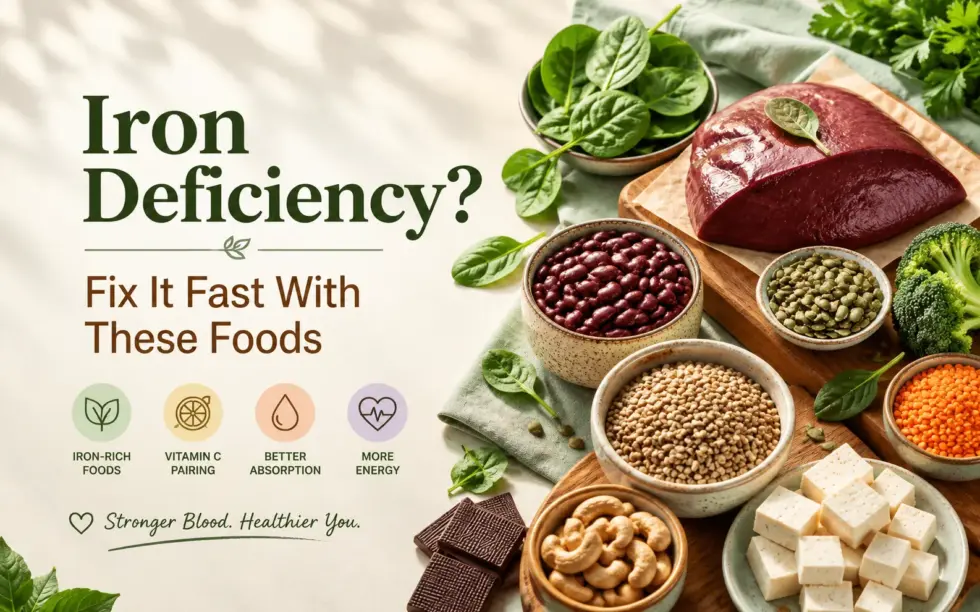
Best foods to fix iron deficiency fast (highest impact first)
1. Clams (and other bivalves)
Clams are one of the most iron dense foods you can eat. They are basically the cheat code.
How to eat them without making it weird:
- Canned clams tossed into pasta with tomato sauce
- Clam chowder, if you tolerate dairy fine, but keep in mind calcium can reduce absorption a bit
- Clams in a garlicky broth with lemon
Also great: mussels, oysters. Seafood iron is heme iron. More absorbable. Easier win.
2. Liver (chicken liver or beef liver)
Yes, liver. I know. People either love it or they would rather do anything else.
But if you want fast. This is fast. Liver contains a lot of iron, and also vitamin A, B12, folate. It is like nature’s multivitamin.
Low drama ways to eat it:
- Chicken liver pate on toast with a squeeze of lemon
- Mix a small amount of minced liver into ground beef for tacos or bolognese
- If you are new to it, start with chicken liver. It is milder.
A note: liver is extremely high in vitamin A. Pregnant people should be careful and follow medical guidance.
3. Red meat (beef, lamb, venison)
This is a classic for a reason. Heme iron, solid amount per serving, and it is filling.
Easy options:
- Beef chili with tomatoes and bell peppers (hello vitamin C)
- Steak with roasted broccoli and lemon
- Lamb meatballs with tomato sauce
If you do not want red meat daily, fine. You do not have to. But if you are truly low, using it a few times a week can move the needle.
4. Sardines
Sardines are underrated. They are affordable, shelf stable, and they bring iron plus omega 3s.
Ways to make sardines taste better:
- Mash with lemon and mustard, eat on crackers
- Add to pasta with tomato sauce, capers, chili flakes
- Put on toast with sliced tomatoes
5. Dark meat turkey and chicken
Not as iron heavy as red meat, but still helpful. Especially if you eat bigger portions.
Try pairing with vitamin C foods. Like chicken thighs with a citrus salad. Or turkey chili with tomatoes.
6. Eggs (especially the yolks)
Eggs contain some iron. Not the highest, but easy to eat consistently.
A good “iron supportive” breakfast:
- Two eggs + sautéed spinach + tomatoes
- Add strawberries or orange on the side
- Save the coffee for later
7. Beans and lentils
These are non heme iron, but still important, especially if you are plant based. Lentils in particular are a staple iron food.
Make them more absorbable:
- Pair with vitamin C foods
- Use soaked or sprouted legumes when possible
- Add lemon juice at the end of cooking
- Try fermented options like tempeh too
Meal ideas:
- Lentil curry with tomatoes and bell peppers
- Black bean tacos with salsa and lime
- Chickpea salad with red peppers and lemon dressing
8. Tofu and tempeh
Soy foods can be good sources of iron, and they are protein dense. Tempeh is also fermented, which can help with digestion and possibly reduce some inhibitors.
Try:
- Tofu stir fry with broccoli and bell peppers
- Tempeh bowls with citrusy dressing
- Add pineapple, kiwi, or orange on the side for vitamin C
9. Pumpkin seeds (pepitas)
A simple add on that actually matters. Pumpkin seeds have iron and are easy to snack on.
Use them like this:
- Sprinkle on oatmeal with berries
- Add to salads with lemon vinaigrette
- Blend into pesto or sauces
- Mix into trail mix with dried fruit (dried apricots especially)
10. Spinach (and leafy greens, but do not over hype them)
Spinach is iron rich on paper, but the iron is non heme and spinach is high in oxalates, which can reduce absorption.
So yes, eat spinach. Just do not rely on it as your main fix.
Make spinach work harder:
- Sauté spinach and finish with lemon juice
- Spinach salad with strawberries and citrus dressing
- Add red peppers to your greens
Also great greens: kale, collards, swiss chard. Still non heme, but part of the bigger picture.
11. Quinoa
Quinoa has more iron than many grains, plus protein.
Do:
- Quinoa bowl with roasted peppers and a lemon tahini sauce
- Quinoa salad with tomatoes, parsley, and citrus
- Quinoa with lentils, then add a vitamin C side
12. Fortified cereals and breads
Not glamorous, but effective. Many cereals are fortified with iron and can contribute a lot, especially for kids and teens.
The issue is sugar. Some cereals are basically dessert.
Pick lower sugar options and eat with vitamin C fruit. If you eat dairy milk, keep in mind calcium can interfere a bit. You can use a non calcium fortified option for that meal, or just focus on your other meals.
13. Dried apricots, raisins, prunes
Not as dense as meat, but they add up.
They are also easy to pair with vitamin C:
- Dried apricots plus a mandarin
- Raisins in oatmeal with strawberries
- Prunes with orange slices
14. Dark chocolate (yes, but be sensible)
Cocoa contains non heme iron. Dark chocolate can contribute, but it is not a medical treatment. Think of it as a supporting player.
A small square after an iron friendly dinner is fine. But do not use “I ate chocolate” as your plan.
The best “iron boost” meal combos (simple and realistic)
Here are combos that actually work in normal life.
Combo 1: Beef chili that pulls its weight
- Ground beef or turkey
- Kidney beans or black beans
- Tomatoes, tomato paste
- Bell peppers
- Finish with lime juice
- Optional: side of fruit like kiwi or orange
This hits iron, protein, and vitamin C in the same bowl.
Combo 2: Lentil bowl with a vitamin C kicker
- Lentils
- Quinoa
- Roasted broccoli and red peppers
- Lemon tahini sauce
- Strawberries on the side
Plant based but designed for absorption.
Combo 3: Sardine toast lunch
- Sardines mashed with lemon and mustard
- Whole grain toast
- Tomato slices
- Side of citrus or berries
Fast, cheap, high impact.
Combo 4: Clam pasta (weeknight version)
- Canned clams
- Garlic, olive oil
- Tomato sauce
- Parsley and lemon
It tastes like effort. It is not.
Combo 5: Spinach omelet that is not pointless
- Eggs
- Spinach sautéed with garlic
- Tomatoes or bell peppers
- Fruit on the side
- Coffee later, not now
What to avoid when you are trying to fix iron quickly
You do not have to avoid these foods forever. This is more about timing.
Coffee and tea with meals
If you drink tea or coffee with breakfast and breakfast is your main iron meal, you might be blocking a chunk of absorption.
Move your coffee to mid morning. It feels annoying for like three days, then it becomes normal.
Calcium supplements with iron meals
If you take calcium, do it at a different time than your iron heavy meal.
Huge dairy loads right with your iron
This is not a dairy hate thing. It is just absorption chemistry.
If you are having an iron focused dinner. Maybe do not make it a giant cheesy meal plus a glass of milk plus yogurt dessert. Spread the calcium out.
High fiber bran overload at the same time
Fiber is great. But some high bran cereals can reduce mineral absorption. If you rely on fortified cereal for iron, keep it balanced.
“How fast will I feel better?” (realistic timeline)
This varies a lot depending on how low you are, what is causing it, and whether you are also supplementing.
Some people notice energy improvements in a couple of weeks when they fix diet and timing. For others, iron stores take months to rebuild.
Also, if the cause is ongoing, like heavy menstrual bleeding, you can eat all the lentils on earth and still struggle. That is where working with a clinician matters.
Food is powerful. But you want the whole picture.
Why you might be iron deficient in the first place (so it does not keep happening)
Common reasons:
- Heavy periods
- Pregnancy and postpartum
- Not eating much heme iron (vegetarian or low meat intake)
- Frequent blood donation
- Endurance training (runners often deal with this)
- Gut issues that reduce absorption (celiac, IBD, chronic gastritis)
- Acid reducing medications affecting absorption
- Low overall calorie intake
If you can spot your reason, you can fix the loop, not just the numbers.
A simple 7 day “iron food” plan (not strict, just a template)
You do not need perfection. You need repetition.
Day 1
- Breakfast: eggs + tomatoes + orange
- Lunch: lentil soup with lemon
- Dinner: beef or turkey chili with bell peppers
Day 2
- Breakfast: oatmeal + pumpkin seeds + strawberries
- Lunch: tofu stir fry with broccoli and red pepper
- Dinner: sardine pasta with tomato sauce
Day 3
- Breakfast: fortified cereal + kiwi
- Lunch: chickpea salad with lemon dressing
- Dinner: lamb or beef meatballs with tomato sauce
Day 4
- Breakfast: spinach omelet + fruit
- Lunch: quinoa bowl with roasted peppers
- Dinner: clams in tomato based pasta or stew
Day 5
- Breakfast: toast with peanut butter + strawberries (not huge iron, but supportive)
- Lunch: black bean tacos with salsa and lime
- Dinner: dark meat chicken with broccoli and lemon
Day 6
- Breakfast: smoothie with berries and a vitamin C base, plus pumpkin seeds
- Lunch: tempeh bowl with citrus dressing
- Dinner: red meat dinner again, keep it simple
Day 7
- Breakfast: eggs + fruit
- Lunch: leftover chili or lentils
- Dinner: seafood night, mussels or sardines, plus a tomato salad
Keep coffee and tea away from the iron heavy meals if possible. That one change alone can be surprisingly effective.
Quick FAQ (because people always ask these)
Can I fix iron deficiency with food alone?
Sometimes, yes. If deficiency is mild and the cause is dietary, food can correct it. If deficiency is moderate to severe, or you are losing iron faster than you can replace it, you may need supplements or treatment. Labs guide this.
Is spinach the best iron food?
Not really. It is useful, but not the fastest fix. Heme iron foods like clams, liver, red meat, sardines tend to be higher impact.
What about cooking spinach, does that help?
Cooking reduces volume so you can eat more, and it can reduce some compounds. It is still non heme iron, so pairing with vitamin C remains the key move.
Should I take iron supplements?
Only if your clinician recommends it or your labs clearly show you need it. Supplements can cause constipation and nausea and can be dangerous in excess. Do not freestyle high dose iron.
What is the best vitamin C pairing?
Anything you will actually eat. Citrus, strawberries, kiwi, bell peppers, tomatoes. Even a squeeze of lemon over your meal helps.
Let’s wrap this up
If you are trying to fix iron deficiency fast, focus on the foods that actually move the needle.
Clams. Liver. Red meat. Sardines. Dark meat poultry. Then stack your plant iron foods behind that, lentils, beans, tofu, pumpkin seeds, greens, quinoa. And do the absorption basics. Vitamin C with your iron, and keep coffee, tea, and calcium away from those meals.
That is the boring truth. It works.
If you want, tell me what you typically eat in a day and whether you eat meat or not. I can map out a simple iron focused plan that fits your routine without turning your life into a food project.
FAQs (Frequently Asked Questions)
What are common symptoms of iron deficiency?
Common symptoms of iron deficiency include constant fatigue, low energy, weakness, shortness of breath during normal activities, headaches, dizziness, pale skin, dark circles under the eyes, feeling cold frequently, restless legs, hair loss, brittle nails, brain fog, poor concentration, and cravings for ice or non-food items (pica).
How does iron function in the body and why does its deficiency cause these symptoms?
Iron is a crucial mineral your body uses to make hemoglobin—the protein in red blood cells responsible for carrying oxygen. Low iron levels reduce oxygen delivery throughout the body, leading to symptoms like fatigue and poor concentration. Iron deficiency often shows symptoms before basic blood counts reveal anemia; ferritin levels are a better indicator of iron stores.
What are the two types of dietary iron and how do they differ in absorption?
There are two types of iron in food: heme iron and non-heme iron. Heme iron comes from animal sources and is absorbed more efficiently (15-35%). Non-heme iron is found in plant foods with lower and more variable absorption rates (2-20%), influenced by other dietary factors. For faster improvement in iron levels, consuming heme iron foods is more effective.
What dietary strategies improve iron absorption?
To optimize iron absorption: pair non-heme iron foods with vitamin C-rich foods like citrus fruits, bell peppers, strawberries, kiwi, tomatoes, or broccoli; avoid inhibitors such as tea, coffee (even decaf), calcium supplements or high dairy intake during meals rich in iron; reduce phytates by soaking or fermenting grains and legumes; cook acidic foods in cast iron cookware; and maintain consistent intake over time rather than relying on occasional meals.
Which foods are most effective for quickly improving iron deficiency?
The highest impact iron-rich foods include clams and other bivalves (mussels, oysters) which provide highly absorbable heme iron; liver (chicken or beef), which is rich in iron plus vitamins A, B12, and folate; and red meats like beef and lamb. Incorporating these into your diet regularly can help fix low iron faster.
When should I get lab tests for iron deficiency instead of just adjusting my diet?
If you experience ongoing fatigue especially with heavy menstrual periods or pregnancy, or have gut issues affecting absorption, you should get lab tests including ferritin levels to assess your iron status accurately. Food helps many people but some require supplements under medical guidance to safely correct deficiency.