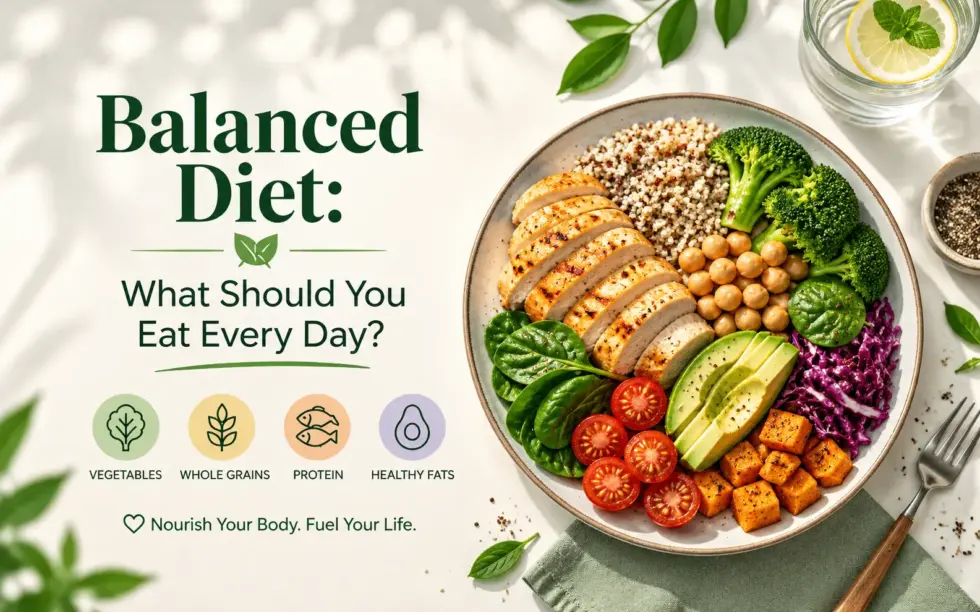

“Eat a balanced diet.” Cool. Thanks. That advice is everywhere, and it’s also kind of useless unless someone tells you what that actually looks like on a regular Tuesday.
Because most of us aren’t trying to eat perfectly. We’re trying to eat in a way that feels normal, keeps our energy steady, helps our digestion, supports our mood, and doesn’t turn grocery shopping into a full time job.
So let’s make this practical.
This is a real world guide to what you should generally eat every day if you want a balanced diet. Not a detox. Not a meal plan with six tiny containers. Just… a steady, repeatable way to feed yourself.
First, what “balanced diet” really means
A balanced diet is basically this:
You eat a mix of foods that cover your body’s needs. Energy (carbs and fats), building blocks (protein), and the stuff that keeps everything running smoothly (fiber, vitamins, minerals, water).
The main categories you want showing up most days:
- Vegetables and fruits (fiber, micronutrients, gut support)
- Protein (muscle repair, fullness, hormones, immune system)
- Carbohydrates (energy, especially for your brain and workouts)
- Healthy fats (hormones, brain health, vitamin absorption)
- Fluids (hydration, digestion, temperature regulation)
And balance also means you’re not living at extremes. Not “no carbs ever” or “only salads” or “protein shakes all day”. Your body likes consistency more than drama.
The simple daily plate (a good default)
If you want one mental model that works almost everywhere, it’s this:
- Half your plate: non starchy vegetables (plus fruit on the side sometime)
- One quarter: protein
- One quarter: carbs (preferably higher fiber most of the time)
- A thumb or two: fats (oils, nuts, seeds, avocado, etc)
Not every single meal needs to be perfectly split like that. But across the day, that pattern usually lands you in a balanced place.
Now let’s break down what to actually eat every day.
1) Vegetables: the thing most people under eat
If there’s one category I’d nudge you to prioritize daily, it’s vegetables. Not because they’re magic. Mostly because they quietly fix a lot of problems.
They help with:
- Regular digestion (fiber)
- Feeling full without feeling heavy
- Blood sugar stability (especially when eaten with carbs)
- Micronutrients you don’t get from processed foods
- Gut health diversity
What to aim for each day
A good target for most people is at least 3 to 5 servings of vegetables daily, and honestly more is great if it’s realistic.
If counting servings makes you want to lie down, do it visually:
- At least 2 big handfuls of vegetables at lunch and dinner
- Something vegetable based at breakfast or as a snack when you can
The best everyday vegetables (pick your favorites)
You don’t need exotic superfoods. Rotate a few basics.
Leafy greens
- Spinach, kale, arugula, romaine, collards
- Easy win: throw a handful into eggs, soups, curries, pasta sauce
Cruciferous
- Broccoli, cauliflower, cabbage, Brussels sprouts
- Great roasted, great in stir fries, great chopped into salads
Colorful veg
- Bell peppers, carrots, tomatoes, beets, zucchini, eggplant
- Different colors tend to mean different phytonutrients, so mix it up
Alliums
- Onion, garlic, leeks, scallions
- Flavor boosters that also support heart and immune health
A note on potatoes and corn
They’re not “bad”. They’re just starchier. Still can be part of a balanced diet, just don’t let them be your only vegetable. If your plate is fries plus ketchup, that’s not really a vegetable situation.
2) Fruit: daily, yes. Just not as your only plant
Fruit is great. It’s also easy. And it can be a lifesaver if you’re trying to snack less on ultra processed stuff.
Fruit gives you:
- Fiber (especially berries, apples, pears, oranges)
- Vitamin C and potassium
- Antioxidants and polyphenols
- A naturally sweet option that doesn’t wreck your whole day
What to aim for each day
Most people do well with 1 to 3 servings of fruit daily.
Examples of one serving:
- 1 medium apple or banana
- 1 cup berries
- 1 orange
- 2 small kiwis
Everyday fruits that are especially solid
- Berries (high fiber, high antioxidants, lower sugar per volume)
- Apples and pears (portable, high fiber)
- Citrus (vitamin C, refreshing, good for snacks)
- Bananas (great for workouts and quick energy, potassium)
- Grapes, mango, pineapple (fine, just easier to overeat)
If you drink fruit juice, just know it’s not the same thing as fruit. Juice is basically fruit sugar without the structure and fiber. Not evil, just not as useful.
3) Protein: daily, spread out, and not only at dinner
Protein is one of those things that makes your day easier. When people struggle with constant hunger, cravings, and snack attacks, it’s often because breakfast and lunch were basically carbs without enough protein.
Protein supports:
- Muscle maintenance and repair
- Immune function
- Hormone production
- Satiety (feeling satisfied)
What to aim for each day
There’s no perfect number for everyone, but most adults do well when they include a quality protein source at every meal, or at least 2 to 3 times per day.
A simple visual guide per meal:
- Palm sized portion of protein (for most adults)
- If you’re very active, older, or trying to build muscle, you may need more
Great daily protein options (mix and match)
Animal based
- Eggs
- Greek yogurt, cottage cheese
- Chicken, turkey
- Fish (salmon, sardines, tuna, cod)
- Lean red meat sometimes, if you enjoy it
- Milk, kefir
Plant based
- Lentils, chickpeas, beans
- Tofu, tempeh, edamame
- Soy milk (look for higher protein versions)
- Seitan (if gluten is fine for you)
- Quinoa (not super high protein but helps)
- Nuts and seeds (also fats, so portions matter)
The “protein at breakfast” trick
If you do one thing: stop eating a breakfast that’s basically dessert. Cereal alone. Toast alone. Pastry and coffee. It sets you up for a snacky day.
Better everyday breakfasts:
- Eggs plus vegetables plus toast
- Greek yogurt plus berries plus nuts
- Oats cooked with milk plus chia plus a side of yogurt
- Tofu scramble with veggies
- Smoothie with protein (Greek yogurt or protein powder) plus fruit plus spinach
4) Carbohydrates: you need them, but choose smarter most of the time
Carbs have a bad reputation online. In real life, they’re just food. And they’re your body’s preferred fuel, especially your brain and muscles.
The key isn’t “avoid carbs”. It’s:
- Choose higher fiber, less processed carbs more often
- Eat carbs with protein and fat so they digest slower
- Adjust amounts based on your activity level
What to aim for each day
This varies a lot. Someone doing hard training needs more carbs than someone sedentary.
But a balanced daily approach looks like:
- 1 to 3 meals with a solid carb source
- Portions that match your hunger and activity
Better everyday carb choices
- Oats
- Brown rice, wild rice
- Whole wheat bread (or other whole grain breads)
- Quinoa, barley, farro
- Potatoes and sweet potatoes
- Beans and lentils (carb plus protein plus fiber, basically a cheat code)
- Whole grain pasta
- Corn tortillas
Carbs that are fine, just easier to overdo
- White bread, pastries, cookies
- Sugary cereals
- Chips, crackers
- Sweet drinks
You don’t have to ban them. It’s just that they’re not doing much for you nutritionally compared to whole foods. And they’re designed to be eaten fast, in large amounts.
5) Healthy fats: essential, not optional
Fat is not the enemy. Your hormones need it. Your brain needs it. Your cells literally use fat as part of their structure.
Healthy fats help with:
- Hormone production
- Absorbing fat soluble vitamins (A, D, E, K)
- Satiety and stable energy
- Brain health
What to aim for each day
Include **1 to 3 servings of **healthy fats daily, often spread across meals.
Examples of one serving:
- 1 to 2 tablespoons olive oil
- 1 small handful nuts
- 1 to 2 tablespoons nut butter
- 1 to 2 tablespoons seeds (chia, flax, pumpkin)
- Half an avocado
Best everyday fat sources
- Olive oil, avocado oil
- Nuts (almonds, walnuts, pistachios)
- Seeds (chia, flax, hemp)
- Avocado
- Fatty fish (salmon, sardines, mackerel)
- Olives
Saturated fats (butter, cheese, fatty meats) can fit too, but you probably don’t want them to be your main fat source every day. Not because they’re poison. Just balance.
6) Fiber: the quiet MVP (and the thing most diets forget)
Fiber is technically a carb, but it deserves its own section because it’s one of the strongest predictors of good digestion and long term health.
- Regular bowel movements
- Gut bacteria diversity
- Lower cholesterol
- More stable blood sugar
- Feeling full
What to aim for each day
General guideline:
- Women: around 25g per day
- Men: around 38g per day
Most people get nowhere near this if they eat mostly refined carbs and low plant foods.
Easy fiber boosters:
- Add beans or lentils a few times a week (even canned is fine)
- Eat fruit with skin when possible
- Choose oats over sugary cereal
- Add chia or ground flax to yogurt or oats
- Make half your plate vegetables
One small caution: if your fiber intake is low right now, don’t jump from 10g to 35g overnight unless you enjoy bloating. Increase gradually and drink more water.
7) Water and fluids: yes, it counts as part of your diet
Hydration affects energy, headaches, digestion, and even hunger signals. A lot of “I’m hungry” is actually “I’m tired and mildly dehydrated”.
What to aim for each day
There’s no single perfect number, but a decent daily baseline is:
- Drink water with every meal
- Keep a bottle nearby and finish it a few times
- Adjust for heat, exercise, and sweat
You’ll know you’re in a decent range if your urine is a pale yellow most of the time (not clear all day, not dark like apple juice).
Other fluids that can count:
- Unsweetened tea
- Coffee (in moderation, and not replacing water)
- Milk or soy milk
- Brothy soups
Sugary drinks don’t hydrate well relative to their calorie load. Again, not forbidden. Just not an “everyday hydration strategy”.
8) Micronutrients you should think about (without obsessing)
If you eat a variety of whole foods, you’ll cover most vitamins and minerals. But there are a few nutrients people commonly miss depending on diet pattern.
Common ones
- Iron: especially for menstruating women, vegetarians, endurance athletes
- Sources: red meat, lentils, beans, spinach, fortified cereals. Pair plant iron with vitamin C foods. It’s important to be aware that iron deficiency can significantly impact your overall health.
- Vitamin D: hard to get from food alone
- Sources: fatty fish, fortified dairy, eggs. Sun exposure helps. Some people need supplements.
- Calcium: not just for bones, also muscle and nerve function
- Sources: dairy, fortified plant milks, tofu set with calcium, sardines, leafy greens (some).
- Omega 3 fats: many diets are low here
- Sources: salmon, sardines, chia, flax, walnuts (plant sources are helpful but fish is more direct).
- Iodine: important for thyroid health
- Sources: iodized salt, seafood, seaweed (careful with too much).
If you suspect a deficiency in any of these areas or are curious about how certain nutrients affect your metabolism, it’s worth getting labs done instead of guessing. Nutrition internet advice can get weird fast.
What should you eat every day? A practical daily checklist
If you like checklists, here you go. This is a solid “balanced diet” day:
- Vegetables: 3 to 5 servings (or half your plate at 2 meals)
- Fruit: 1 to 3 servings
- Protein: 2 to 4 servings spread through the day including sources like chicken, salmon, tofu, and lentils
- Whole food carbs: 2 to 4 servings depending on activity
- Healthy fats: 1 to 3 servings
- Fiber: include at least 2 high fiber foods (beans, oats, berries, veggies, whole grains)
- Water: consistently through the day
If you hit most of that most days, you’re doing better than you think.
What this looks like in actual meals (examples that feel normal)
Here are a few full day examples. Not meal plans, just realistic combinations.
Example Day 1 (classic, simple)
Breakfast:
Greek yogurt, berries, chia seeds, plus a drizzle of honey
Lunch:
Chicken salad bowl with mixed greens, cucumber, tomatoes, olive oil dressing, plus a piece of fruit
Snack:
Apple and peanut butter
Dinner:
Salmon, roasted broccoli, and rice or potatoes
Example Day 2 (more plant based)
Breakfast:
Oats cooked with milk or soy milk, topped with banana and walnuts
Lunch:
Lentil soup plus a side salad and whole grain bread
Snack:
Carrots and hummus
Dinner:
Tofu stir fry with mixed vegetables, served with brown rice
Example Day 3 (busy day, minimal cooking)
Breakfast:
Eggs (or egg bites) plus toast, plus a handful of greens on the side or mixed into eggs
Lunch:
Tuna or chickpea wrap with veggies, plus fruit
Snack:
Cottage cheese and berries (or a protein smoothie)
Dinner:
Rotisserie chicken, bagged salad kit, microwavable quinoa, olive oil
This is balanced. Not perfect. Balanced.
The part people ignore: consistency beats perfection
You can eat the healthiest meal in the world and it won’t matter if the rest of your week is chaos. And you can eat a cookie every day and still have a balanced diet if your overall pattern supports you.
A few habits that make this way easier:
1) Build meals around protein and plants
If you start there, carbs and fats fall into place naturally.
2) Keep 5 to 10 “default foods” stocked
Not a giant pantry makeover. Just reliable basics.
My boring but effective list would be something like:
- Eggs
- Greek yogurt or cottage cheese
- Oats
- Rice or potatoes
- Frozen vegetables
- Leafy greens
- Beans or lentils (canned is fine)
- Fruit (bananas, apples, berries)
- Olive oil
- Nuts or seeds
3) Don’t treat balanced eating like punishment
If every meal feels like a diet, you won’t stick with it. Add flavor. Use sauces. Roast vegetables properly. Eat foods you actually like.
4) Watch the “liquid calories” trap
A lot of people accidentally drink their calories without feeling satisfied.
- Sugary coffees
- Soda
- Juice
- Alcohol
You don’t have to cut them completely. Just don’t let them become a daily foundation.
Common balanced diet questions (quick answers)
Do I have to eat breakfast?
No. But if you skip breakfast and then feel shaky, ravenous, and snacky by mid morning, it might not be helping. Try a protein forward breakfast for a week and see what happens.
Is it okay to eat the same thing every day?
Yes, if it’s nutritionally decent. It’s actually easier for a lot of people. Just rotate a few fruits and vegetables so you’re not missing micronutrients long term.
What about snacks?
Snacks are fine. Think of them as mini meals. A balanced snack usually includes at least two of:
- Protein
- Fiber rich carbs (fruit, whole grains)
- Healthy fats
Examples:
- Yogurt + berries
- Apple + nut butter
- Hummus + carrots
- Nuts + fruit
- Cheese + whole grain crackers
Can you have treats and still be balanced?
Yes. A balanced diet isn’t a “never”. It’s an “often”. If your daily core is solid, treats are just part of life.
Let’s wrap this up (without making it complicated)
A balanced diet, day to day, isn’t about hitting perfect macros or eating like a fitness influencer.
It’s mostly about this:
- Eat plants every day. Lots of them.
- Get protein at breakfast and lunch, not just dinner.
- Choose carbs that come with fiber more often.
- Include healthy fats so you stay satisfied and your body works properly.
- Drink water consistently.
- Repeat.
And if you want the simplest possible answer to “What should you eat every day?”
Vegetables, fruit, a protein source, a high fiber carb, a healthy fat, and water.
Most days. In combinations you actually enjoy. That’s the whole thing.
FAQs (Frequently Asked Questions)
What does a balanced diet really mean?
A balanced diet means eating a mix of foods that cover your body’s needs, including energy sources like carbohydrates and fats, building blocks like protein, and nutrients such as fiber, vitamins, minerals, and water. It involves regularly consuming vegetables and fruits, proteins, carbohydrates (preferably high fiber), healthy fats, and fluids without extreme restrictions or overindulgence.
How can I visualize a simple daily plate for a balanced meal?
A practical mental model for a balanced meal is to fill half your plate with non-starchy vegetables (plus fruit on the side sometimes), one quarter with protein, one quarter with carbohydrates (ideally higher fiber), and add a thumb or two of healthy fats like oils, nuts, seeds, or avocado. This pattern across the day helps maintain balance without needing perfection every meal.
Why should I prioritize vegetables in my daily diet?
Vegetables are crucial because they support regular digestion through fiber, help you feel full without heaviness, stabilize blood sugar especially when eaten with carbs, provide essential micronutrients not found in processed foods, and promote gut health diversity. Aiming for at least 3 to 5 servings of vegetables daily is recommended for most people.
What are some everyday vegetables I should include in my meals?
Focus on rotating a few basic vegetables such as leafy greens like spinach and kale; cruciferous veggies like broccoli and cauliflower; colorful vegetables such as bell peppers and carrots; and alliums like onion and garlic. These provide diverse nutrients and flavors while supporting overall health.
How much fruit should I eat daily and which fruits are best?
Most people do well with 1 to 3 servings of fruit daily. Good choices include berries (high in fiber and antioxidants), apples and pears (portable and high fiber), citrus fruits (rich in vitamin C), bananas (great for quick energy), as well as grapes, mangoes, and pineapple in moderation. Remember that whole fruit is preferable to juice due to its fiber content.
Why is spreading protein intake throughout the day important?
Protein supports muscle maintenance and repair, immune function, hormone production, and helps you feel satisfied after meals. Many hunger issues stem from meals that are mostly carbs without enough protein. Eating protein at breakfast, lunch, and dinner can help control cravings and keep energy steady throughout the day.