
Most people don’t spend a lot of time staring into the toilet bowl. Totally fair.
But urine color is one of those oddly useful body signals that can give you a quick snapshot of hydration, diet, supplements, and sometimes something you should not ignore. It’s not a perfect test. It’s not a diagnosis. Still, if you know what you’re looking at, it can be a pretty decent early warning system.
Also, you’d be surprised how often I hear some version of.
“I peed neon yellow, am I dying?”
So. Let’s do this properly.
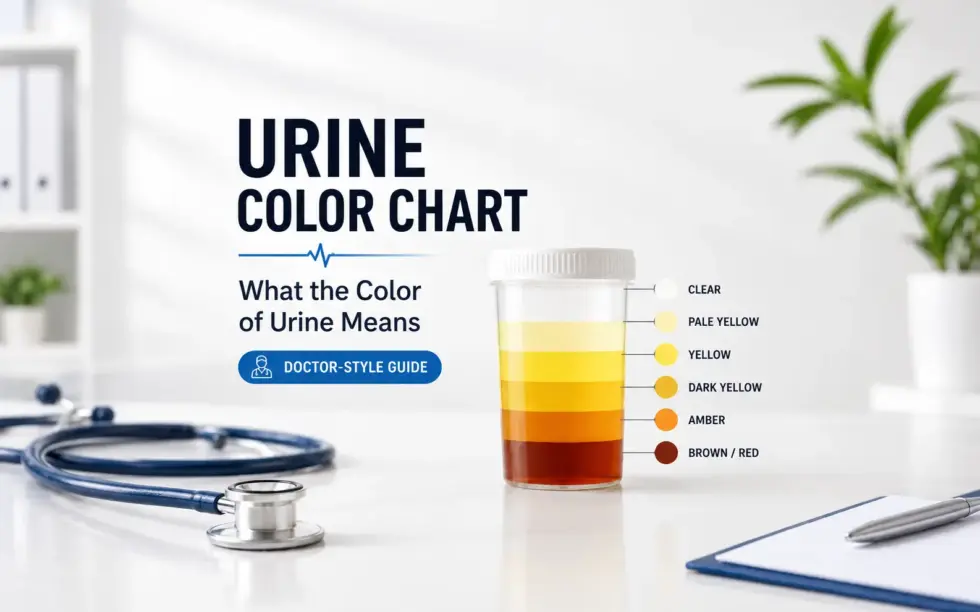
Quick urine color chart (simple version)
Here’s the quick and practical chart. Then we’ll go color by color with what it usually means, what’s normal, and when to worry.
- Clear: very hydrated, sometimes overhydrated
- Pale straw / light yellow: ideal, well hydrated
- Medium yellow: normal, mildly concentrated
- Dark yellow: dehydrated, needs fluids
- Amber / honey: more dehydration, sometimes meds or vitamins
- Orange: dehydration, certain meds, sometimes liver or bile issues
- Pink / red: foods, blood, infection, stones, other causes
- Brown / tea / cola: dehydration, muscle breakdown, liver issues, blood breakdown
- Cloudy / milky: infection, crystals, semen, vaginal discharge contamination, dehydration
- Blue / green: dyes, meds, some infections, rare metabolic causes
- Purple (in catheter bags): purple urine bag syndrome, usually infection related
Now let’s slow down and make it actually useful.
First, what “normal urine” really looks like
Normal urine is usually some shade of yellow because of a pigment called urochrome (from the breakdown of hemoglobin). The more diluted your urine is, the lighter it looks. The more concentrated, the darker.
So urine color is mostly a hydration story. Mostly.
But not always. Supplements, foods, medications, and medical conditions can override the hydration signal. That’s where people get confused.
Also, lighting matters. A bathroom with warm bulbs can make urine look more orange than it is. And the color of the toilet bowl, cleaning tablets, even dehydration plus vitamins can create a very dramatic effect.
Ok. Colors.
Clear urine (looks like water)
What it usually means
- You’re very well hydrated.
- Or you’ve been chugging water, especially in a short time window.
Is it bad? Not automatically. Clear urine after a big water bottle at the gym is normal.
But if your urine is consistently clear all day, every day, you might be overdoing fluids. And that can, in rare cases, contribute to low sodium (hyponatremia), especially if you’re drinking huge amounts of water plus sweating a lot, endurance sports, certain medications, etc.
When to pay attention
- You’re peeing constantly, including at night.
- You feel shaky, nauseated, confused, or have headaches after heavy water intake.
- You have intense thirst all the time (can be diabetes, meds, etc).
Most people. It’s fine. Just don’t treat “clear” like a gold medal. Pale yellow is usually the sweet spot.
Pale straw / light yellow
This is the one you want most of the time.
What it usually means
- Normal hydration.
- Kidneys are doing their job.
- You’re not too concentrated, not too diluted.
If your urine is light yellow most days and you feel fine, you can basically stop thinking about it. Congrats. You are a boring kidney patient. The best kind.
Medium yellow
What it usually means
- Still normal.
- Mildly concentrated.
- Common first morning urine tends to be darker because you’re not drinking overnight.
If it lightens up as you drink through the day, that’s a good pattern.
Dark yellow
Now we’re getting into. Drink water territory.
What it usually means
- Dehydration or underhydration.
- You’ve been sweating, not drinking much, sick with fever, diarrhea, vomiting, etc.
What to do
- Drink fluids. Don’t overcorrect with gallons. Just steady intake.
- If you’re losing fluids through illness, consider oral rehydration solutions, broth, electrolyte drinks.
When to worry Dark urine plus any of these:
- dizziness, fainting, rapid heart rate
- very dry mouth, minimal sweating
- you’re barely peeing
- confusion in older adults
- signs of dehydration in infants and kids (fewer wet diapers, lethargy)
Dark yellow alone is usually just dehydration. But context matters.
Amber / honey
This is deeper than dark yellow. Think “apple juice” vibes.
What it usually means
- More significant dehydration.
- Sometimes vitamins (especially B complex) can push color toward darker yellow, but true amber often means concentration.
Common scenarios
- Long flights, long work shifts, fasting, heavy exercise.
- Not drinking because you’re busy. A classic.
What to do Hydrate and recheck. If it stays amber for a full day despite normal fluids, you look at other symptoms too. Pain? Fever? Yellow eyes? Medication changes?
Orange urine
Orange is a big one because it can be nothing… or not nothing.
Benign and common causes
- Dehydration (most common)
- Food dyes and intense pigment foods
- Carrots in large amounts can contribute, though the result is usually more yellow-orange
- Vitamins can sometimes contribute, but usually produce neon yellow rather than orange
Medication causes (very common)
- Phenazopyridine (AZO and similar urinary pain relief meds) can turn urine bright orange. This is expected and can also stain underwear.
- Rifampin (an antibiotic used for TB and other conditions) turns urine, sweat, and tears orange.
- Some laxatives and chemotherapy medications can also shift urine color toward orange.
More concerning causes
Bilirubin in urine from liver or bile duct problems can cause dark yellow-orange or brownish urine. It is often paired with yellowing of the skin or eyes (jaundice), pale or clay-colored stools, itching, fatigue, and sometimes abdominal pain.
When to seek care
- Orange urine combined with jaundice, pale stools, right upper abdominal pain, or severe fatigue
- Orange urine that does not improve with hydration and cannot be explained by a medication you are taking
Pink or red urine
This is the one that scares people. And it should get your attention. Not panic. Attention.
First question: Did you eat something that can do this?
Food causes (common and harmless)
- Beets (beeturia) — some people turn pink or red after eating them, which can be startling
- Blackberries, rhubarb, and sometimes food dyes
If the color appears right after eating those foods and resolves quickly, it is probably fine.
Medication causes
Some antibiotics and medications can tint urine, but true red is less commonly caused by medications than orange urine is.
The big medical cause: blood in urine
Blood can make urine appear pink, red, or cola brown (if the blood is older or mixed). Sometimes blood is invisible and only detected through urine testing.
Possible causes of blood in urine
- UTI — often accompanied by burning, urgency, frequency, and foul smell
- Kidney stones — often with severe flank pain, waves of pain, and nausea
- Prostate issues — more common in older men
- Kidney disease
- Bladder or kidney tumors — risk increases with age, smoking history, and certain chemical exposures
- Menstrual contamination — common and worth considering
When to get it checked
If you see red urine and cannot confidently link it to beets or a similar food, get it checked. This is especially important if any of the following apply:
- There is pain or fever
- You notice clots in the urine
- You are pregnant
- You are older than 40
- You smoke or used to smoke
- It keeps happening
- You take blood thinners or have known kidney disease
Intense exercise can sometimes cause blood in urine (runner’s hematuria). Even so, if the blood is visible, it still warrants evaluation.
Brown urine (tea, cola, dark brown)
Brown can look like iced tea, cola, or even muddy. While dehydration can darken urine, true brown usually points to something more significant.
Possible causes
Liver problems or bile issues
Bilirubin can darken urine to a brownish color. This is often accompanied by jaundice, itching, and pale stools.
Blood breakdown products
Old blood in urine can appear brown rather than red.
Muscle breakdown (rhabdomyolysis)
Severe muscle injury releases myoglobin into the bloodstream, which darkens urine. This is a serious condition. It can occur after crush injuries, extreme workouts, heat illness, seizures, prolonged immobilization, and sometimes certain drugs or statins.
Medications and food
- Certain antibiotics, antimalarials, and muscle relaxants can cause brown urine.
- Fava beans can darken urine in people with G6PD deficiency.
Signs that rhabdomyolysis may be the cause
- Severe muscle pain or swelling
- Muscle weakness
- Dark cola-colored urine following extreme exertion or heat exposure
- Feeling very unwell overall
If rhabdomyolysis is suspected, go to the ER immediately. This is not a wait-and-see situation.
When to seek care quickly
- Brown urine with yellow eyes, pale stools, or severe fatigue
- Brown urine with muscle pain, swelling, weakness, or recent extreme exercise or heat exposure
- Brown urine with reduced urination or severe dehydration symptoms
Cloudy urine (hazy, opaque)
Cloudy urine is super common and often not serious. But it has a few repeat offenders.
Common benign causes
- Dehydration (concentrated urine can look cloudy)
- Crystals (phosphates can make urine look cloudy, often harmless)
- Semen after ejaculation in men
- Vaginal discharge mixing with urine sample
Common medical causes
- UTI: cloudy urine plus burning, urgency, frequency, pelvic discomfort, sometimes fever.
- STIs: sometimes discharge and urinary symptoms.
- Kidney stones: may have crystals and blood.
If cloudy urine is paired with a strong odor, pain, fever, or urgency. Think infection until proven otherwise.
Milky or white urine
Milky urine is less common, and it’s one you don’t ignore if it persists.
Possible causes
- UTI or pus in urine (pyuria)
- Crystals (especially if urine is very alkaline)
- Chyluria (lymphatic fluid in urine, rare, can happen with certain parasitic infections or lymphatic issues)
- Protein (heavy protein in urine can make it foamy more than milky, but sometimes people describe it as cloudy white)
A one-off weird sample is often contamination. But if you repeatedly see milky urine, especially with symptoms, get a urinalysis.
Blue or green urine
This one is weird. It’s also usually explainable.
Common causes
- Food dyes (blue frosting, sports drinks, candy)
- Methylene blue (used in some meds and diagnostic contexts)
- Some antihistamines, antidepressants, and other medications can rarely shift urine greenish.
- Propofol (anesthesia) can cause green urine in hospitals. Patients wake up and get told. Yes it happens.
Medical cause
- Pseudomonas UTI can sometimes cause greenish urine. Usually there are other symptoms and risk factors.
If you’ve started a new medication or had a procedure, that’s often the answer. If not, and you have urinary symptoms, get checked.
Purple urine (usually in catheter bags)
This is called purple urine bag syndrome. It tends to happen in people with urinary catheters, bacteria that break down tryptophan, and certain urine chemistry conditions.
It looks alarming. It is generally linked to infection and needs medical attention, but it’s not typically a sudden emergency on its own. It’s more like. The catheter patient needs evaluation.
Neon yellow urine (highlighter yellow)
This deserves its own section because it’s insanely common.
Cause
- B vitamins, especially riboflavin (B2).
- Multivitamins, energy drinks, pre workout mixes.
It’s basically your body excreting excess vitamins. It can look radioactive. That’s fine.
If neon urine comes with pain, fever, or other symptoms, then it’s not the vitamins. But the color alone, especially after supplements, is normal.
Foamy urine (not a color, but people ask)
Foam is not color, but it shows up in the same conversation.
Common harmless cause
- Fast urination, concentrated urine, toilet cleaners.
More concerning cause
- Protein in urine, especially if the foam is persistent, thick, and happens repeatedly.
If you notice persistent foamy urine plus swelling in legs/face, high blood pressure, or fatigue, ask for a urine test.
What urine odor means (quick add on)
Again not color, but it’s tied to the same worries.
- Strong ammonia smell: dehydration, concentrated urine, sometimes UTI
- Sweet/fruity smell: can happen with uncontrolled diabetes (ketones), needs attention
- Foul smell: often UTI, diet can contribute too (asparagus, coffee)
- Musty smell: sometimes liver disease (not common, but classic teaching)
Smell is less specific than color. Still useful when paired with symptoms.
When urine color is an actual red flag
Here’s the doctor style triage list. If any of these are true, don’t overthink charts. Just get evaluated.
Seek urgent care or ER if:
- red urine with clots
- red urine plus severe flank or abdominal pain
- brown cola urine after extreme exercise, heat illness, or muscle injury
- very dark urine plus yellow eyes or pale stools
- you can’t pee, or you’re peeing very little with dehydration symptoms
- fever, back pain, and UTI symptoms (possible kidney infection)
- you are pregnant and see blood in urine or have UTI symptoms
Schedule a prompt (not someday) visit if:
- visible blood in urine even once, unless you are 100 percent sure it was beets and it resolved
- persistent orange or brown urine not explained by meds or dehydration
- recurrent cloudy urine with urinary symptoms
- new urinary frequency, urgency, burning, or nighttime urination that sticks around
How to check urine color the right way (small but important)
If you’re going to monitor urine color, do it in a way that reduces false alarms.
- Look in a clean toilet bowl without blue cleaning tablets.
- Check midstream urine, not the first dribble.
- Consider lighting. Daylight is best.
- Compare over time, not one random pee after a workout.
- First morning urine is usually darker. That’s normal.
Also, if you’re on your period, urine color is not reliable. Use a clean catch sample later if you’re trying to figure something out.
Common questions people have (and the straight answers)
Is dark urine always dehydration?
No. Dehydration is common, but liver issues, blood, and muscle breakdown can also darken urine. If hydration doesn’t fix it, or you have other symptoms, get checked.
Can anxiety cause urine color changes?
Not directly. But anxiety can change hydration habits, caffeine intake, and bathroom frequency. Which can change urine color indirectly.
Does clear urine mean my kidneys are failing?
No. Kidney failure typically causes other issues and lab changes, not just clear urine. Clear urine is usually dilution from high fluid intake. If you’re peeing huge volumes constantly and very thirsty, that’s a different question.
Can dehydration be serious even if I’m still peeing?
Yes. You can still pee while dehydrated. But the urine tends to be darker and smaller volume. If you feel unwell, lightheaded, or your heart is racing, treat dehydration seriously.
Why is my urine darker when I take vitamins?
Because excess B vitamins get excreted in urine. Neon yellow is classic. It’s not blood. It’s not liver failure. It’s usually your multivitamin.
A practical way to use this chart without spiraling
This is what I’d tell a friend.
- If your urine is pale yellow to medium yellow, you’re fine.
- If it’s dark yellow or amber, drink fluids and recheck later.
- If it’s orange, think meds first (AZO, rifampin), then dehydration, then liver signs.
- If it’s red/pink and you didn’t eat beets, treat it as blood until proven otherwise.
- If it’s brown like tea or cola, don’t wait around if you also feel sick, have muscle pain, or jaundice.
Simple. Not scary. Just. Pay attention.
What your doctor will usually do if you come in with abnormal urine color
People sometimes avoid care because they assume it’ll be a huge ordeal. Usually it’s pretty straightforward.
- History: hydration, foods (beets), supplements, meds, exercise, pain, fever, urinary symptoms, period status, travel, exposures.
- Urinalysis: checks for blood, protein, bilirubin, infection markers, crystals. This urinalysis is a key step in understanding the underlying issue.
- Urine culture if infection suspected.
- Blood tests if liver issues, kidney function issues, dehydration, or muscle breakdown suspected (CMP, creatinine, CK for rhabdo, etc).
- Imaging sometimes: ultrasound or CT if stones, tumors, or obstruction are suspected.
Most of the time, we’re confirming something simple. Dehydration. UTI. Stone. Vitamin effect. But you do want to catch the less common serious stuff early.
Let’s wrap this up
Urine color is a low tech, surprisingly useful clue. And it’s also easy to misread if you only look once and panic.
If you want the short rule.
Pale yellow is good. Dark yellow means drink. Red or brown that you can’t explain deserves medical attention.
And if you’re ever unsure, especially with symptoms, it’s completely reasonable to get a basic urine test. It’s quick. It answers a lot.
That’s the doctor style truth of it. Not glamorous. But very practical.
FAQs (Frequently Asked Questions)
What does the color of my urine indicate about my hydration status?
Urine color is a helpful indicator of hydration. Clear urine typically means you are very well hydrated or possibly overhydrated, while pale straw or light yellow urine indicates ideal hydration. Medium yellow is normal and mildly concentrated, whereas dark yellow, amber, or honey-colored urine suggests dehydration and the need to increase fluid intake.
Is clear urine always a sign of good health?
Not necessarily. While clear urine often means you are well hydrated, consistently clear urine throughout the day may indicate overhydration. Overhydration can rarely lead to low sodium levels (hyponatremia), especially if combined with heavy sweating or certain medications. Pay attention if you experience frequent urination, shakiness, nausea, confusion, or headaches after drinking large amounts of water.
What could cause orange-colored urine and when should I be concerned?
Orange urine commonly results from dehydration but can also be caused by certain medications, food dyes, or liver and bile issues. If orange urine persists despite adequate hydration or is accompanied by symptoms like jaundice (yellowing of the eyes), consult a healthcare provider to rule out liver problems.
Can foods or supplements affect my urine color?
Yes. Foods like beets or blackberries can cause pink or red urine, while B complex vitamins often darken urine toward amber hues. Some medications and dyes can also change urine color to blue, green, or purple. These changes are usually harmless but if you notice unusual colors without dietary causes, consider medical evaluation.
When should cloudy or milky urine prompt me to see a doctor?
Cloudy or milky urine may indicate infection, presence of crystals, semen contamination, vaginal discharge contamination, or dehydration. If cloudy urine is persistent and accompanied by symptoms such as pain during urination, fever, or foul smell, it is advisable to seek medical attention for possible urinary tract infection or other conditions.
What does dark brown or tea-colored urine mean?
Dark brown or tea-colored urine can signify dehydration but may also indicate muscle breakdown, liver issues such as hepatitis or bile duct obstruction, or blood breakdown products in the urine. If this coloration persists despite proper hydration or is accompanied by other symptoms like fatigue or jaundice, medical evaluation is important.