
If you have ever Googled “how to increase sperm count” at 1:00 a.m., you already know how weird and noisy the internet can get about this topic.
One site says it is all about zinc, another says stop cycling, and another swears by some mysterious “male fertility tea” that tastes like lawn clippings. And in the middle of all that, you are just trying to figure out what actually matters. Like, what can I eat this week that has a real chance of helping?
So let’s talk about that.
Not magic pills. Not miracle smoothies.
Just food, patterns, and nutrients that show up again and again in decent research on sperm count and overall sperm health. Also, a quick reality check: sperm count is only one piece of fertility. Motility and morphology matter too. Hormones matter. Sleep, stress, heat exposure, alcohol, smoking, certain meds, infections, varicocele, all that stuff matters.
But food is one of the few levers you can pull every day without making your life a science experiment.
First, what is a “healthy” sperm count anyway?
Semen analysis reports can get technical fast, but the headline number people fixate on is usually sperm concentration and total sperm count.
In general terms, higher is better up to a point, but fertility is not a single-number game. You can have a “normal” count and still struggle if motility is low. Or you can have a lower count and still conceive because everything else is strong and timing is good.
Also important. Sperm takes time to make.
The process from early development to ejaculation is roughly 2 to 3 months. So when you change your diet, you are not “boosting sperm by Friday.” You are building the next batch.
Keep that in mind. It makes this whole thing feel less frantic and more… doable.
The nutrition basics that actually influence sperm
When researchers look at dietary patterns linked to better sperm parameters, a few themes repeat:
- Antioxidants that reduce oxidative stress (a big driver of sperm damage).
- Minerals involved in testosterone production and sperm formation (zinc, selenium, iron in the right context, magnesium).
- Anti-inflammatory fats (omega-3s).
- Vitamins that support DNA integrity and maturation (folate, vitamin C, vitamin E, vitamin D).
- Overall metabolic health (insulin sensitivity, healthy weight, stable energy intake).
Translation: the “foods that move the needle” are mostly the ones that support your whole system. Heart health food is often fertility food. Annoying but true.
Now let’s get specific.
1. Oysters, beef, pumpkin seeds: zinc heavy hitters
Zinc is probably the most famous fertility mineral for men, and it is not just hype. Zinc plays a role in testosterone metabolism, sperm production, and sperm maturation. Low zinc status has been associated with poorer sperm quality.
Foods that deliver real zinc:
- Oysters (the king, by a mile)
- Beef and lamb
- Crab and lobster
- Pumpkin seeds
- Chickpeas and lentils (less bioavailable than animal sources, but still useful)
- Cheese and दूध based foods in moderate amounts
Practical idea if you hate oysters: do pumpkin seeds daily. Toss a handful on yogurt, salads, oatmeal, whatever. And get red meat in sensible portions a couple times a week if it fits your diet and health situation.
One thing. If you are already taking a high-dose zinc supplement and stacking it with a multivitamin, be careful. Too much zinc long term can mess with copper and cause other issues. Food-first is safer.
2. Brazil nuts, tuna, eggs: selenium for sperm structure and movement
Selenium is a quiet powerhouse for male fertility. It is involved in antioxidant enzymes (like glutathione peroxidase) that protect sperm from oxidative damage. Several studies link adequate selenium status to better motility and morphology.
Selenium-rich foods:
- Brazil nuts (the easiest win)
- Seafood like tuna, sardines, shrimp
- Eggs
- Turkey
- Sunflower seeds
- Whole grains (depends on soil selenium where you live)
Brazil nuts are almost comically effective, but do not go overboard. Selenium can be too much if you eat a pile every day.
A good, normal approach: 1 to 2 Brazil nuts a day, not a handful.
3. Salmon, sardines, chia, walnuts: omega-3 fats that support membrane health
Sperm cells are basically little delivery vehicles with membranes that need to be flexible and intact. Omega-3 fatty acids, especially DHA, are strongly tied to sperm membrane function and overall quality in research.
You will see this show up as improved motility, improved morphology, sometimes better count. Not always dramatic, but it is one of the more consistent nutrition levers.
Recent studies have further highlighted the importance of omega-3 fats in male fertility (source).
Best omega-3 foods:
- Salmon
- Sardines
- Mackerel
- Trout
- Anchovies
- Chia seeds and flax seeds (ALA form, which converts poorly to DHA/EPA but still helpful)
- Walnuts
Try to get fatty fish 2 times per week if you can. Sardines are underrated here because they are cheap, high omega-3, and lower on the food chain so generally lower in mercury than big predatory fish.
If fish is not happening for you, then at least do chia or ground flax daily. It is not the same as DHA, but it is directionally right.
4. Citrus, berries, bell peppers: vitamin C to protect sperm DNA
Oxidative stress is one of the biggest enemies of sperm. Reactive oxygen species can damage sperm membranes and DNA. Vitamin C is a primary water-soluble antioxidant, and higher vitamin C intake is linked to better sperm parameters in some studies.
Vitamin C foods that are easy to actually eat:
- Oranges, grapefruit, lemons
- Kiwi
- Strawberries
- Bell peppers (especially red)
- Broccoli
- Guava if you have it
This is a simple habit: include one vitamin C-rich food daily. Like kiwi at breakfast or bell peppers in lunch.
5. Almonds, sunflower seeds, spinach: vitamin E and friends
Vitamin E is a fat-soluble antioxidant that helps protect cell membranes, including sperm. It often shows up in fertility supplement combos because it pairs well with vitamin C and selenium in antioxidant defense systems.
Vitamin E foods:
- Sunflower seeds
- Almonds
- Hazelnuts
- Avocado
- Olive oil
- Spinach
A small snack bowl of almonds and sunflower seeds is boring, yes. But it works as a daily baseline.
6. Leafy greens, beans, fortified grains: folate for sperm formation and DNA integrity
Folate is usually discussed for women and pregnancy, but men need it too. Folate is involved in DNA synthesis and repair, which makes it crucial for maintaining sperm health. Low folate status has been associated with higher sperm DNA fragmentation and poorer sperm quality.
Folate foods:
- Spinach, kale, arugula
- Lentils and beans
- Asparagus
- Avocado
- Citrus
- Fortified grains (varies by country)
One practical move: lentils or beans a few times a week, plus a daily leafy green. Not complicated. Just consistent.
7. Eggs, dairy, mushrooms, sunlight: vitamin D (the “are you even outside?” vitamin)
Vitamin D status is linked with testosterone levels and may be associated with sperm motility in some research. Plenty of men are low on this essential vitamin, especially if you work indoors, use heavy sunscreen all day, or live where winter lasts forever. The relationship between vitamin D and male fertility is something worth considering.
Vitamin D sources:
- Sunlight (still the big one)
- Fatty fish
- Egg yolks
- Fortified milk or plant milks
- UV-exposed mushrooms
If you suspect you are low, the best approach is to test and correct. But food-wise, eggs plus fish plus fortified dairy does a lot.
8. Tomatoes, watermelon, pink grapefruit: lycopene for sperm quality
Lycopene is a carotenoid antioxidant that has been studied in male fertility with some promising signals, particularly around motility and morphology, and possibly count. Some studies suggest that lycopene may have beneficial effects on male fertility, making it another “why not” lever to pull since these foods are normal and healthy anyway.
Lycopene foods:
- Cooked tomato products (sauce, paste, soups)
- Watermelon
- Pink grapefruit
- Guava
Cooking tomatoes in olive oil is a classic move because it can improve lycopene absorption.
9. Garlic and onions: not romantic, but potentially helpful
Garlic has compounds that may support antioxidant status and circulation. Some animal studies suggest benefits for sperm parameters, and human evidence is less robust, but garlic is one of those foods that improves cardiovascular health and inflammation markers in general.
So. It is not a “garlic boosts sperm count guaranteed” situation.
It is more like: if your diet is heavy in processed foods and low in plants, adding garlic and onions as daily staples moves you toward a pattern that supports fertility.
Also it makes food taste better, which helps compliance. That matters.
10. Pomegranate: the poster child for antioxidants
Pomegranate juice and arils are packed with polyphenols. There is some research suggesting improvements in sperm quality markers, likely via antioxidant effects.
If you like it, great.
A simple approach: a small glass of 100 percent pomegranate juice a few times per week, or add arils to yogurt or salads. Just keep an eye on sugar if you are drinking juice daily.
Foods that can quietly drag sperm count down
This part is not here to scare you. But it is real. You can eat all the salmon you want, and still be working against yourself if the foundation is shaky.
Ultra-processed foods and trans fats
Diet patterns high in ultra-processed foods are often linked to poorer semen quality in observational research. Part of that is nutrient displacement. Part is inflammation. Part is metabolic health.
Trans fats (still present in some baked and fried foods) have been associated with worse sperm parameters in some studies.
Excess alcohol
Moderate use may not be catastrophic for everyone, but heavy drinking is strongly associated with hormonal disruption and poorer semen quality. If you are actively trying to conceive, reducing alcohol for a few months is one of the highest ROI moves.
High sugar intake
High added sugar can contribute to insulin resistance and weight gain, and metabolic dysfunction is tied to lower testosterone and worse sperm parameters. You do not need to go zero sugar, but if soda and desserts are daily, this is worth tightening up.
Processed meats
Not every slice of bacon is a fertility disaster. But frequent processed meat intake is often associated with poorer semen quality. If you want a simple rule: make processed meats an occasional thing, not a default protein.
High mercury fish
Fish is helpful. But choose types lower in mercury. Big predatory fish like shark, swordfish, king mackerel, and some tuna types can carry more mercury, which is not great for reproductive health in high exposure.
The “male fertility plate” (what to aim for most days)
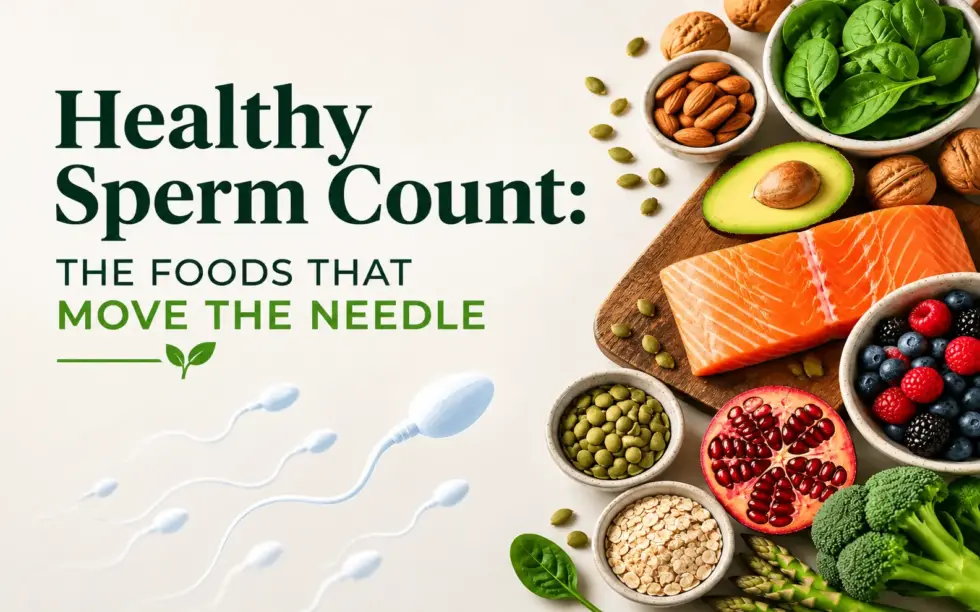
If you want a simple visual without turning your kitchen into a supplement lab, aim for:
- Protein: eggs, fish, lean meats, beans, lentils
- Healthy fats: olive oil, avocado, nuts, seeds, fatty fish
- Plants: leafy greens plus at least one bright fruit or veg daily (citrus, berries, peppers, tomatoes)
- Whole carbs: oats, brown rice, potatoes, whole grain bread if tolerated
- Extras: garlic, onions, herbs and spices
It is basically Mediterranean-ish. Not trendy. Just effective.
A sample day of eating that supports sperm count (without being weird)
This is not a perfect plan, just an example that hits many key nutrients.
Breakfast
- Greek yogurt with berries, kiwi, and a tablespoon of pumpkin seeds
- Or eggs with spinach and tomatoes cooked in olive oil
Lunch
- Lentil bowl with mixed greens, bell peppers, olive oil dressing
- Add sardines or salmon on top if you can
Snack
- 1 to 2 Brazil nuts
- A handful of almonds
- Optional: pomegranate arils or a small glass of pomegranate juice
Dinner
- Salmon with roasted broccoli and potatoes
- Side salad with avocado
If you ate like this most days for 8 to 12 weeks, your body would be swimming in the stuff sperm cells like.
What matters as much as food (quick but important)
I know this article is about food, but these are big enough that skipping them would feel dishonest.
- Heat exposure: hot tubs, saunas, frequent laptop-on-lap, tight underwear, prolonged cycling. Heat can reduce sperm production. Sometimes significantly.
- Sleep: consistent poor sleep can reduce testosterone and increase inflammation. Aim for boring, reliable sleep.
- Smoking and vaping: both are consistently associated with worse semen quality and higher DNA fragmentation. If there is one lifestyle change to prioritize, it is this.
- Weight and activity: moderate exercise helps. Excessive training plus low calories can hurt hormones. Sedentary plus weight gain also hurts. Middle path.
- Stress: chronic stress can mess with hormones and habits. Also it makes you eat like a raccoon at night. So yeah.
How long until you see changes?
If you get a semen analysis today, change your diet tomorrow, and retest next week, you may not see much.
A more realistic window is 8 to 12 weeks, sometimes longer, because that is the sperm development timeline. Improvements can happen earlier in oxidative stress markers, but measurable semen parameter shifts usually take time.
So pick a few habits you can keep. Not a two-week sprint.
The short list of foods that move the needle most
If you want the simplest “do these first” list, here it is:
- Pumpkin seeds (daily)
- Brazil nuts (1 to 2 a day)
- Fatty fish like salmon or sardines (2x per week)
- Leafy greens and legumes (most days)
- Berries or citrus (daily)
- Tomato sauce or cooked tomatoes with olive oil (a few times per week)
- Eggs (several times per week if you tolerate them)
Then reduce the stuff that crowds these out. Ultra-processed foods, heavy alcohol, sugary drinks, processed meats.
That is it. Not sexy, but it works.
When to talk to a doctor instead of just changing your diet
Food can support sperm production, but it cannot fix everything. If any of these apply, consider seeing a urologist or fertility specialist:
- You have been trying for 12 months (or 6 months if partner is 35+)
- History of undescended testicle, testicular injury, mumps orchitis
- Varicocele symptoms or known varicocele
- Very low count on analysis, or repeated abnormal results
- Pain, swelling, or hormonal symptoms
- You are on testosterone therapy (this can suppress sperm production)
Also, if you have not done a semen analysis, it is worth doing. Guessing is stressful. Data helps.
Wrap up
Healthy sperm count is not about one superfood. It is about building a daily nutrient environment where sperm can develop with less oxidative damage, better membranes, and better DNA integrity.
Eat zinc and selenium rich foods. Get omega-3s. Load up on antioxidants from fruits and vegetables. Prioritize folate rich greens and legumes. Keep alcohol and ultra-processed foods from dominating your week.
Then give it time.
Because that part is frustrating, but it is also the good news. You can start today, keep it pretty normal, and actually change the next few months of outcomes without doing anything extreme.
FAQs (Frequently Asked Questions)
What foods can help increase sperm count and improve overall sperm health?
Foods rich in zinc, selenium, omega-3 fats, and key vitamins like folate, vitamin C, E, and D support sperm health. Examples include oysters, beef, pumpkin seeds for zinc; Brazil nuts, tuna, eggs for selenium; and salmon, sardines, chia seeds, walnuts for omega-3 fatty acids.
Why is zinc important for male fertility and which foods are good sources?
Zinc plays a crucial role in testosterone metabolism, sperm production, and maturation. Foods high in zinc include oysters (the top source), beef, lamb, crab, lobster, pumpkin seeds, chickpeas, lentils, and moderate amounts of cheese and dairy products.
How does selenium affect sperm quality and what are the best dietary sources?
Selenium supports antioxidant enzymes that protect sperm from oxidative damage and is linked to improved motility and morphology. Good selenium sources are Brazil nuts (1-2 per day), seafood like tuna and sardines, eggs, turkey, sunflower seeds, and whole grains depending on soil selenium levels.
What role do omega-3 fatty acids play in male fertility?
Omega-3 fatty acids help maintain flexible and intact sperm cell membranes which improves motility and morphology. Consuming fatty fish such as salmon, sardines, mackerel twice a week or plant sources like chia seeds, flax seeds (ALA form), and walnuts can support sperm membrane health.
Is focusing solely on sperm count enough to assess fertility?
No. While sperm count is important, other factors like motility (movement), morphology (shape), hormone levels, sleep quality, stress levels, heat exposure to testes, alcohol intake, smoking habits, medications, infections, and varicocele also significantly impact male fertility.
How long does it take for dietary changes to affect sperm quality?
Sperm development takes approximately 2 to 3 months from early development to ejaculation. Therefore dietary improvements influence the next batch of sperm over this time frame rather than immediately boosting sperm quality within days.