
Most people think heart attacks are this random lightning strike thing. Like you could be “fine” on Monday and then, out of nowhere, you’re in the ER on Tuesday.
And yes, sometimes it really does feel that way.
But when you zoom out and look at the data, heart attacks usually don’t come from nowhere. They come from patterns. Repeatable stuff. The boring, everyday risk factors that build up quietly. Then one day the body basically says, alright, I can’t compensate anymore.
So let’s talk about the big ones.
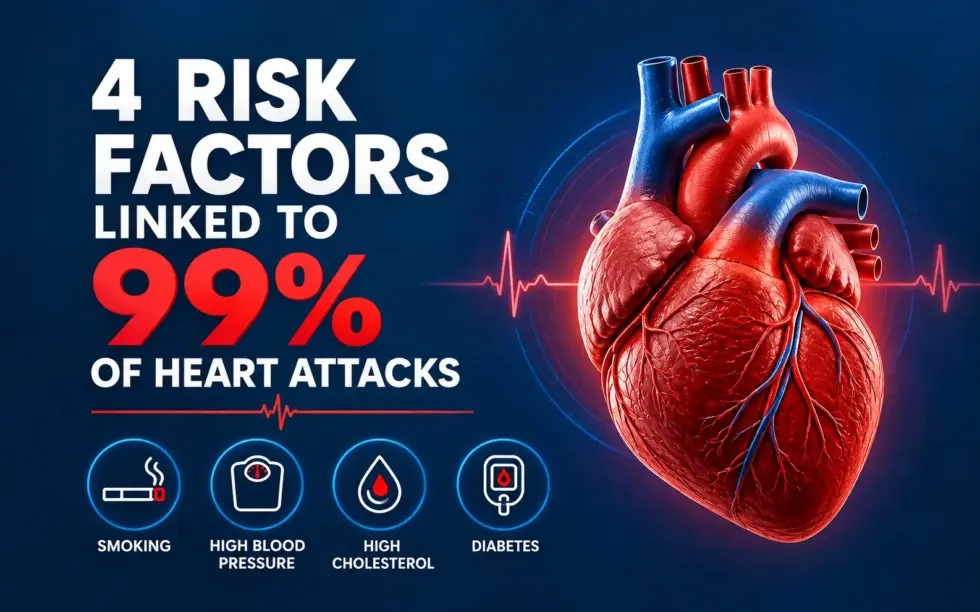
There’s a statistic that gets quoted a lot in cardiology circles, and it comes from a huge international study called INTERHEART. The short version is this: a small set of modifiable risk factors explained the vast majority of heart attacks worldwide. Like, almost all of them.
Different articles summarize it a little differently, and “99%” is a rounded, punchy way people communicate the idea, but the takeaway is real. Most heart attacks are strongly linked to a handful of risk factors we can actually do something about.
This isn’t medical advice, obviously. If you have symptoms, concerns, family history, weird chest pressure, shortness of breath, jaw pain, arm pain, fatigue that doesn’t make sense, any of that. Don’t “read an article” your way out of it. Talk to a clinician.
But if what you want is a practical map. The stuff that shows up again and again. The four buckets that basically dominate the landscape.
Here you go.
Quick context, what a heart attack actually is
A heart attack, medically, is usually a myocardial infarction. That means part of the heart muscle is being starved of oxygen long enough to start getting injured and dying.
In most cases, this happens because a coronary artery is narrowed by plaque over time (atherosclerosis), and then a plaque ruptures and a clot forms on top of it, blocking blood flow.
So it’s not usually a single event. It’s a slow setup. Then a sudden trigger.
Which is why risk factors matter so much. They’re the things that build the plaque, destabilize it, make the blood more likely to clot, and stress the heart until it can’t cope.
Alright. Let’s get into the 4.
1. High blood pressure (hypertension)
High blood pressure is one of those problems that’s almost too common to feel scary.
And that’s part of the danger.
Because if you’re walking around with elevated blood pressure for years, you are basically subjecting your artery walls to constant mechanical stress. Imagine a garden hose that’s been over-pressurized for a decade. It’s not going to stay pristine.
Hypertension contributes to:
- Damage to the inner lining of arteries (endothelium)
- Faster plaque buildup
- Plaque instability (more likely to rupture)
- Thickening of the heart muscle (the heart has to work harder)
- Higher oxygen demand from the heart itself
It also often travels with other issues. People with high blood pressure frequently also have insulin resistance, abdominal weight gain, sleep apnea, chronic stress, high sodium intake, low potassium intake, low activity levels. It’s rarely “just” one thing.
Why blood pressure is sneaky
Because you can feel totally normal with a blood pressure of 150/95.
No pain. No warning. You might even be able to exercise fine. Meanwhile, the damage is accumulating quietly.
Also, a lot of people rely on “I feel calm” as proof they don’t have high blood pressure. But blood pressure is not a mood detector. You can be chill and still have hypertension.
What numbers actually matter
Guidelines vary slightly by country and medical society, but generally:
- Normal is around 120/80 mmHg or lower
- Elevated and high starts creeping in above that
- Sustained readings at or above ~130/80 often trigger lifestyle intervention, and sometimes medication depending on overall risk
The most important word there is sustained. One random reading in a stressful moment isn’t your identity. But repeated readings, especially at home, are very meaningful.
If you don’t own a home cuff, this is one of the best “cheap adult purchases” you can make. A validated upper arm cuff, not a sketchy wrist one. Then you take readings correctly. Seated, rested, feet on the floor, arm supported, no caffeine right before, no talking.
It’s not complicated. But it is easy to do wrong.
What to do about it (realistically)
Lifestyle changes that consistently help lower blood pressure:
- Reducing excess sodium and ultra processed foods
- Eating more potassium rich foods (beans, lentils, leafy greens, potatoes, yogurt, bananas, etc)
- Losing visceral fat if needed
- Regular aerobic activity (walking counts if you do it enough)
- Strength training also helps, yes
- Better sleep, especially treating sleep apnea if present
- Limiting alcohol, because alcohol pushes BP up in a very reliable way
- Stress management, not as a vibe, but as a practice. Breathing, therapy, boundaries, whatever actually changes your physiology
And sometimes, even if you do everything “right,” you still need medication. That’s not a moral failure. It’s risk management.
Uncontrolled blood pressure is one of the biggest drivers of heart attack and stroke risk. It’s not subtle.
2. Unhealthy blood lipids (especially high LDL, ApoB)
This is the part where people get confused because cholesterol talk has been messy for decades.
You’ll hear:
- “Cholesterol doesn’t matter”
- “Only inflammation matters”
- “It’s all genetics”
- “Statins are poison”
- “Statins are a miracle”
- “Just eat eggs, it’s fine”
- “Never eat eggs again”
The truth is calmer and more useful.
Atherosclerosis, the plaque buildup process that leads to most heart attacks, is strongly driven by the number of atherogenic particles circulating in your blood over time. Those particles carry cholesterol into artery walls. LDL is the most known, but ApoB is often a better single marker because ApoB reflects the number of these particles.
If you have more of them, and you have them for longer, you are more likely to build plaque. Period.
Inflammation matters too, yes. Blood pressure matters too, yes. Smoking matters. Diabetes matters. But lipids are one of the main levers.
Why “my cholesterol is only a little high” can still be a big deal
Because this is a long game.
If your LDL is moderately high at age 25 and stays that way for 20 years, that cumulative exposure matters. It’s like sun exposure. One day isn’t the point. It’s the total.
And some people have genetically higher LDL or ApoB. Familial hypercholesterolemia is a classic example, but you don’t need a rare diagnosis for genetics to influence this.
Also, you can have “normal” total cholesterol and still have a high ApoB, high LDL particle number, or a nasty triglyceride and HDL pattern. Total cholesterol is a blunt tool.
The lipid markers that come up most in prevention
Basic labs you’ll often see:
- LDL C (bad cholesterol, sort of)
- HDL C (good cholesterol, sort of)
- Triglycerides
- Total cholesterol
More informative markers, if you can get them:
- ApoB
- Lp(a) which is largely genetic and can add independent risk
- Non HDL cholesterol (total minus HDL) which is a simple proxy for atherogenic particles
If you want one blood test upgrade beyond the standard panel, ApoB is the one most prevention focused clinicians love.
What improves lipids (the stuff that actually works)
Lifestyle:
- Reducing saturated fat in some people lowers LDL significantly, especially if you replace it with unsaturated fats, not with refined carbs
- Increasing soluble fiber helps (oats, beans, lentils, psyllium, fruits)
- Weight loss can improve triglycerides and HDL, often dramatically
- Better blood sugar control tends to improve triglycerides
- Regular exercise improves triglycerides and overall metabolic profile
- Cutting back on ultra processed foods tends to improve everything at once, which is why it’s so effective
Medication, when indicated:
- Statins are the most common and have strong evidence for reducing heart attacks in higher risk populations
- Ezetimibe sometimes added
- PCSK9 inhibitors for specific situations and very high risk
- Other options depending on the lipid pattern and individual scenario
This is where you want a clinician who thinks in terms of risk and time horizon, not just “your LDL is slightly above the lab range, good luck.”
Because lab ranges are based on population averages, not on optimal risk reduction.
The big idea
Plaque builds when the conditions allow it to build.
If your lipid profile is pushing plaque formation and you do nothing for 10 years, that’s not neutral. That’s a decision by default.
And the scary part is you don’t feel plaque building.
Until it breaks.
3. Smoking (and tobacco or nicotine exposure)
If there’s one risk factor that screams “stop,” it’s smoking.
And yes, people already know this. Everyone knows this. That’s not the problem.
The problem is people mentally file smoking under “lung cancer.” They don’t always emotionally connect it to heart attacks.
But smoking is a massive cardiovascular risk factor. One of the biggest.
Smoking increases heart attack risk through multiple pathways at once:
- Damages the endothelium (the artery lining)
- Increases inflammation
- Increases oxidative stress
- Promotes plaque formation and instability
- Increases blood clotting tendency
- Raises heart rate and blood pressure
- Reduces oxygen carrying capacity (carbon monoxide)
- Causes coronary artery spasm in some people
It’s like taking every mechanism that leads to heart attack and turning the knob up.
What about vaping
The long term data is still evolving, but “we don’t have 40 year outcome data yet” is not the same as “it’s safe.”
Nicotine itself raises heart rate and blood pressure and has vascular effects. Many vaping products contain chemicals that may affect vascular function and inflammation. If someone uses vaping to get off cigarettes completely and then stops vaping too, that can be part of a harm reduction path.
But if it becomes a permanent high nicotine habit, it’s not nothing. It’s not free.
The frustrating truth
There is no “healthy smoker.”
People will say, my grandpa smoked and lived to 95. Sure. Some people win weird genetic lotteries. That doesn’t change population risk.
Also, people underestimate how fast the body benefits from quitting. Cardiovascular risk begins dropping relatively quickly after stopping smoking, and continues to improve over time.
What works for quitting
Quitting is not a willpower contest. It’s addiction. So treat it like that.
Things that help, often in combination:
- Nicotine replacement therapy (patch plus gum or lozenges)
- Prescription medications (like varenicline in some settings)
- Counseling or quit programs
- Avoiding triggers early on, changing routines
- Support, accountability, someone who gets it
If you smoke and you do one thing for your heart this year, make it quitting.
Honestly.
4. Diabetes and insulin resistance (metabolic syndrome)
This is the risk factor people don’t take seriously until it has a name.
“Diabetes.”
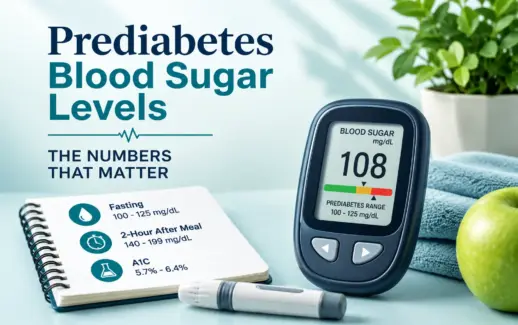
But the danger starts earlier than that. The prediabetes phase, insulin resistance, metabolic syndrome. This is where a lot of damage happens quietly.
High blood sugar and insulin resistance are strongly linked to:
- Endothelial dysfunction
- Increased inflammation
- Higher triglycerides and lower HDL
- Higher blood pressure
- More small dense LDL particles (more atherogenic)
- Faster plaque progression
- Higher clot risk
Diabetes is basically a heart disease accelerator.
And here’s the brutal thing. Many people with insulin resistance do not feel sick. They just feel a little more tired than they used to. A little softer around the middle. A little hungrier. Sleepier after meals. Not always, but often.
It’s easy to normalize.
What metabolic syndrome often looks like in real life
Not in a textbook. In a normal person’s week.
- You gain weight mostly around the abdomen
- Blood pressure creeps up
- Triglycerides creep up
- HDL trends down
- Fasting glucose is “fine” until it isn’t
- A1c slowly rises over years
- You’re active sometimes, but mostly sitting
- You sleep 6 hours, maybe less
- Stress is high, meals are rushed, protein is low, fiber is low
- You snack more than you eat meals
Then one day you get labs and someone says “prediabetes.”
And if nothing changes, eventually it’s diabetes.
The labs that matter
Common screening markers:
- Fasting glucose
- Hemoglobin A1c (3 month average)
- Fasting insulin (not always ordered but useful in context)
- Triglycerides and HDL
- Waist circumference and blood pressure, yes those count as data too
A continuous glucose monitor can be helpful for some people, but it’s not required. Sometimes it just adds anxiety. The basics still work.
What improves insulin resistance
This is where lifestyle has enormous power. Not infinite power, not magical power. But big power.
What tends to work consistently:
- Losing 5 to 10 percent of body weight if overweight, especially reducing visceral fat
- Resistance training, because muscle is a glucose sink
- Regular walking, especially after meals. This sounds too easy, but it’s shockingly effective
- More protein and fiber, fewer refined carbs, less sugar sweetened beverages
- Better sleep, because sleep deprivation worsens insulin resistance fast
- Reducing alcohol if it’s frequent or heavy
- Treating sleep apnea if present
And yes, medications can be life changing for people who need them. Metformin is common. GLP-1 receptor agonists and related meds have changed the landscape for many patients, especially when obesity is part of the picture. There are also SGLT2 inhibitors and other therapies that have cardiovascular benefits in certain populations.
This should be individualized. But ignoring insulin resistance is not the move.
Incorporating regular exercise into your routine can significantly improve your condition. According to the Mayo Clinic, exercise plays a crucial role in managing diabetes and improving overall health.
Why this factor is so important now
Because modern life manufactures insulin resistance.
High calorie, low fiber food everywhere. Constant snacking. Sedentary work. Chronic stress. Poor sleep. It’s basically the default setting.
Which means a huge chunk of the population is on a slow conveyor belt toward metabolic dysfunction unless they intentionally step off.
So why only four, what about stress, obesity, family history, and all the other stuff?
Good question, because it’s never just four things.
But these four buckets. Blood pressure, atherogenic lipids, smoking, and diabetes or insulin resistance. They are the heavy hitters.
And a lot of other risk factors either feed into these, or sit next to them.
For example:
- Obesity often raises blood pressure, worsens lipids, and drives insulin resistance. It’s a risk factor, yes, but also a driver of other risk factors.
- Chronic stress can raise blood pressure, worsen sleep, increase smoking or drinking, push people toward ultra processed food. Stress is real, but it often works through the big levers.
- Family history and genetics matter a lot. Especially for lipids, Lp(a), clotting tendencies, and early heart disease. But you cannot change your genes. You can change how aggressively you manage everything else.
- Diet and inactivity are upstream. They influence blood pressure, lipids, and metabolic health.
- Inflammation is a layer underneath many conditions. But it’s often improved by fixing the basics first.
So if you’re trying to simplify without being simplistic, these four are a strong starting point.
A practical self check (not a diagnosis, just a reality check)
If you want to be annoyingly honest with yourself, ask:
- Do I know my blood pressure from the last month, not last year?
- Do I know my LDL and triglycerides, and ideally ApoB?
- Do I smoke, vape, or use nicotine regularly in any form?
- Do I know my A1c, and have I been trending up over time?
If you can’t answer those, you’re not alone. But that’s the gap.
Because you can’t manage what you’re not measuring. And heart disease loves a measurement gap.
What to do next (simple, not easy)
If you’re reading this and thinking, great, I probably have two of these. Now what.
Here’s a basic next step list that doesn’t require becoming a biohacker.
Step 1: Get the right baseline numbers
Ask your clinician for:
- Blood pressure readings (home readings if possible)
- Lipid panel and consider ApoB
- A1c and fasting glucose
- Ask if Lp(a) makes sense for you, especially with family history of early heart disease
If you already have numbers, look at trends, not just one snapshot.
Step 2: Pick one lever to move first
People burn out because they try to fix everything on Monday.
Pick one. Seriously.
- If you smoke, quit smoking first.
- If your BP is high, focus on BP first.
- If A1c is creeping up, focus on metabolic health first.
- If LDL ApoB is high, focus on lipid lowering first.
You can stack habits later.
Step 3: Make it boring and repeatable
The heart attack prevention stuff that works is not sexy.
- Walk most days.
- Lift a couple days a week if you can.
- Eat more fiber than you currently do.
- Get your sleep under control.
- Stop drinking calories.
- Stop nicotine.
- Take the meds you need to take, if you need them.
That’s it. It’s not a mystery, it’s just hard to do consistently in a chaotic life.
A quick warning, symptoms matter more than risk factors
This article is about risk, not acute diagnosis.
If you or someone else has symptoms of a heart attack, call emergency services. Do not wait. Do not drive yourself if you can avoid it. Do not try to “see if it passes.”
Common symptoms can include chest pressure, squeezing, pain radiating to the arm, back, neck, jaw, shortness of breath, nausea, sweating, sudden fatigue, lightheadedness. Symptoms can vary, and women in particular may have less “classic” presentations.
Again, don’t play tough.
Final thoughts
Heart attacks feel dramatic, but the lead up is usually quiet.
And when people say something like “4 risk factors are linked to 99% of heart attacks,” what they’re really trying to say is this:
Most heart attacks are not inevitable.
Not all, but most. There’s a lot you can do.
Control blood pressure. Get serious about lipids. Stop smoking. Fix insulin resistance before it becomes diabetes. If you do those four things, you’re not just lowering your odds a little.
You’re changing the whole trajectory.
If you want, tell me your age, sex, and any recent numbers you have for BP, LDL, triglycerides, and A1c. I can help you translate them into a simple “what should I focus on first” plan to discuss with your doctor.
FAQs (Frequently Asked Questions)
What are the common misconceptions about heart attacks?
Many people think heart attacks happen suddenly and without warning, like a random lightning strike. However, heart attacks usually result from long-term patterns and build-up of risk factors that quietly damage the heart over time.
What is a heart attack and how does it occur?
A heart attack, or myocardial infarction, happens when part of the heart muscle is starved of oxygen due to blocked blood flow. This typically occurs because plaque builds up in coronary arteries over time, then ruptures causing a clot that blocks blood flow.
Why is high blood pressure considered a major risk factor for heart attacks?
High blood pressure causes constant mechanical stress on artery walls, leading to damage, faster plaque buildup, plaque instability, thickening of the heart muscle, and increased oxygen demand. It often coexists with other health issues that compound risk.
How can I accurately monitor my blood pressure at home?
Use a validated upper arm cuff (not a wrist one) and take readings while seated, rested, with feet on the floor and arm supported. Avoid caffeine before measurement and don’t talk during it. Multiple sustained readings are more meaningful than single ones.
What lifestyle changes can help lower high blood pressure to reduce heart attack risk?
Effective lifestyle changes include reducing sodium and processed foods, eating potassium-rich foods like beans and leafy greens, losing visceral fat if needed, regular aerobic exercise like walking, strength training, improving sleep quality especially treating sleep apnea, limiting alcohol intake, and managing stress through practices like breathing exercises or therapy.
Is medication always necessary for managing high blood pressure?
Not always. Many people can manage blood pressure with lifestyle changes alone. However, sometimes medication is needed despite best efforts. Taking medication is not a moral failure but an important part of managing risk to prevent heart attacks and strokes.