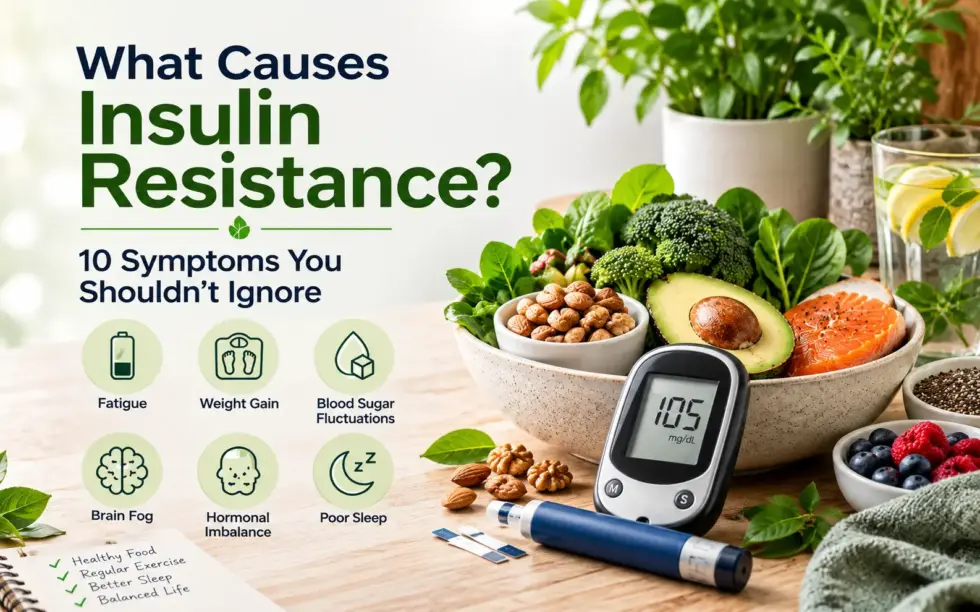
What Causes Insulin Resistance? 10 Symptoms You Shouldn’t Ignore

Insulin resistance sounds like one of those clinical phrases that belongs in a lab report. But it’s actually pretty personal.
Because insulin resistance usually shows up quietly. Not as a dramatic “something is wrong” moment. More like. Huh, I’m always tired lately. Why am I hungry again? Why is my belly getting softer even though I didn’t change much?
And the annoying part is you can live with it for years without knowing. Meanwhile your body is working overtime just to keep your blood sugar normal.
Let’s break it down in plain language.
Insulin resistance is when your cells stop responding well to insulin, the hormone that helps move glucose (sugar) from your bloodstream into your muscles, liver, and fat cells to use for energy or store for later. When that response gets weaker, your pancreas compensates by making more insulin. For a while, blood sugar can look “fine” on basic tests. But the cost is high insulin levels and a metabolism that starts to get… messy.
Over time, this can lead to prediabetes, type 2 diabetes, nonalcoholic fatty liver disease, PCOS in many women, cardiovascular disease risk, and other stuff you definitely do not want to collect.
This article covers two things:
- What causes insulin resistance (the real-life drivers, not just textbook ones).
- 10 symptoms you shouldn’t ignore, because your body does drop hints.
Quick note: symptoms aren’t a diagnosis. If any of this feels familiar, use it as a nudge to get checked, not as a reason to panic.
To understand how insulin works and its role in our body better, you might find this resource from the NIDDK helpful.
What causes insulin resistance?
Most people want a single villain. Sugar. Carbs. Seed oils. Stress. Lack of willpower. Whatever the internet is arguing about today.
In reality it’s usually a pile-up. A handful of forces pushing in the same direction, slowly, over years.
Here are the big ones.
1. Excess body fat (especially visceral belly fat)
This is the one people hate hearing, and I get it. But it matters.
Not all fat is the same. Subcutaneous fat is the stuff under the skin. Visceral fat is the deeper fat around your organs. Visceral fat is metabolically active, releasing inflammatory signals and free fatty acids that interfere with insulin signaling, especially in the liver. This study provides more insights into this issue.
That’s why someone can be “not that heavy” but carry weight in the middle and still be insulin resistant. Waist circumference can tell you a lot.
And no, this isn’t about shame. It’s about biology.
2. A sedentary lifestyle (even if you exercise sometimes)
You can go to the gym three times a week and still sit 9 to 10 hours a day. That counts.
Muscle is one of your best glucose sinks. When muscles contract, they can take up glucose even with less insulin. So when you move less, your body needs more insulin to do the same job.
Regular walking, strength training, and just interrupting long sitting streaks can make a noticeable difference, as highlighted in this research.
Not because exercise is magic. But because your muscles are literally built to handle glucose.
3. Chronic high-calorie intake (and frequent snacking)
Insulin resistance is often a “too much, too often” problem.
When you’re constantly eating, especially refined carbs or high-calorie ultra-processed foods, insulin is constantly being called to action. High insulin all day. Every day. That pattern can make cells less responsive over time.
This doesn’t mean you must do fasting or skip meals forever. But if your day is basically breakfast, snack, coffee drink with sugar, snack, lunch, snack, dinner, dessert, snack… your insulin never gets a break.
Your body was not designed for that kind of nonstop incoming supply.
4. Poor sleep (and sleep apnea)
Sleep is one of the fastest ways to change insulin sensitivity. Even a few nights of short sleep can make the body more insulin resistant in studies.
And sleep apnea is a major player. If you snore loudly, wake up unrefreshed, or feel sleepy during the day, it’s worth taking seriously. Sleep apnea is linked to insulin resistance through intermittent low oxygen, stress hormones, and inflammation.
You can eat perfectly and still struggle if your sleep is wrecked.
5. Chronic stress and high cortisol
Stress doesn’t just live in your head. It changes your hormones.
Chronic stress can raise cortisol and adrenaline, which push glucose into the bloodstream to help you “handle danger.” That made sense when danger meant a tiger. Now it’s Slack notifications and money problems, and the glucose still shows up… but you’re not sprinting away.
Over time, this can contribute to insulin resistance, cravings, belly fat accumulation, and disrupted sleep. It becomes a loop.
6. Genetics and family history
Some people are simply more prone.
If type 2 diabetes runs in your family, you may develop insulin resistance at a lower weight or earlier age. That doesn’t mean it’s inevitable, but it does mean you should treat prevention like a priority, not an afterthought.
7. Hormonal conditions (PCOS, menopause, thyroid issues)
PCOS (polycystic ovary syndrome) is strongly linked with insulin resistance. In many cases, insulin resistance is a central driver of symptoms like irregular cycles, acne, and excess hair growth.
Menopause can also increase insulin resistance risk due to changes in estrogen, body fat distribution, and muscle mass.
Thyroid dysfunction can complicate metabolic health too, though the relationship is not always straightforward.
8. Certain medications
Some medications can worsen insulin resistance or raise blood sugar. Examples include long-term corticosteroids, some antipsychotics, and some HIV treatments.
This doesn’t mean “stop your meds.” It means if you’re noticing changes after starting something new, talk with your clinician. There may be alternatives or strategies to offset the effect.
9. Smoking and heavy alcohol intake
Smoking is associated with increased insulin resistance and higher type 2 diabetes risk. Heavy alcohol intake can promote fatty liver and metabolic disruption too.
Also, alcohol can mess with sleep and appetite, which then spills into everything else. It’s rarely just one pathway.
10. Inflammation and fatty liver
Nonalcoholic fatty liver disease (NAFLD), now increasingly called MASLD, is closely tied to insulin resistance. The liver becomes less responsive to insulin, continues releasing glucose, and drives higher insulin production.
Sometimes fatty liver is the first “metabolic warning light” someone gets, even before blood sugar looks abnormal.
10 symptoms of insulin resistance you shouldn’t ignore
Here’s where it gets practical.
Some of these symptoms are subtle. Some are common and easy to dismiss. And to be fair, many can be caused by other issues too.
But if you recognize multiple items on this list, especially alongside a family history or weight gain around the middle, it’s worth investigating.
1. You’re tired all the time, especially after eating
This is a classic one.
If you eat and feel sleepy, foggy, or like you need to lie down. That post-meal crash can happen when blood sugar and insulin are swinging around more than they should.
Some people describe it as a “food coma.” Others feel weirdly anxious or shaky a couple hours later, like their energy fell off a cliff.
Not everyone gets this. But if you do, don’t just blame age or being busy.
2. You’re hungry again soon after a meal (and cravings are intense)
Insulin resistance can mess with satiety signals.
You eat. You should feel satisfied. But instead, you’re grazing an hour later, and the cravings lean toward carbs and sweets. That’s because the body is struggling to get glucose into cells efficiently, so your brain interprets it as “we still need energy.”
It can feel like a willpower problem. It’s often not.
Also, if you get “hangry” fast or feel shaky when meals are delayed, that can be another clue.
3. Weight gain around the belly (even if the scale isn’t changing much)
Central weight gain is one of the strongest visual hints of insulin resistance.
High insulin levels promote fat storage and make fat breakdown harder. And visceral fat itself worsens insulin resistance, so it becomes a cycle. A pretty unfair one, honestly.
If your pants are tighter in the waist, or your waist-to-hip ratio is creeping up, pay attention. Especially if nothing else in your routine explains it.
4. Dark patches of skin (acanthosis nigricans)
This one is more specific.
Acanthosis nigricans looks like dark, velvety discoloration, usually around the neck, armpits, groin, or under the breasts. It’s associated with high insulin levels stimulating skin cells.
If you notice this and it’s new, it’s a very good reason to ask for metabolic labs. It’s not just a cosmetic thing.
5. Skin tags that keep showing up
Skin tags are common and often harmless. But multiple skin tags, especially around the neck and underarms, are associated with insulin resistance in many people.
It’s not a perfect diagnostic sign. Plenty of insulin-sensitive people have them too. But when skin tags are increasing along with other symptoms, it can be part of the bigger picture.
6. Brain fog, poor focus, or “I can’t think straight” afternoons
This can be hard to pin on one cause, because life itself causes brain fog.
But unstable blood sugar and high insulin can contribute to energy dips and cognitive fuzziness. People often report:
- Trouble concentrating after lunch
- Feeling mentally “slow” mid afternoon
- Needing sugar or caffeine to push through
If you’re stuck in that cycle daily, it’s worth looking at metabolic health, not just productivity hacks.
7. High triglycerides and low HDL on bloodwork
This one is sneaky because you can feel totally fine while your labs quietly wave a red flag.
A common insulin resistance pattern on a lipid panel is:
- Elevated triglycerides
- Low HDL cholesterol
Sometimes LDL may look “not terrible,” so people assume everything is okay. But triglycerides and HDL often reflect metabolic health more directly.
If your doctor has ever said “watch your triglycerides” or “your HDL is low,” don’t ignore it.
8. High blood pressure (or it’s trending upward)
Insulin resistance is tied to high blood pressure through several mechanisms, including sodium retention, increased sympathetic nervous system activity, and vascular changes.
If your blood pressure used to be normal and now it’s borderline. Or if it’s climbing each year. That’s not just aging. That’s data.
This is part of why insulin resistance clusters with other issues as “metabolic syndrome.”
9. Irregular periods, fertility issues, acne, or unwanted hair growth (often PCOS-related)
For many women, insulin resistance shows up first through reproductive symptoms.
High insulin can increase ovarian androgen production, disrupting ovulation and contributing to:
- Irregular or missing periods
- Difficulty getting pregnant
- Acne, especially along the jawline
- Increased facial or body hair growth
- Thinning scalp hair in some cases
If you’ve been told “maybe PCOS” or you suspect it, insulin resistance should be part of the conversation.
10. Prediabetes numbers (or “normal” glucose but rising A1c)
Sometimes the only sign is in the labs.
- Fasting glucose creeping up (even within “normal”)
- A1c rising year over year
- Fasting insulin elevated (not always tested, but useful)
- HOMA-IR elevated (calculated from glucose and insulin)
A frustrating detail: you can have insulin resistance with normal fasting glucose and an A1c that looks okay. Because high insulin is keeping glucose controlled. Until it can’t.
So if your results are “normal” but trending worse, don’t wait for the official prediabetes label to take action.
How insulin resistance is usually diagnosed (and what to ask for)
A lot of people assume there’s one definitive test. There isn’t one perfect test in everyday practice, but there are useful ones.
If you’re talking to a clinician, you can ask about:
- Fasting glucose
- Hemoglobin A1c
- Fasting insulin (not always included, but can add context)
- Lipid panel (triglycerides, HDL, LDL)
- Liver enzymes and possible imaging if fatty liver is suspected
- Sometimes an oral glucose tolerance test (OGTT), especially in pregnancy or complex cases
If you have symptoms plus risk factors, it’s reasonable to ask for a deeper look than “your fasting glucose is fine, bye.”
Why you shouldn’t ignore insulin resistance (even if you feel okay)
Because insulin resistance is one of those conditions where the damage can accumulate quietly.
The “bad stuff” people fear, like type 2 diabetes, heart disease, nerve issues, kidney problems, vision issues, often happens later. Insulin resistance is earlier in the chain.
The good news is. Earlier in the chain is where change tends to work best.
Not perfectly. Not overnight. But best.
What you can do next (simple, not extreme)
Not medical advice. Just a practical next step list you can bring into real life.
- Get labs if you recognize several symptoms. Don’t guess.
- Walk daily, especially after meals if you can. Even 10 to 15 minutes helps glucose handling.
- Strength train a couple times a week. Muscle improves insulin sensitivity.
- Prioritize sleep like it’s a health intervention, because it is.
- Build meals around protein, fiber, and minimally processed carbs. You don’t have to go zero-carb to improve insulin response.
- Reduce sugary drinks and liquid calories. This is often the easiest high-impact change.
- If you suspect sleep apnea, get evaluated. Treating it can change everything.
And if you’re feeling overwhelmed reading that list. Yeah. Normal.
Pick one thing. Do it consistently. Recheck labs later. That’s a real plan.
Let’s wrap up
Insulin resistance is basically your body saying, “I’m having trouble using insulin efficiently.” It often builds from modern life factors that stack together: sedentary days, stress, sleep problems, frequent ultra-processed food, weight gain around the middle, genetics, hormones.
The symptoms are not always loud, but they’re there if you know what to look for.
Here are the 10 to remember:
- Fatigue, especially after meals
- Hunger soon after eating and strong cravings
- Belly weight gain
- Dark velvety skin patches
- Increasing skin tags
- Brain fog and energy crashes
- High triglycerides and low HDL
- Rising blood pressure
- PCOS-like symptoms (irregular periods, acne, unwanted hair)
- Prediabetes trends or rising A1c, even if “still normal”
If several of these hit close to home, don’t just shrug it off. Get checked. Get real numbers. And start with small changes you can actually live with.
Because the earlier you catch insulin resistance, the more leverage you have. That part is genuinely hopeful.
FAQs (Frequently Asked Questions)
What is insulin resistance and how does it affect the body?
Insulin resistance occurs when your cells stop responding well to insulin, the hormone that helps move glucose from your bloodstream into muscles, liver, and fat cells for energy or storage. As this response weakens, your pancreas produces more insulin to compensate. Over time, this can lead to high insulin levels and a disrupted metabolism, increasing risks for prediabetes, type 2 diabetes, fatty liver disease, PCOS, cardiovascular problems, and more.
What are common causes of insulin resistance beyond just sugar or carbs?
Insulin resistance is usually caused by a combination of factors including excess visceral belly fat, sedentary lifestyle (even if you exercise occasionally), chronic high-calorie intake with frequent snacking especially on refined carbs and ultra-processed foods, poor sleep or sleep apnea, chronic stress raising cortisol levels, genetics and family history, and certain hormonal conditions. It’s rarely due to a single cause.
How does excess belly fat contribute to insulin resistance?
Visceral fat around your organs is metabolically active and releases inflammatory signals and free fatty acids that interfere with insulin signaling, particularly in the liver. This disrupts your body’s ability to use insulin effectively even if you’re not visibly overweight. Measuring waist circumference can help indicate risk without focusing on shame but biology.
Can lifestyle changes like exercise improve insulin sensitivity?
Yes! Muscle tissue helps absorb glucose even with less insulin when it contracts. Regular physical activity such as walking, strength training, and breaking up long periods of sitting can significantly improve insulin sensitivity. Even if you go to the gym three times a week but sit most of the day, you may still be at risk.
Why is poor sleep linked to insulin resistance?
Lack of quality sleep or conditions like sleep apnea can quickly worsen insulin sensitivity by causing intermittent low oxygen levels, increasing stress hormones and inflammation. Even a few nights of short sleep can make your body more resistant to insulin regardless of diet or exercise habits.
What symptoms might indicate I have insulin resistance?
Insulin resistance often shows up quietly with symptoms like persistent tiredness, frequent hunger despite eating recently, gradual softening or increase in belly fat without major lifestyle changes. These signs are hints from your body that shouldn’t be ignored—getting checked by a healthcare provider is important for diagnosis and prevention.