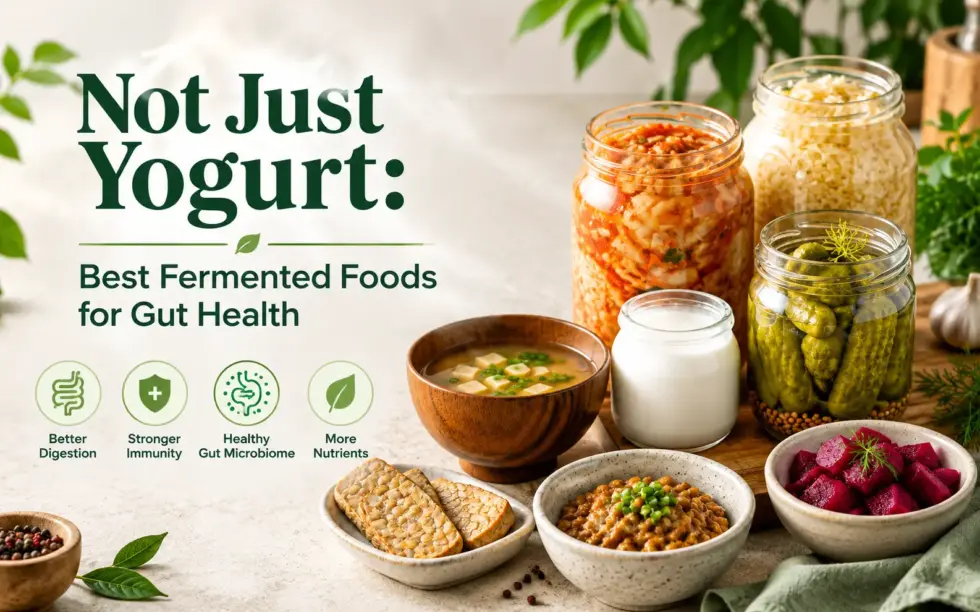

Most gut health conversations online start and end with yogurt.
Which is fine. Yogurt can be great.
But it’s also kind of… boring? And honestly, it leaves a lot on the table, because fermented foods are way bigger than one dairy cup with fruit at the bottom.
If you have ever walked through an Asian grocery store, or even the “international” aisle at a normal supermarket, you have seen the truth. There are jars, tubs, bottles, crocks, weird little packets. Some smell sharp. Some fizz. Some look a little scary. And a lot of them can be genuinely helpful for your gut, if you pick the right ones and eat them in a way your body actually tolerates.
So this is a guide to fermented foods for gut health that are not just yogurt. We’ll still talk about yogurt, yes. But we’re going way past it.
A quick heads up before we get into the list. Not every fermented food automatically contains live beneficial microbes by the time you eat it. Some are pasteurized. Some are filtered. Some are basically “fermented flavor” but no longer probiotic. That doesn’t make them worthless, it just changes what you’re getting.
Also. If you have histamine intolerance, certain gut conditions, or you’re very sensitive right now, fermented foods can sometimes make you feel worse before better. So we’ll keep this real and practical, not preachy.
What “fermented” actually means (and why your gut cares)
Fermentation is when microbes like bacteria or yeast eat sugars and starches and turn them into other compounds. Acids, gases, alcohols, and all kinds of byproducts.
In food, that usually means:
- A tangy taste (lactic acid is common)
- Better preservation (lower pH makes it harder for bad microbes to grow)
- New textures (crunchier, fizzier, softer)
- Potential probiotic benefits when the food still has live cultures
- Potential prebiotic benefits too, because some fermented foods contain fibers and compounds that feed the microbes already living in your gut
Gut health is complicated, but here’s the simple version. Your gut microbiome likes variety. It likes plant fibers. It often responds well to small regular exposures to beneficial microbes, especially when they come with real food, not just isolated strains in a capsule.
Fermented foods can be one of those “small inputs, consistent habit” levers. Not a miracle. But helpful.
Before you start: how to add fermented foods without wrecking your stomach
This matters more than people admit.
If you go from zero fermented foods to a big bowl of sauerkraut, you might feel gassy, bloated, uncomfortable. That is not a moral failing. It’s just your gut adjusting.
A calmer approach:
- Start tiny. Like 1 teaspoon to 1 tablespoon a day.
- Go slow. Stay at that dose for several days, then increase.
- Rotate. Don’t rely on one food. Try different types across the week.
- Eat them with meals. Most people tolerate fermentation better with other food.
- Watch the salt. A lot of fermented foods are salty by design. Balance the rest of your day.
And if you have symptoms like hives, headaches, flushing, or you feel “wired” after fermented foods, that can be a histamine thing. Not always, but it’s common enough to mention.
Alright. Let’s get into the good stuff.
1. Kefir (the gut health “cheat code,” if you tolerate dairy)
If yogurt is the poster child, kefir is the overachieving cousin.
Kefir is a fermented milk drink made using kefir grains, which are basically a living community of bacteria and yeasts. It tends to have a wider variety of microbes than standard yogurt. It’s also more drinkable, which makes it easy to use daily without thinking too hard.
Why it can be great for your gut:
- Often contains multiple strains of lactic acid bacteria and beneficial yeasts
- Fermentation lowers lactose, so some lactose sensitive people tolerate it better
- Easy to dose: you can literally sip a few ounces
How to use it without getting bored:
- Blend with berries and a spoon of peanut butter
- Use as a base for salad dressing (yes, really, garlic and lemon and herbs)
- Drink a small glass with breakfast
What to look for:
- “Live and active cultures”
- Plain, unsweetened if possible (added sugar tends to cancel the vibe)
- Avoid ultra long shelf life products that don’t specify live cultures
If you want non dairy kefir, there’s water kefir and coconut kefir too. They can be good, just check labels because many are basically sugary sodas with “kefir” branding.
2. Sauerkraut (raw, unpasteurized is the point)
Sauerkraut is fermented cabbage. That’s it. Cabbage plus salt, time, and microbes.
The problem is that a lot of store sauerkraut is pasteurized or shelf stable, which means it’s not bringing live cultures anymore. Still tasty, still a fermented food historically, but not probiotic in practice.
Why it helps:
- Provides live lactic acid bacteria when unpasteurized
- Cabbage brings fiber and plant compounds
- Easy to add to meals without cooking
How to eat it:
- On eggs
- On salads
- Next to a bowl of beans or lentils
- As a side with rice and veggies
A small note. Do not cook your raw sauerkraut if your goal is probiotics. Heat can kill the live cultures. Add it after cooking, like a topping.
What to buy:
- Refrigerated sauerkraut
- Labels that say “raw” or “unpasteurized”
- Minimal ingredients: cabbage, salt, maybe spices
3. Kimchi (spicy, funky, and honestly pretty powerful)
Kimchi is the Korean fermented vegetable superstar. Usually napa cabbage and radish with garlic, ginger, chili, scallions, and salted seafood in traditional versions.
It has this reputation for being intense. And yeah, it can be. But you can start with mild kimchi too.
Gut benefits:
- Live cultures (if unpasteurized)
- Big flavor means you eat small amounts, which is perfect for beginners
- Diverse ingredients beyond cabbage: garlic, ginger, etc
A few practical tips:
- Start with 1 tablespoon a day
- If spice triggers reflux, look for white kimchi or mild versions
- If you avoid seafood, many brands have vegan kimchi
Kimchi is one of those foods that can make you feel like you’ve “upgraded” your meal instantly. Plain rice and chicken? Add kimchi. Now it tastes like something.
4. Miso (fermented, comforting, and sneaky easy)
Miso is fermented soybean paste made with koji (a cultured grain inoculated with Aspergillus oryzae), plus salt, plus time.
People mostly think of miso soup, but miso is more versatile than that.
Why it’s gut friendly:
- Fermented food with beneficial microbes, depending on processing
- Contains amino acids and flavorful compounds that make meals satisfying
- Easy to use in small amounts
The key mistake: boiling miso.
If you dump miso into boiling soup and cook it hard, you’re likely killing most of the live cultures. The move is to whisk miso into a little warm (not boiling) broth, then add it back at the end.
Other ways to use miso:
- Mix into salad dressings (miso + tahini + lemon = ridiculous)
- Use in marinades for tofu, salmon, or chicken
- Stir into roasted veggie glaze at the end
Look for miso in the refrigerated section when possible, and go with brands that don’t pasteurize if you want live cultures. Some miso is pasteurized for stability.
5. Tempeh (fermented, but also high protein, so it feels like real food)
Tempeh is fermented soybeans pressed into a cake, held together by a fungal culture (usually Rhizopus).
It’s not “probiotic” in the same way as raw kraut, because tempeh is usually cooked. But fermentation still changes the food. It can improve digestibility, reduce certain anti nutrients, and make soy easier on some stomachs.
Why it’s worth including:
- Fermentation transforms the bean, often making it easier to tolerate
- High protein, high fiber, very filling
- Great for building gut friendly meals that are not just “add a spoon of kraut”
How to make tempeh not taste like cardboard:
- Steam it for 10 minutes first (reduces bitterness)
- Then marinate and pan sear or bake
- Use bold flavors: soy sauce, garlic, ginger, maple, chili
So yeah, not a live culture powerhouse after cooking. Still a fermented food that can support a gut friendly pattern of eating.
6. Natto (the hardcore one, but it works for some people)
Natto is fermented soybeans with Bacillus subtilis. It is sticky, stringy, and has a smell that makes some people back away slowly.
But natto is also one of the most interesting fermented foods out there.
Why people eat it for health:
- Contains live bacteria
- High in vitamin K2
- Contains nattokinase (an enzyme often discussed for cardiovascular support, though supplementation is a separate conversation)
How to make it more approachable:
- Eat it with hot rice, soy sauce, mustard, scallions
- Add a raw egg yolk if you’re comfortable with that
- Start with a small portion
You do not have to force yourself to love natto. If you hate it, you hate it. There are plenty of other options.
7. Kombucha (helpful, but the sugar and acidity matter)
Kombucha is fermented tea made with a SCOBY, which is a symbiotic culture of bacteria and yeast.
It can be a nice way to get fermented foods in, especially if you like fizzy drinks. But kombucha is also easy to overdo because it feels like a “healthy soda.”
Potential gut upsides:
- Contains organic acids and microbial byproducts
- May contain live microbes if unpasteurized
- Can replace higher sugar beverages
But watch out for:
- Sugar content (some bottles are basically sweet tea)
- Bloating if you drink too much too fast
- Acid reflux triggers, for some people
- Alcohol content is usually low, but not always zero
If kombucha works for you, treat it like a supplement-y beverage. A small glass. Not a 32 oz daily habit.
8. Pickles (but only the real fermented kind)
This trips people up.
Most pickles are not fermented. They’re just cucumbers in vinegar.
Vinegar pickles are fine. They’re tasty. But they don’t usually have live cultures.
Real fermented pickles, on the other hand, are made in salt brine and naturally sour over time. These lively foods not only add flavor but also beneficial probiotics to your diet.
How to tell the difference:
- Fermented pickles are usually refrigerated
- Ingredients should be: cucumbers, water, salt, spices (not vinegar)
- Labels may say “naturally fermented” or “live cultures”
If you find real fermented pickles, they’re an easy “one spear with lunch” addition.
9. Plain yogurt (still good, just choose it carefully)
Okay, yogurt is still on the list. Because it deserves to be.
But if you’re eating yogurt for gut health, the kind matters.
What helps:
- Live and active cultures
- Minimal added sugar
- Higher protein can help you stick with it as a routine
- Greek is strained, higher protein, often lower sugar
- Regular can have a softer taste, sometimes more lactose
Tips to make it gut friendly and actually enjoyable:
- Add berries and chia seeds
- Add cinnamon and walnuts
- Use it as a savory sauce: yogurt + garlic + cucumber + salt (quick tzatziki vibe)
If dairy bothers you, you can try lactose free yogurt, or sheep and goat yogurt. Some people tolerate those better. Non dairy yogurts are a mixed bag. Some have live cultures, some don’t, and many are basically starch gels with sugar. Read labels.
10. Traditional buttermilk and cultured dairy (a quiet classic)
In some cultures, fermented dairy isn’t a “health trend,” it’s just normal food. Traditional buttermilk, cultured milk, lassi, ayran, these are all in the same universe.
They tend to be easier to drink than yogurt, and they’re often used with meals.
Why it can be useful:
- Adds fermentation without heavy spice or fiber
- Can be soothing for some people’s digestion
- Easy to take in small amounts
Store “buttermilk” in some places is cultured, but not always teeming with live cultures in a meaningful way. Still, if it’s cultured and refrigerated, it’s a reasonable option.
11. Sourdough (yes, bread can count, sort of)
Sourdough is fermented, but again, it’s usually baked. So the live cultures are not the main story.
The story is what fermentation does to the dough.
Long fermentation can reduce certain compounds that bother some people, and it can make bread easier to digest for those who don’t do well with fast risen bread.
This is not a “sourdough is gluten free” claim. It’s not. But traditional long fermented sourdough can be gentler for some.
What to look for:
- Real sourdough made with starter, not just vinegar and yeast
- Short ingredient list
- Ideally from a bakery that does long fermentation
Gut health is not only probiotics. It’s also tolerability. Sourdough can fit there.
12. Fermented veggies beyond kraut and kimchi (underrated and easier than you think)
Carrots. Beets. Green beans. Cauliflower. Jalapeños. Onions.
You can ferment a lot of vegetables in a simple salt brine, and they can be a really nice way to get variety into your gut routine.
The benefit here is variety, honestly. Different vegetables bring different fibers and plant compounds. Fermentation changes them, softens edges, adds tang.
If you’re buying, look for:
- Refrigerated jars
- “Unpasteurized”
- No vinegar (or vinegar listed way down, depending on style)
If you’re making them at home, do it safely. Clean jars, correct salt ratios, and don’t wing it if you’re new. Food safety matters.
13. Apple cider vinegar (not probiotic, but still fermented and sometimes helpful)
Apple cider vinegar with the “mother” is made through fermentation, but it’s not really a probiotic food in the same way kraut is. It’s acidic, and that environment is not exactly a thriving live culture party by the time it hits your shelf.
Still, some people find ACV helps with digestion, appetite, or blood sugar response when used with meals. Evidence is mixed, and it’s not magic, but it can be part of a routine.
If you use it:
- Dilute it. Always.
- Use 1 to 2 teaspoons in water, or in salad dressing
- Avoid if it worsens reflux or irritates your throat
I’m including it because people ask, and because it’s commonly lumped in with fermented gut health stuff. Just keep expectations realistic.
What about fermented foods vs probiotic supplements?
Supplements can help in specific situations. Certain strains have evidence for certain outcomes. But supplements are also narrow. One or a few strains, in a capsule, with variable survivability.
Fermented foods tend to be:
- More enjoyable (so you actually stick with them)
- Part of meals (which changes digestion and tolerance)
- A way to add microbial exposure alongside fiber and nutrients
If your gut is very disrupted, you might still benefit from a targeted supplement, ideally chosen with a clinician. But for everyday “support my gut over the next year” goals, fermented foods are a strong baseline.
A simple “fermented foods for gut health” weekly plan (that won’t overwhelm you)
If you’re trying to build a habit, here’s a low friction approach. Nothing extreme.
Day to day base:
- Pick one: kefir OR yogurt, 3 to 5 days a week
- (Start small, half a cup or less.)
Add a spoon habit:
- 1 tablespoon sauerkraut or kimchi with one meal daily
- (Or every other day if you’re sensitive.)
Rotate a bonus fermented food:
- Miso soup once or twice a week
- Kombucha once or twice a week
- Fermented pickles a few times a week
- Tempeh as a protein option once or twice a week
That’s it. You don’t need to collect every fermented food like it’s a hobby.
What to avoid (or at least be careful with)
Some fermented foods sound healthy but come with tradeoffs:
- Pasteurized sauerkraut and kimchi if you’re specifically seeking live cultures
- Sugar heavy kombucha that spikes cravings and blood sugar
- “Probiotic” snacks with tiny amounts of cultures and lots of additives
- Overdoing it and ending up bloated and miserable, then quitting entirely
Consistency beats intensity here.
FAQs people usually have, quickly
Do I need to eat fermented foods every day?
No. But small regular servings tend to work better than random big servings.
How long until I notice a difference?
Some people notice digestion changes in days. For others, it’s weeks. Sometimes the “difference” is subtle. Less bloating, more regularity, better tolerance to foods.
Can I just eat fermented foods and ignore fiber?
Please don’t. Fiber is still a big deal for gut health. Fermented foods are more like a support beam, not the entire house.
Are fermented foods safe if I’m immunocompromised?
This is a talk to your clinician situation. Some fermented foods contain live microbes and there can be risk depending on your condition.
Let’s wrap this up
Yogurt is fine. It’s just not the whole story.
If you want the best fermented foods for gut health, think bigger and a little more interesting:
- Kefir for an easy daily probiotic style habit
- Raw sauerkraut and kimchi for live cultures in tiny doses
- Miso for a warm, comforting fermented add on
- Fermented pickles for crunchy, salty variety
- Tempeh and sourdough for “fermented but cooked” foods that can still be easier to digest for some
- Kombucha if it works for you, but keep it sensible
Start small. Rotate. Pay attention to how you feel. And don’t be surprised if your gut likes the variety more than any single “superfood” you try to force down.
Not just yogurt. Way more fun than yogurt, honestly.
FAQs (Frequently Asked Questions)
What are fermented foods and why are they important for gut health?
Fermented foods are those transformed by microbes like bacteria or yeast that consume sugars and starches, producing acids, gases, and other compounds. This process creates tangy tastes, better preservation, new textures, and potential probiotic benefits if live cultures remain. They support gut health by introducing beneficial microbes and prebiotic fibers that feed your existing gut microbiome, promoting variety and balance.
Why should I not rely solely on yogurt for gut health?
While yogurt is a popular fermented food rich in probiotics, it can be somewhat limited in variety. Fermented foods extend far beyond yogurt to include diverse options like kefir, sauerkraut, kimchi, and more. These alternatives offer different strains of beneficial microbes and unique nutrients that can enhance your gut health more comprehensively.
How can I safely introduce fermented foods into my diet without upsetting my stomach?
Start with very small amounts—like 1 teaspoon to 1 tablespoon daily—and maintain that dose for several days before increasing. Rotate between different types of fermented foods rather than relying on just one. Always consume them with meals to improve tolerance and watch out for high salt content. If you experience symptoms like hives or headaches, it might be related to histamine intolerance.
What makes kefir a good choice for improving gut health?
Kefir is a fermented milk drink containing multiple strains of lactic acid bacteria and beneficial yeasts, often more diverse than standard yogurt. Its fermentation reduces lactose content, making it easier to digest for some lactose-sensitive people. It’s also convenient to consume daily as a drinkable probiotic source.
How can I tell if sauerkraut contains live beneficial microbes?
Look for raw, unpasteurized sauerkraut labeled as containing live cultures. Pasteurized or shelf-stable versions have usually lost their probiotic benefits due to heat treatment. Raw sauerkraut retains live lactic acid bacteria essential for gut health along with fiber from cabbage.
Are all fermented foods probiotic and safe for everyone?
Not all fermented foods contain live probiotics by the time you eat them; some are pasteurized or filtered removing live microbes. Also, people with histamine intolerance or sensitive gut conditions might react negatively to certain fermented foods initially. It’s important to choose properly prepared products and introduce them gradually while monitoring your body’s response.