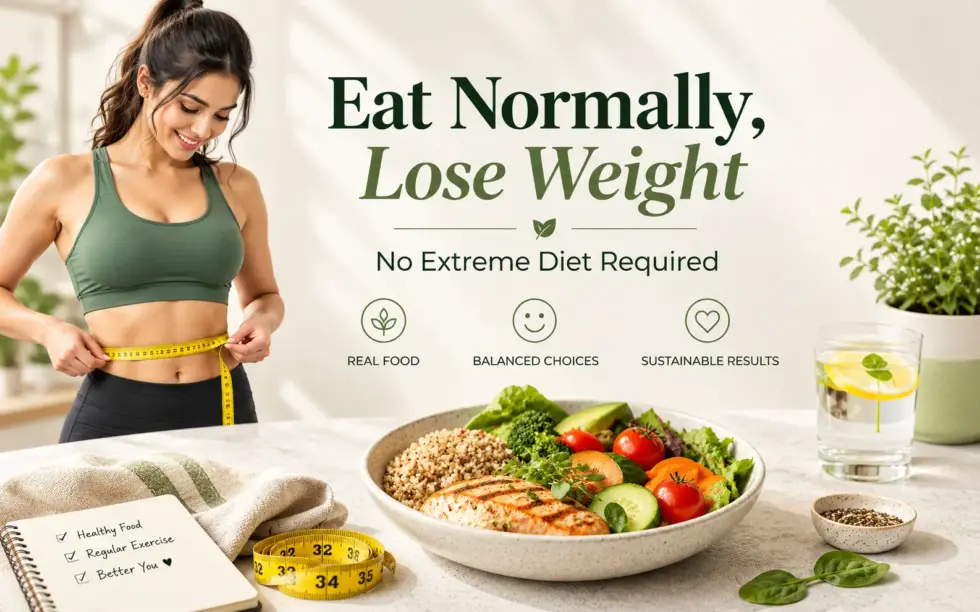

There’s this weird belief floating around that weight loss has to feel like punishment.
Like, if you’re not cutting carbs, skipping dinner, drinking lemon water that tastes like regret, or surviving on sad little bowls of something “clean”, then it doesn’t count.
And honestly, I used to believe that too.
But the most sustainable weight loss I’ve seen, in myself and in other people, comes from doing something almost boring.
Eating normally.
Not “perfectly”. Not like a fitness model. Not like you’re training for a photoshoot. Just normally, with a few smart adjustments that don’t make you hate your life.
This is that kind of approach. No extreme diet required. No food group banished. No dramatic resets. Just a way to eat that you can actually keep doing in real life.
What “eat normally” actually means (because people twist this)
When I say “eat normally”, I don’t mean “eat whatever, whenever, forever, and hope metabolism handles it”.
I mean eating in a way that looks like a normal human life.
You eat meals. You eat snacks sometimes. You eat dinner with family. You go out on weekends. You have dessert occasionally. You don’t spiral because you had pizza. You don’t start over on Monday like your body is a broken computer.
Eating normally means:
- You have a basic structure most days.
- You eat enough protein and fiber without turning meals into math.
- You don’t rely on willpower as your main plan.
- You adjust portions and patterns, not your entire personality.
That’s it. It’s not flashy. Which is kind of why it works.
Why extreme diets feel effective (at first) and then collapse
Extreme diets usually work short term because they do one thing really well: they make it hard to eat a lot of calories.
If you cut carbs, you remove tons of common foods and your intake drops. If you do juice cleanses, you’re basically on liquid. Of course the scale moves. If you do very low calorie plans, same deal.
But the problem is the cost.
- Hunger ramps up.
- Cravings get louder.
- Social life becomes annoying.
- Energy drops.
- And eventually you “snap”, because your body is not designed to live in famine mode while your brain watches everyone eat normally around you.
Then comes the rebound. Not because you’re weak. Because the plan was unrealistic.
So the real question isn’t “what makes me lose weight fastest”.
It’s “what can I keep doing without feeling trapped”.
The simplest fat loss truth that nobody wants to hear
If you want to lose body fat, you need a calorie deficit over time.
Not starvation. Not misery. Just consistently eating a bit less than your body uses.
That’s the mechanics.
But here’s what matters more than the mechanics: how you create the deficit.
Most people try to force it with restriction, leading to unsustainable results. A more normal approach is to create it through better food choices most of the time, slightly smaller portions, a bit more daily movement, and routines that reduce mindless eating.
So the deficit happens, but you don’t feel like your whole life is shrinking.
Start with this: stop trying to “be good” all day
This might sound random, but it’s huge.
A lot of people do this thing where they try to be “good” until they can’t.
Breakfast: tiny. Lunch: salad with air. Snack: none, because discipline. Then dinner hits and you’re starving and annoyed and suddenly you’re eating like you haven’t seen food in years.
That pattern is not lack of self control. It’s predictable.
Eat like a normal person earlier in the day and dinner stops being a battlefield.
A normal day that supports weight loss usually looks like:
- a real breakfast or a protein heavy first meal
- a solid lunch
- a planned snack if needed
- a dinner that isn’t a “reward” for suffering
You’re not trying to win hunger games. You’re trying to build consistency.
The 4 boring habits that make “normal eating” lead to weight loss
If you do nothing else, do these four. They’re not trendy, but they work.
1. Eat protein at every meal (yes, every meal)
Protein is the closest thing to a cheat code that still feels normal.
It helps you stay full, supports muscle, and makes your meals feel more satisfying. And when meals are satisfying, you snack less without forcing it.
You don’t need ridiculous amounts. Just include a solid source each time.
Examples (not a complete list, just to make it real):
- eggs, Greek yogurt, cottage cheese
- chicken, turkey, fish, shrimp
- tofu, tempeh, edamame
- lentils, beans, chickpeas
- protein powder if that’s convenient, not mandatory
A simple rule that works for a lot of people: build the meal around the protein, not around the carb.
Not because carbs are evil. Just because most people naturally overshoot calories when the meal is mostly bread, pasta, cereal, and “quick stuff”.
2. Keep high fiber foods in the rotation
Fiber makes “normal eating” work because it slows things down and adds volume.
When your meals have fiber, you feel full on fewer calories. That’s the whole game, really.
High fiber foods that don’t feel like diet food:
- fruit you actually like (bananas, berries, apples, oranges)
- vegetables roasted with salt and olive oil (not steamed sadness)
- oats
- potatoes with the skin
- beans and lentils
- popcorn (plain or lightly seasoned, not caramel brick popcorn)
Aim for having at least one fiber heavy item in most meals. That’s a normal target.
3. Use “slightly less” portions, not “tiny” portions
The easiest way to ruin a plan is to cut portions so hard you feel deprived.
Instead, eat like you normally would, but take 10 to 20 percent off.
That sounds too small to matter, but over weeks it matters a lot.
Practical ways to do that without measuring:
- Use a slightly smaller plate for most meals.
- Serve yourself once, then wait 10 minutes before deciding on seconds.
- When eating pasta or rice, add more protein and veggies and slightly less starch.
- If you love snacks, keep them, just portion them into a bowl. Don’t eat from the bag.
This is normal human behavior stuff. Not diet stuff.
4. Make your “default meals” predictable
You don’t need a perfect meal plan. You need default meals you can repeat without thinking.
Because decision fatigue is real. If you have to “figure it out” every meal, you’ll eventually pick something easy and calorie dense.
Default breakfasts might be:
- Greek yogurt + fruit + granola (measured with your eyes, not a scale)
- eggs + toast + some fruit
- oatmeal + protein powder or yogurt mixed in
Default lunches:
- a sandwich with a real protein filling + fruit
- rice bowl with chicken or tofu + veggies + sauce
- leftovers from dinner (underrated)
Default dinners:
- protein + veg + carb, simple format
- stir fry
- tacos with lean protein and lots of toppings
- pasta with added protein and salad
The goal is not to eat the same thing forever. It’s to remove friction on busy days.
You don’t have to “quit” your favorite foods. You need a plan for them.
This is where most diets fail.
They treat favorite foods like crimes.
But in real life, you’re going to eat them. So you might as well learn how to include them without turning it into an all or nothing spiral.
Here are normal ways to do it:
The 80/20 approach (without being weird about it)
If most of your intake is made of satisfying, nutrient dense foods, you can absolutely have fun foods.
Not as a “cheat”. Just as food.
A simple version:
- Weekdays: keep it mostly consistent
- Weekends: enjoy meals out, dessert, drinks, but still eat like a person
Or even simpler:
- Most meals: protein + fiber + some carbs + fats
- Some meals: pizza, burger, ice cream, whatever
- Then back to normal at the next meal
No compensation. No starvation the next day. Back to normal is the whole skill.
Portion hacks that feel normal
You can eat the thing and reduce calories without feeling robbed.
- Want ice cream? Put it in a bowl, add berries, eat slowly.
- Want chips? Buy single serve packs or portion into a small bowl.
- Want pizza? Have two slices plus a big salad or veggies.
- Want a burger? Get it, but skip the fries or share them, add a side salad.
You’re not “being strict”. You’re just balancing the meal so you’re full and not overeating.
However, it’s important to be mindful of certain times of the year when weight gain is more likely, such as during holidays. This period often leads to holiday weight gain, which can be managed with careful planning and mindful eating strategies.
The hidden reason people can’t lose weight while “eating healthy”
This one stings a bit, but it’s common.
You can eat healthy foods and still gain weight.
Because calories still count, even when the food is organic, gluten free, or from a cute cafe.
Some classic examples:
- handfuls of nuts that turn into 500 calories
- “healthy” smoothies that are basically liquid dessert
- granola that’s more sugar than you realize
- cooking with lots of oil (oil is healthy, but it is very calorie dense)
- constant little bites and tastes while cooking, snacking, etc
So if you feel like you’re eating well but nothing is changing, don’t panic.
Just zoom out and ask:
- Are my portions creeping up?
- Am I drinking calories most days?
- Am I snacking out of habit, not hunger?
- Is my “healthy” meal actually a calorie bomb?
This isn’t about guilt. It’s about seeing the pattern.
Drinks matter more than people want to admit
You can keep your normal diet and still block weight loss if your drinks are doing heavy damage.
Common culprits:
- sugary coffee drinks
- soda and juice
- alcohol (and the snacks that come with it)
- fancy “wellness” drinks with hidden sugar
- even constant milk, creamers, and add ins
Normal fixes:
- switch to diet soda if you like soda
- make coffee at home, reduce syrups gradually
- keep juice as an occasional thing, not daily
- if you drink alcohol, pick a couple days a week, not every day, and have a plan for food
Also, water. Not in a preachy way. Just drink enough that you’re not confusing thirst for hunger.
Movement: you don’t need extreme workouts either
The same logic applies here.
You don’t need to train like an athlete to lose weight. You need to move consistently.
Most people underestimate what daily walking does when it’s consistent.
A normal weekly movement plan that works for a lot of people:
- Walk most days (even 20 to 40 minutes is solid)
- Strength train 2 to 3 times a week (basic full body work)
- Do something active that you actually like once a week (bike, swim, sport, dancing, whatever)
If you hate the gym, don’t go. Just don’t do nothing.
Because movement helps with:
- burning calories
- appetite regulation
- stress
- sleep
- keeping muscle while losing fat
And keeping muscle matters. Not for aesthetics only. It keeps your metabolism healthier and your body tighter as weight comes off.
Sleep and stress: the boring stuff that changes everything
You can eat normally and still feel like you’re failing if you’re exhausted.
When sleep is bad, hunger tends to go up and cravings get louder. Stress does similar things. Your brain wants quick comfort.
So yeah, you can out diet a bad week here and there. But long term, sleep and stress drive your eating.
A normal approach:
- Set a rough bedtime and keep it most nights.
- Get morning light when you can.
- Stop scrolling in bed if it keeps you wired.
- Don’t let yourself get so hungry and tired that takeout becomes the only option.
Also, stress eating is real. If food is your coping tool, you don’t need to shame yourself. You need extra tools.
Even small substitutions help:
- go for a quick walk before snacking
- drink tea and give it 10 minutes
- journal for 2 minutes, just dump the thoughts
- call someone
- eat the snack, but portion it and sit down with it, no phone
Normal, not perfect.
A “normal eating” day that supports weight loss (example)
Not a template you must follow. Just a realistic example.
Breakfast
Greek yogurt + berries + a bit of granola
Coffee
Lunch
Turkey sandwich with lots of veggies
An apple
Snack (if hungry)
Cottage cheese or a protein bar
Or popcorn
Dinner
Salmon or chicken
Roasted potatoes
Big serving of vegetables
A sauce you actually like
Dessert (optional)
A couple squares of chocolate or a small bowl of ice cream
That’s normal food. No cleanse. No weird rules. And for many people, if portions are reasonable, that will create a deficit.
What to do when weight loss stalls (without going extreme)
If you’re eating normally and progress slows, don’t jump to something dramatic.
Do a calm audit first.
1) Check your portions
Portions creep up quietly. Especially with snacks, oils, and “healthy extras”.
Try a small adjustment for 2 weeks:
- slightly less starch at dinner
- one less snack
- reduce cooking oil a bit
- keep dessert, just smaller
2) Check weekends
A lot of people are consistent Monday to Friday, then weekends erase the deficit.
You don’t have to be strict on weekends. But you may need some structure.
Normal structure might be:
- keep breakfast and lunch similar to weekdays
- choose one main treat per day, not five
- get a walk in
- drink water between drinks if you drink
3) Increase steps, not restriction
Before cutting more food, add movement.
Add 2,000 steps a day and see what happens over 2 to 3 weeks. It’s shockingly effective for some people, and it doesn’t mess with hunger the way aggressive dieting can.
4) Make sure you’re not chasing the scale daily
Weight fluctuates. Salt, hormones, sleep, stress, workouts, all of it changes the number.
Track trends, not single days.
If you want a simple method:
- weigh 3 to 7 times a week
- look at the weekly average
- compare averages over 2 to 4 weeks
That’s a lot more sane.
The mindset shift that makes this sustainable
You’re not “on” a diet.
You’re building a default way of eating that happens to lead to fat loss.
That difference sounds small, but it changes everything.
Because if your plan requires constant motivation, it will fail the moment life gets chaotic. And life is always chaotic eventually.
The goal is:
- simple meals you like
- enough flexibility to live
- enough structure to get results
- and routines you can repeat without thinking too hard
It’s not exciting. But it’s stable. And stability is what makes weight loss stick.
A quick checklist to keep yourself honest (and calm)
If you want to eat normally and lose weight, check these boxes most days:
- I ate protein at 2 to 4 meals
- I had at least a couple fiber rich foods
- I didn’t drink a ton of calories
- I moved my body in some way
- I didn’t let myself get ravenous
- I had treats in a planned, normal way, not a chaotic way
- I slept decently or at least tried
You don’t need all of them every day. But if most of them are true most of the time, you’re in a good spot.
Let’s wrap this up (without making it dramatic)
You can lose weight without doing something extreme.
You can eat normal meals, keep the foods you love, go out sometimes, have dessert, and still make progress.
But you do need a few things:
- protein and fiber so you’re full
- portions that are slightly smaller than “whatever feels right”
- default meals so you’re not improvising daily
- movement you can stick to
- and patience, because slow weight loss is usually the kind that stays
If you’ve been stuck in the cycle of strict diet, burnout, rebound, you don’t need a stronger rule set.
You need a more normal one.
And yeah, it’s a bit boring. But boring is kind of the point. Boring is sustainable. And sustainable is what actually works.
FAQs (Frequently Asked Questions)
Is weight loss supposed to feel like punishment?
No, sustainable weight loss doesn’t have to feel like punishment. Instead of extreme diets or cutting out entire food groups, it works best when you eat normally with a few smart adjustments that fit into your real life without causing misery.
What does ‘eat normally’ mean for weight loss?
‘Eat normally’ means having a basic meal structure most days, including meals and occasional snacks, eating enough protein and fiber without overcomplicating things, not relying solely on willpower, and adjusting portions and patterns without changing your personality. It’s about realistic eating habits that support long-term success.
Why do extreme diets often fail after initial success?
Extreme diets usually cause short-term weight loss because they drastically reduce calorie intake, but they also increase hunger and cravings, lower energy, disrupt social life, and are unsustainable. Eventually, this leads to a rebound in weight because the plan isn’t realistic for everyday life.
What is the simplest truth about fat loss?
The simplest truth is that fat loss requires a calorie deficit over time—consistently eating slightly fewer calories than your body uses. This doesn’t mean starvation or misery; it means making better food choices most of the time, slightly reducing portion sizes, increasing daily movement, and building routines that prevent mindless eating.
How should I structure my meals throughout the day to support weight loss?
Avoid trying to be ‘good’ all day and then overeating later. Instead, eat a satisfying breakfast or protein-heavy first meal, have a solid lunch, include a planned snack if needed, and enjoy dinner without treating it as a reward for deprivation. This balanced approach helps prevent extreme hunger and overeating.
What are four simple habits that make ‘normal eating’ effective for weight loss?
Four key habits include: 1) Eating protein at every meal to stay full and support muscle; 2) Including high-fiber foods to add volume and fullness; 3) Adjusting portions rather than eliminating foods; 4) Creating consistent routines that reduce mindless eating. These habits are practical and sustainable for long-term fat loss.