
PCOS can feel unfair in this very specific way.
You can be doing what looks like the right stuff, eating “pretty healthy”, not going wild with sugar, maybe even working out. And still the scale does its thing, cravings show up out of nowhere, periods are chaotic, skin is mad, hair is shedding, or the facial hair is… yeah.
Food is not the whole story with PCOS. Stress, sleep, movement, genetics, meds, hormones. All of it matters.
But food is the lever most of us touch multiple times a day. And when you pull the right lever, things often get noticeably easier. Not perfect. Easier.
This is a practical PCOS foods list. What to eat more of, what to limit, and how to build meals that actually keep you full and steady. Especially if you deal with insulin resistance, which is very common in PCOS. Even if you are not sure you have it.
Not medical advice, obviously. But it’s a solid, realistic starting point.
Quick note on what “PCOS friendly” really means
Most PCOS nutrition advice is basically shorthand for:
- Keep blood sugar steadier.
- Improve insulin sensitivity over time.
- Lower chronic inflammation.
- Support gut health.
- Support ovulation and hormone metabolism with enough protein, fiber, and key micronutrients.
That usually means meals built around protein + fiber + healthy fats, with carbs chosen more carefully, not necessarily eliminated.
You do not have to go keto to have PCOS improvement. Some people love lower carb, some people hate it and it backfires. The common denominator is quality, consistency, and enough protein and fiber.
Ok. List time.
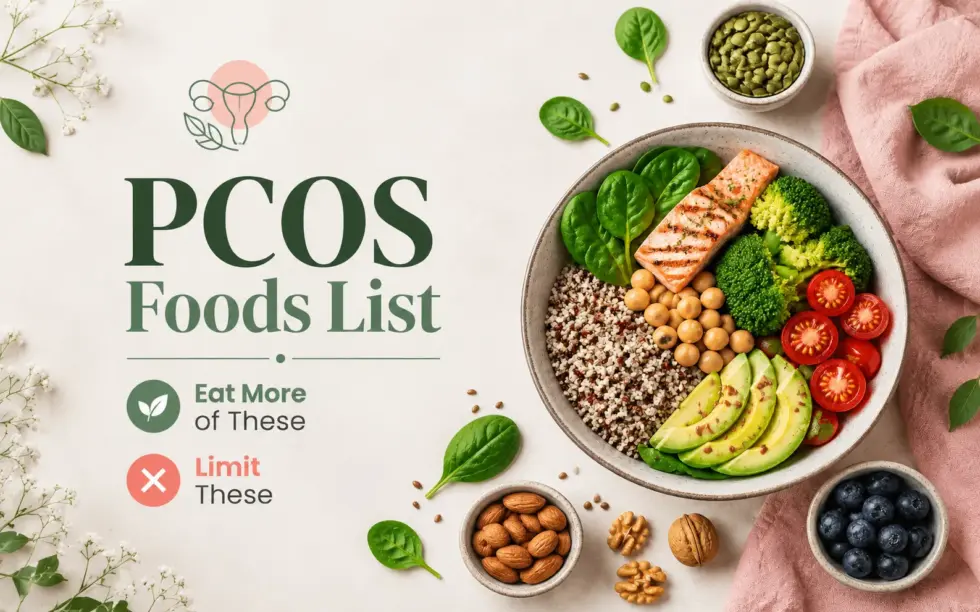
Eat more of these foods (the PCOS “yes” list)
1) Non starchy vegetables (the boring heroes)
If you only change one thing, honestly, increase vegetables. Not because vegetables are magical. Because they push your meal in the right direction: more fiber, more volume, slower glucose rise, better fullness.
Aim: half your plate, most meals.
Examples:
- Leafy greens: spinach, kale, arugula, romaine
- Cruciferous: broccoli, cauliflower, cabbage, Brussels sprouts
- Peppers, zucchini, cucumbers, tomatoes
- Mushrooms, eggplant, green beans, asparagus
- Onions, garlic, leeks
Easy ways to actually eat them:
- Frozen veg counts. It counts.
- Pre chopped salad kits, plus a protein.
- Roast a huge tray (olive oil, salt, pepper) and keep it in the fridge for 3 days.
2) Protein at every meal (not just dinner)
Protein is the most underrated PCOS tool. It blunts blood sugar spikes, reduces cravings, helps with muscle, and tends to make “I can’t stop snacking” less intense.
A lot of people with PCOS are accidentally under eating protein, then fighting hunger all day. It is exhausting.
General targets (rough, flexible):
- Many women do well with 25 to 35g protein per meal
- Or roughly 1.2 to 1.6 g/kg body weight per day depending on activity, goals, appetite, and guidance from a clinician
PCOS friendly protein options:
- Eggs, egg whites
- Chicken, turkey, lean meats
- Fish and seafood (salmon, sardines, tuna, shrimp)
- Greek yogurt, cottage cheese (if dairy works for you)
- Tofu, tempeh, edamame
- Lentils, chickpeas, beans (also carbs, but fiber rich)
- Protein powder (whey or plant) if you need convenience
Small but important point: if breakfast is usually carbs only (toast, cereal, granola, smoothie with fruit only), try shifting it. PCOS bodies often respond really well to a protein centered breakfast.
3) High fiber carbs (you can have carbs, just make them count)
Carbs are not automatically the enemy with PCOS. The issue is usually the form they come in.
Think: carbs with fiber attached.
Best options:
- Oats (especially steel cut or rolled)
- Quinoa, barley, farro, brown rice (some people do fine, portion matters)
- Sweet potatoes, potatoes (cooked and cooled sometimes helps resistant starch)
- Beans, lentils, chickpeas
- Whole fruit (not juice)
- Whole grain breads and wraps (look for high fiber, minimal added sugar)
A simple portion guide:
- Start with one cupped hand of cooked starch (or one slice bread), then adjust based on your hunger, activity, and blood sugar response.
4) Healthy fats (they slow digestion and support hormones)
Fat is not the villain either. It helps with satiety and makes meals feel complete. The quality matters.
Best fats to eat more often:
- Olive oil, avocado oil
- Avocados
- Nuts: almonds, walnuts, pistachios
- Seeds: chia, flax, hemp, pumpkin
- Fatty fish: salmon, sardines, mackerel
PCOS specific bonus: omega 3 fats are associated with improved triglycerides and inflammation markers, and some people notice symptom improvements over time.
5) Low glycemic fruits (yes, fruit is allowed)
Fruit is fine for most people with PCOS. It has fiber, water, antioxidants. But if fruit tends to trigger cravings for you, the tweak is usually pairing and portion, not banning it.
Typically easier fruits for PCOS:
- Berries (strawberries, blueberries, raspberries)
- Apples, pears
- Cherries
- Citrus (oranges, grapefruit)
- Kiwi
- Peaches, plums
More likely to spike you (still not “bad”, just be mindful):
- Grapes, mango, pineapple
- Dried fruit (very easy to overeat)
- Fruit juice (basically sugar water, even if it’s “natural”)
Pro tip: eat fruit with protein or fat.
- Apple + peanut butter
- Berries + Greek yogurt
- Orange + a handful of nuts
6) Fermented foods (for gut support, maybe hormones too)
Gut health is not a cure, but it is one piece. Fermented foods add beneficial bacteria and can help digestion and inflammation for some people.
Options:
- Unsweetened yogurt or kefir
- Sauerkraut, kimchi
- Miso, tempeh
- Kombucha (watch the added sugar)
If you bloat easily, start small. Like, a forkful of sauerkraut, not a whole bowl.
7) Anti inflammatory flavor boosters (spices, herbs, the little things)
These are not miracle cures. But they can add up.
Good options:
- Cinnamon (often used for blood sugar support)
- Turmeric + black pepper
- Ginger
- Garlic
- Rosemary, oregano
- Cocoa powder (unsweetened)
8) Plenty of water, plus electrolytes if you need them
Cravings and “hunger” can be dehydration in disguise. Also, higher fiber intake needs water to work well.
If you are active, or you sweat a lot, or you get headaches easily, adding electrolytes (low sugar) can help.
Limit these foods (the PCOS “not every day” list)
Not because you are “not allowed”. But because these foods tend to worsen insulin resistance, inflammation, and appetite dysregulation for a lot of PCOS folks.
1) Sugary drinks (the biggest bang for your buck to reduce)
This is the fastest way to spike glucose and insulin with basically no fullness.
Limit:
- Soda, sweet tea, energy drinks
- Sweet coffee drinks
- Fruit juice, juice blends
- Most bottled smoothies
If you want sweetness, try sparkling water + a splash of juice, or a diet soda if that helps you transition. Not perfect, but often better than full sugar.
2) Refined carbs (they hit hard and don’t keep you full)
Limit:
- White bread, white rice, regular pasta (unless portioned carefully and paired well)
- Pastries, cookies, cakes
- Crackers, pretzels
- Most breakfast cereals
These are the foods that create the “I’m hungry again in 90 minutes” situation.
3) Ultra processed snack foods (engineered to override fullness)
You already know the list. Chips, candy, packaged baked goods, snack bars that are basically dessert. It’s not about willpower. These foods are designed to be easy to overeat.
If you love crunchy snacks, try:
- Roasted chickpeas
- Popcorn with olive oil and salt
- Nuts portioned into a small bowl
- Veg + hummus
4) High sugar “health” foods
This one is sneaky.
Watch out for:
- Flavored yogurts with lots of added sugar
- Granola (often sugar and oil heavy)
- Smoothie bowls loaded with honey and toppings
- Protein bars with 20g sugar
Not saying you can’t have them. Just read the label like a detective.
5) Alcohol (especially in higher amounts)
Alcohol can disrupt blood sugar regulation, sleep, appetite, and liver hormone metabolism. Some people with PCOS are very sensitive to it.
If you drink:
- Keep it occasional
- Eat protein and fiber first
- Avoid sugary mixers
6) Deep fried foods and trans fats
Fried foods are not “evil”, but frequent intake is associated with worse inflammation and cardiometabolic markers, which matters because PCOS already increases risk for things like dyslipidemia and prediabetes.
For more information on how certain dietary choices can impact health conditions like PCOS, you might find this study insightful.
Try more:
- Air fryer versions
- Oven baked versions
- Pan seared in a little olive oil
The dairy and gluten question (because it always comes up)
Dairy with PCOS: should you avoid it?
Some people feel better off dairy. Some people do great with it.
Possible reasons dairy can be an issue for some:
- Acne flares (not everyone)
- Digestive issues (lactose intolerance is common)
- Highly sweetened dairy products causing sugar spikes
If dairy works for you, it can be a great protein source.
Better dairy choices:
- Plain Greek yogurt
- Cottage cheese
- Kefir (unsweetened)
- Milk with no added sugar
If you want to test it, do a 2 to 4 week trial without dairy, then reintroduce and watch symptoms. Do not change 12 things at once, or you will not know what helped.
Gluten with PCOS: is it a problem?
Gluten is not automatically inflammatory. Unless you have celiac disease, non celiac gluten sensitivity, or you mainly eat gluten in the form of refined carbs.
A lot of “gluten free” replacements are lower fiber and higher starch, which can be worse for insulin resistance.
If you suspect gluten bothers you, test it systematically. Otherwise, focus on quality. Whole grains, high fiber breads, portion control, pairing with protein.
A simple PCOS plate method (use this more than any food rule)
When in doubt, build meals like this:
- Half plate: non starchy vegetables
- Quarter plate: protein
- Quarter plate: high fiber carb (or smaller if you do better lower carb)
- Plus: a thumb of healthy fat
Then add flavor. Sauce. Salt. Make it edible.
This structure alone tends to reduce cravings and random snacking because your meals actually satisfy you.
PCOS foods list (quick grab and go)
Eat more often
Proteins
- Eggs, egg whites
- Chicken, turkey
- Fish, especially salmon, sardines
- Lean meats
- Tofu, tempeh, edamame
- Greek yogurt, cottage cheese
- Lentils, chickpeas, beans
Vegetables
- Leafy greens
- Broccoli, cauliflower, Brussels sprouts
- Zucchini, peppers, mushrooms, tomatoes
- Cucumber, asparagus, green beans
Carbs (higher fiber)
- Oats, quinoa, barley
- Sweet potatoes, potatoes
- Brown rice, farro
- Beans and lentils
- Whole grain bread (high fiber)
Fruits
- Berries
- Apples, pears
- Citrus
- Kiwi, cherries
Fats
- Olive oil, avocado
- Nuts and seeds
- Fatty fish
Extras
- Cinnamon, turmeric, ginger
- Fermented foods like kimchi, sauerkraut, kefir
Limit more often
- Sugary drinks
- Pastries, candy, desserts
- White bread, refined pasta, many cereals
- Packaged snack foods
- High sugar “healthy” foods (granola, sweetened yogurt, many bars)
- Frequent alcohol
- Frequent deep fried foods
What to eat for PCOS (realistic meal ideas)
Not “perfect” meals. Just meals you can repeat.
Breakfast ideas
- Greek yogurt bowl: plain Greek yogurt + berries + chia seeds + chopped walnuts
- Egg scramble: eggs + spinach + mushrooms + feta, plus a slice of high fiber toast
- Protein oats: oats cooked with milk, add protein powder or egg whites, top with cinnamon and berries
- Savory breakfast: leftover chicken or tofu + veggies + avocado (sounds weird, works great)
Lunch ideas
- Big salad that is not sad: greens + chicken or chickpeas + olive oil dressing + avocado + pumpkin seeds
- Wrap: high fiber tortilla + turkey + hummus + lots of crunchy veg
- Grain bowl: quinoa + salmon + roasted veg + tahini sauce
- Soup + protein: lentil soup plus a side of Greek yogurt or cottage cheese
Dinner ideas
- Stir fry: tofu or chicken + mixed veg + a small portion of rice, lots of garlic and ginger
- Sheet pan meal: salmon + broccoli + sweet potato wedges
- Taco plate: ground turkey or black beans + peppers + salsa + guac, served over greens
- Pasta but smarter: lentil pasta or regular pasta in a smaller portion, with chicken and a lot of vegetables
Snack ideas (if you need snacks)
You might not, once meals are built better. But if you do:
- Apple + peanut butter
- Cottage cheese + berries
- Hummus + carrots and cucumbers
- Hard boiled eggs
- A handful of nuts + fruit
- Edamame with salt
Common PCOS eating mistakes (that look healthy but backfire)
1) Eating too little all day, then losing control at night
PCOS hunger can be intense when insulin is involved. Under eating makes it worse. You do not need to “be perfect”. You need consistent meals.
2) Carbs alone, especially in the morning
Cereal, toast, smoothie, juice. You get a spike, then a crash, then cravings.
Try protein first. Even 20g helps.
3) Going super low carb with no plan
Some people feel amazing on lower carb. Others end up tired, constipated, stressed, and binge prone.
If you lower carbs, increase:
- Vegetables
- Protein
- Healthy fats
- Fiber (chia, flax, legumes if tolerated)
And monitor your energy and cycle changes.
4) Being afraid of fat, then never feeling full
If your meals are protein + vegetables only, you may be hungry fast. Add olive oil, avocado, nuts, seeds. It helps.
5) Relying on “PCOS snacks” instead of meals
A protein bar here, a latte there, a handful of something. It adds up, but you never feel satisfied.
Build actual meals first.
If you have insulin resistance PCOS (extra helpful tweaks)
Again, not everyone with PCOS has insulin resistance. But many do. And these small changes can be huge:
- Walk 10 minutes after meals when you can. It improves glucose handling.
- Eat protein and vegetables first, then carbs. Food order matters for some people.
- Choose carbs you can chew (whole grains, beans, whole fruit) over liquid carbs.
- Be consistent. Insulin resistance responds to patterns, not one perfect day.
A gentle note about weight loss and PCOS
A lot of PCOS content turns into weight loss content immediately. And yeah, weight changes can improve symptoms for some people. But you can also have PCOS symptoms at any weight. And you can improve labs and cycles without obsessing over the scale.
The goal with this foods list is more stable energy, fewer cravings, better cycle support, better metabolic health. Sometimes weight follows, sometimes it does not, sometimes it is slow.
But if you feel better, you are more likely to keep doing the habits. That’s the real win.
Wrap up (keep it simple)
If this feels overwhelming, do not start with a massive overhaul.
Start with just two changes for 2 weeks:
- Add protein to breakfast (25 to 30g if possible).
- Build lunch and dinner with the plate method: half veg, solid protein, slower carbs, healthy fat.
Then adjust.
PCOS is not fixed by one superfood. It is more like a bunch of small choices that stop your body from feeling like it is on a blood sugar roller coaster all day.
Eat more of the foods that keep you steady. Limit the ones that keep you stuck. And give it time.
FAQs (Frequently Asked Questions)
What does ‘PCOS friendly’ nutrition really mean?
PCOS friendly nutrition focuses on keeping blood sugar steadier, improving insulin sensitivity over time, lowering chronic inflammation, supporting gut health, and aiding ovulation and hormone metabolism with enough protein, fiber, and key micronutrients. It usually involves meals built around protein + fiber + healthy fats, with carefully chosen carbs—not necessarily eliminating them.
Which foods should I eat more of to help manage PCOS symptoms?
Increase intake of non-starchy vegetables (aim for half your plate at most meals), protein at every meal (about 25 to 35g per meal or 1.2 to 1.6 g/kg body weight daily), high fiber carbs like oats and legumes, healthy fats such as olive oil and fatty fish, and low glycemic fruits like berries and apples. These choices help stabilize blood sugar, reduce cravings, and support hormone balance.
Why is protein important for managing PCOS?
Protein helps blunt blood sugar spikes, reduces cravings, supports muscle maintenance, and lessens constant hunger often experienced with PCOS. Many people with PCOS under-eat protein unintentionally. Including protein at every meal—especially breakfast—can make managing symptoms easier.
Can I eat carbohydrates if I have PCOS?
Yes! Carbohydrates are not the enemy in PCOS when chosen wisely. Focus on high fiber carbs such as oats, quinoa, sweet potatoes, beans, whole fruits (not juice), and whole grain breads with minimal added sugar. Portion control is key—start with about one cupped hand of cooked starch or one slice of bread per meal and adjust based on your body’s response.
Are fats bad for PCOS?
No. Healthy fats are beneficial as they slow digestion, support hormones, increase satiety, and make meals feel complete. Good options include olive oil, avocado oil, avocados, nuts like almonds and walnuts, seeds such as chia and flax, and fatty fish like salmon. Omega-3 fats specifically may improve inflammation markers associated with PCOS.
Is fruit allowed in a PCOS-friendly diet?
Yes, fruit is allowed and can be part of a balanced PCOS-friendly diet. Low glycemic fruits such as berries, apples, pears, cherries, citrus fruits, kiwi, peaches, and plums are typically easier to manage. If fruit triggers cravings for you, try pairing it with protein or fat and watch portion sizes rather than banning it altogether.