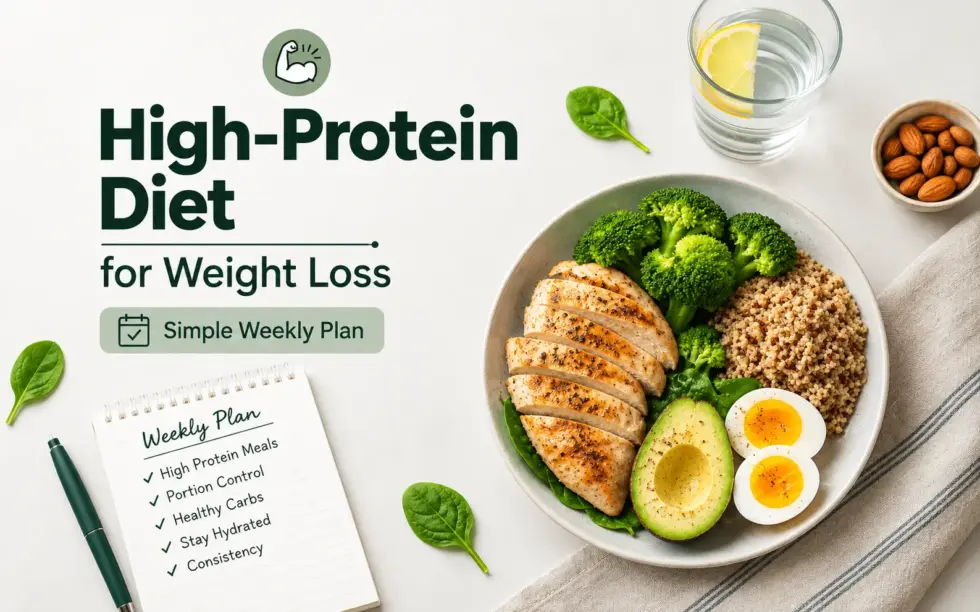

If you have ever tried to lose weight, you already know the annoying part is not “what to do”.
It’s the day to day. The constant decisions. The snack that turns into a meal. The meal that somehow doesn’t keep you full. The “I’ll start again Monday” loop.
A high-protein diet helps because it makes the whole thing feel less like willpower and more like… momentum. You eat. You feel full. You snack less. You stop thinking about food every 35 minutes.
Also, protein has a bit of a “metabolic tax” (your body burns more calories digesting it compared to fat or carbs), and it supports muscle while you lose fat. Which is a big deal because the goal is not just a smaller number. It’s a better body composition.
Anyway. This is a simple weekly plan you can repeat, mix and match, or steal from when life gets messy.
No fancy recipes. No diet culture weirdness. Just a plan.
What “high protein” actually means (without making it complicated)
For weight loss, most people do well aiming for:
- 0.7 to 1.0 grams of protein per pound of goal body weight
- Or 1.6 to 2.2 grams per kg (if you think in kg)
So if your goal weight is 150 lbs, a solid target range is 105 to 150 grams/day.
That sounds like a lot until you realize it’s basically:
- 30 to 40g at breakfast
- 30 to 40g at lunch
- 30 to 40g at dinner
- plus a small snack or two
And no, it doesn’t have to be all chicken breast and protein shakes. It can be Greek yogurt, eggs, tofu, lentils, fish, cottage cheese, lean beef, edamame, tempeh. Even pasta. Even bread. Just not as the main character.
Quick reality check
If you have kidney disease or any medical condition where protein needs to be managed, check with your clinician first. For generally healthy people, higher protein is widely considered safe.
Why high protein helps with weight loss (the practical version)
Here’s what tends to happen when people increase protein:
- They feel fuller, because protein is very satiating.
- They eat fewer “random calories”, especially at night.
- **They **keep more muscle, which matters for long term metabolism and how you look as you lose weight.
- They get better structure, because protein forces you to plan meals a little more. And planning is half the battle.
The biggest win, honestly, is this:
high protein makes dieting feel less like dieting.
The simple rules for this weekly plan
This plan is built on a few rules that make it easier to stick to:
- Every meal has a clear protein anchor (at least 25 to 40g).
- Carbs are included, but portioned in a boring, reasonable way.
- Veggies show up daily (not because you “have to”, but because they add volume and make the plan sustainable).
- Snacks are allowed, but they are protein first.
No food is banned. If you want dessert, have it. Just not as your daily stress strategy.
Protein targets and calories (rough guide)
This plan is written so it can fit different calorie needs. You adjust portions, not the whole menu.
For fat loss with less hunger, keep protein high, keep fats moderate, and use carbs around workouts and meals. To lose weight more aggressively, use slightly smaller carb and fat portions. For a less aggressive approach, allow a little more carbs and fats.
Daily macro targets
- Protein: 110 to 160g/day
- Fat: 40 to 70g/day
- Carbs: whatever is left based on your calorie target
But you don’t need a calculator to start. You need a repeatable week.
Grocery list (1 week, flexible)
Pick what you like from each category. You don’t need all of it.
Proteins
- Chicken breast or thighs (boneless skinless)
- Ground turkey (93 to 99% lean)
- Eggs and egg whites (optional, but helpful)
- Greek yogurt (0 to 2%)
- Cottage cheese
- Tuna or salmon (canned is fine)
- Lean beef (sirloin or extra lean ground beef)
- White fish (cod, tilapia) or shrimp
- Tofu and/or tempeh
- Lentils, chickpeas, black beans
- Protein powder (whey or plant based)
Carbs
- Rice (white or brown)
- Oats
- Potatoes or sweet potatoes
- Whole wheat wraps or bread
- Pasta (regular or high protein)
- Quinoa
- Fruit (bananas, berries, apples, oranges)
Fats and flavor
- Olive oil or avocado oil spray
- Avocados
- Nuts or nut butter
- Cheese (use it, just measure it)
- Salsa, hot sauce, mustard
- Soy sauce or teriyaki (watch sugar if it’s heavy)
- Spices: garlic powder, paprika, cumin, chili flakes, Italian blend
Veggies (go easy, buy frozen if needed)
- Salad mix
- Broccoli, green beans, asparagus
- Bell peppers and onions
- Spinach
- Zucchini
- Frozen mixed vegetables
- Tomatoes and cucumbers
Meal prep in 60 minutes (optional but life changing)
If you do even a little prep, the week gets easier fast. Here’s a simple one hour setup.
Cook 2 proteins
- Bake or air fry chicken
- Brown ground turkey with taco seasoning
Cook 1 to 2 carbs
- Rice cooker rice or microwave potatoes
Prep easy veg
To ensure your vegetables stay fresh longer and maintain their nutritional value, consider freezing them. You can steam a big bag of frozen broccoli for a quick side dish. Also wash salad mix and throw it in a container for an easy meal addition.
That’s it. You now have mix and match meals.
Simple Weekly Plan (7 days)
Each day has:
- Breakfast
- Lunch
- Dinner
- 1 to 2 snack options
You can swap days. Repeat meals. Skip what you hate. The point is consistency, not culinary achievement.
Protein counts are approximate, because brands and portions vary. Still, it’s close enough to work.
Day 1 (Monday)
Breakfast: Greek yogurt protein bowl (35 to 45g protein)
- 1.5 to 2 cups Greek yogurt
- Berries
- 1 tbsp chia or flax (optional)
- Optional: mix in 1 scoop protein powder if you want it extra high protein
Why it works: fast, high protein, surprisingly filling.
Lunch: Turkey taco bowl (35 to 45g)
- 5 to 6 oz lean ground turkey
- Rice (start with 1/2 to 1 cup cooked)
- Lettuce, salsa, onions, peppers
- Optional: a little cheese or Greek yogurt as “sour cream”
Dinner: Sheet pan chicken + potatoes + broccoli (40g)
- 6 oz chicken
- Roasted potatoes
- Big serving broccoli
- Olive oil spray and spices
Snack options (pick 1)
- Cottage cheese + pineapple (20 to 30g)
- Protein shake + apple (25g)
- 2 hard boiled eggs (12g) plus a piece of fruit
Day 2 (Tuesday)
Breakfast: Eggs + egg whites scramble (30 to 40g)
- 2 whole eggs
- 1 cup egg whites (or less if you prefer)
- Spinach, peppers, onions
- 1 slice whole wheat toast (optional)
Lunch: Tuna wrap + crunchy veggies (35 to 45g)
- 1 can tuna (or 2 if you need more protein)
- Greek yogurt or light mayo
- Wrap with lettuce, pickles, mustard
- Side: carrots, cucumber, or salad
Dinner: Salmon (or tofu) rice bowl (35 to 45g)
- 5 to 6 oz salmon
- Rice
- Cucumbers + carrots + soy sauce
- Optional: sesame seeds, sriracha
Snack options
- Greek yogurt (1 cup) + cinnamon (20g)
- Jerky + fruit (check labels, but easy)
- Edamame (surprisingly good protein)
Day 3 (Wednesday)
Breakfast: Overnight oats with protein (30 to 45g)
- Oats
- Milk or almond milk
- 1 scoop protein powder mixed in
- Berries or banana
If you hate overnight oats, just make regular oats and stir protein in after cooking.
Lunch: Chicken salad bowl (35 to 45g)
- Chopped chicken
- Big salad base
- Beans or quinoa (optional)
- Dressing (measure it once, you’ll see why)
- Add crunchy stuff: pickles, cucumber, onions
Dinner: Lean beef stir fry (35 to 45g)
- 5 to 6 oz lean beef strips or extra lean ground beef
- Frozen stir fry veggies
- Soy sauce, garlic, ginger
- Serve over rice or cauliflower rice
Snack options
- Protein shake (25g)
- Cottage cheese + tomatoes + salt (sounds weird, tastes good) (20g)
- String cheese + turkey slices
Day 4 (Thursday)
Breakfast: Cottage cheese bowl (30 to 40g)
- 1.5 cups cottage cheese
- Fruit (berries, peach, pineapple)
- Optional: drizzle honey, but don’t go wild
Lunch: Lentil and chicken soup (35 to 45g)
- Lentils (canned or cooked)
- Chicken
- Veggies
- Broth and seasoning
Shortcut: buy a lentil soup and add cooked chicken into it. Done.
Dinner: Shrimp tacos (35 to 45g)
- Shrimp sautéed with chili powder + lime
- Corn tortillas or wrap
- Cabbage slaw (bagged slaw mix is perfect)
- Salsa
Snack options
- Greek yogurt + protein granola (watch portion)
- 2 eggs + baby carrots
- Protein bar (not daily, but useful)
Day 5 (Friday)
Breakfast: Protein smoothie (30 to 45g)
- 1 scoop protein powder
- Frozen berries
- Greek yogurt (optional, adds more protein)
- Water or milk
- Ice
This is for the people who don’t want to chew breakfast.
Lunch: Turkey burger bowl (35 to 45g)
- Turkey patty (store bought or homemade)
- Potatoes or rice
- Salad
- Pickles, mustard, ketchup (don’t fear ketchup, just measure it)
Dinner: Pasta night, but higher protein (35 to 45g)
- Use high protein pasta (optional)
- Add ground turkey, chicken, or lean beef
- Big side salad
Yes, you can lose weight eating pasta. The portion is the thing. And the protein.
Snack options
- Cottage cheese + cocoa powder + sweetener (tastes like dessert)
- Greek yogurt
- Tuna on rice cakes
Day 6 (Saturday)
Saturday is where plans go to die, so we plan for that.
Breakfast: Brunch style plate (35 to 45g)
- 3 eggs (or 2 eggs + whites)
- Turkey bacon or chicken sausage (check protein)
- Fruit
- Optional: toast or potatoes
Lunch: “Whatever is left” meal (30 to 45g)
This is a real strategy.
Take leftovers and build a bowl:
- Protein + veggies + carb + sauce
If you’re eating out, aim for:
- grilled chicken salad
- burrito bowl with double meat
- sushi plus edamame
- kebab plate
- burger with extra patty, plus side salad or fries if you want (just don’t black out and order everything)
Dinner: Tofu or chicken curry (35 to 45g)
- Tofu or chicken
- Curry sauce (store bought is fine)
- Add frozen veggies
- Serve with rice
Snack options
- Protein shake (easy)
- Greek yogurt
- Jerky + fruit
Day 7 (Sunday)
This is reset day. Also “I want comfort food” day. So we do comfort food, but structured.
Breakfast: Oatmeal + egg whites on the side (30 to 40g)
- Oatmeal with fruit
- Egg whites scramble (quick) with spinach
Lunch: Big salad + “real” protein (40g)
- Large salad
- Add chicken, tuna, salmon, or steak
- Add beans if you want more volume
- Dressing measured
Dinner: Roast chicken dinner (40g)
- Roast chicken (or rotisserie chicken)
- Potatoes or rice
- Veggies
- Gravy if you want, just not a lake
Snack options
- Cottage cheese bowl
- Protein bar
- Leftover chicken roll ups (chicken wrapped in lettuce with mustard, honestly solid)
If you want it even simpler: 3 breakfast templates, 3 lunch templates, 3 dinner templates
If the full weekly plan feels like too much, use this instead and repeat meals.
Breakfast templates (choose 1 daily)
- Greek yogurt + fruit + optional protein powder
- Eggs/egg whites scramble + toast
- Protein smoothie
Lunch templates
- Protein bowl (chicken/turkey + rice + veggies + salsa)
- Wrap (tuna/chicken + veggies)
- Big salad + protein
Dinner templates
- Sheet pan protein + potatoes + broccoli
- Stir fry (protein + frozen veggies + rice)
- Pasta with lean meat + salad
That’s basically the whole plan anyway.
Portion guidance (so you actually lose weight)
High protein is not magic if calories are out of control. It just makes calorie control easier.
Use these as starting points:
Protein
- 5 to 7 oz cooked meat or fish at meals (or tofu equivalent)
Carbs
- Rice or pasta: 1/2 to 1 cup cooked
- Potatoes: 1 to 2 medium
- Oats: 1/2 cup dry
Fats
- 1 tbsp olive oil or nut butter is a real portion, not a “pour until it feels right” portion
If weight loss stalls, don’t panic. Tighten one knob:
- Reduce carbs slightly at 1 meal per day
- Reduce added fats
- Add a bit more daily movement
Don’t change everything at once. That gets chaotic fast.
High-protein snack list (so you stop “foraging”)
These are snack options that actually help weight loss instead of quietly wrecking it.
- Greek yogurt (plain, add fruit or cinnamon)
- Cottage cheese
- Protein shake
- Jerky or meat sticks (watch sugar and calories)
- Edamame
- Hard boiled eggs
- Tuna packets
- Turkey slices wrapped around pickles
- Protein bars (not all are great, but they’re convenient)
- Roasted chickpeas (decent, but easy to overeat)
A small tip that works: pre decide your snack.
If you wait until you’re starving, you’ll eat whatever is closest. Usually something weird.
Eating out on a high-protein diet (without being the difficult person)
You can eat out and still stick to this. Just anchor the meal around protein.
Look for:
- double chicken at Chipotle style places
- grilled meats, kebabs, steak, fish
- bunless burger or double patty
- sashimi, poke bowls with extra fish
- breakfast places: omelet + side of meat + fruit
Then pick:
- a carb you enjoy (rice, potatoes, bread, fries)
- a veggie if possible
You don’t need a perfect meal. You need a meal that doesn’t spiral into “well, today is ruined”.
Common mistakes that make “high protein” not work
1. You push protein but forget fiber
If your digestion gets weird, it’s usually because veggies and fruit disappeared.
Keep at least:
- 1 to 2 fruits/day
- 2+ cups veggies/day (frozen counts)
2. You drink your calories without noticing
Coffee drinks, juices, alcohol. They add up.
Not saying never. Just… notice.
3. Your “healthy fats” are unmeasured
Olive oil, nuts, peanut butter, avocado. Amazing foods. Also calorie dense.
Measure for a week. Not forever. Just long enough to re learn portions.
4. You treat weekends like a separate life
If Friday night to Sunday night is a free for all, your weekly deficit disappears.
You don’t have to be strict on weekends. But you do need some structure. Even one high protein meal early in the day helps.
High-protein vegetarian swaps (if you don’t eat meat)
You can still do this plan.
Use:
- tofu, tempeh
- edamame
- Greek yogurt, cottage cheese (if you do dairy)
- eggs
- lentils, chickpeas, beans
- seitan (if gluten is fine for you)
- protein pasta
- protein powder (plant based is fine)
A vegetarian day might look like:
- Breakfast: Greek yogurt bowl (or tofu scramble)
- Lunch: lentil bowl with quinoa + veggies
- Dinner: tofu stir fry
- Snack: protein shake
Still high protein. Still effective.
A simple way to track progress (without obsessing)
Pick 2 or 3 of these:
- weigh 3 to 4 mornings/week, take the average
- waist measurement once/week
- progress photos every 2 weeks
- how clothes fit
Don’t get stuck on daily scale noise. Salt, stress, sleep, workouts, hormones. It all shifts water weight.
What you want is trend.
The “repeat this next week” plan (because that’s how results happen)
If you want the simplest version of all this, do this for the next 7 days:
- Breakfast: Greek yogurt bowl or eggs (alternate)
- Lunch: turkey taco bowl (repeat it, it’s fine)
- Dinner: rotate chicken sheet pan, stir fry, salmon bowl
- Snack: cottage cheese or protein shake
Boring works. Boring is kind of the secret. Not forever. Just long enough to get traction.
Let’s wrap this up
A high protein diet for weight loss is not about living on chicken and sadness.
It’s about building meals that keep you full, protect your muscle, and reduce the mental noise around food. And when you do that, sticking to a calorie deficit stops feeling like a daily argument with yourself.
Use the weekly plan as written, or steal the templates and repeat meals until it’s automatic.
That’s usually when weight loss finally starts to feel… simple. Not easy, exactly. But simpler.
If you want, tell me your goal weight, dietary preferences (omnivore, vegetarian, etc), and how many meals you eat per day, and I can adjust this into a tighter plan with exact protein targets per meal.
FAQs (Frequently Asked Questions)
What does a high protein diet mean for weight loss?
A high protein diet for weight loss means aiming for about 0.7 to 1.0 grams of protein per pound of your goal body weight, or 1.6 to 2.2 grams per kilogram. For example, if your goal weight is 150 lbs, you should target roughly 105 to 150 grams of protein per day, spread across meals and snacks.
How does eating more protein help with losing weight?
Increasing protein intake helps you feel fuller longer, reduces random calorie snacking especially at night, supports muscle retention during fat loss which boosts metabolism, and encourages meal planning. Overall, it makes dieting feel less like a struggle and more like building momentum.
What are the simple rules of the high protein weekly meal plan?
The plan includes meals anchored by at least 25 to 40 grams of protein, reasonable portions of carbohydrates, daily vegetables to add volume and sustainability, and protein-first snacks. No foods are banned; treats are allowed but not used as a daily coping mechanism.
Can I include carbs and fats while following a high protein weight loss plan?
Yes! Carbohydrates are included in moderate portions, especially around workouts and meals, while fats are kept moderate. Adjusting carb and fat portions can make the plan more or less aggressive for your weight loss goals.
What types of foods should I buy for this high protein meal plan?
Focus on lean proteins like chicken breast, ground turkey, eggs, Greek yogurt, cottage cheese, fish, tofu, lentils; carbs such as rice, oats, potatoes, whole wheat bread or wraps; healthy fats like olive oil, avocados, nuts; and plenty of vegetables including broccoli, spinach, bell peppers, and frozen mixed veggies.
Is it safe to eat a high protein diet if I have kidney issues?
If you have kidney disease or any medical condition affecting protein needs, consult your healthcare provider before increasing your protein intake. For generally healthy individuals, higher protein diets are widely considered safe.